
Most couples do not wake up one morning and decide, casually, to look for a therapist. Usually it is more like this: you are doing dishes, or driving to soccer practice, or lying in bed staring at the ceiling, and a small, steady thought shows up. We cannot keep doing it like this.
As a former marriage and family therapist and someone whose own marriage has had a few “are we really okay?” seasons, I want to say this plainly: couples counseling is not only for relationships on the brink. It is for relationships where the tools you have are no longer matching the life you are living.
Below is an actionable checklist of seven clear signs it may be time to get professional support. Not because you failed, but because you are wise enough to stop white knuckling your way through love.

Before you start
What it is: a structured space to slow down conflict, learn new communication skills, repair trust, and understand patterns that keep repeating.
What it is not: a courtroom where one person “wins,” a place to punish a partner, or a magic reset button that works without effort between sessions.
If you are looking for a sign that it is “bad enough” to go, you can stop waiting. Earlier support usually means more options and less damage to repair.
1) The same fight keeps coming back
You argue about dishes, but it is actually about feeling invisible. You fight about money, but it is actually about safety and control. You clash over parenting, but it is actually about respect and feeling like a team.
What it can look like
- You can predict your argument word for word.
- It starts small and escalates fast.
- You make up, but nothing changes for more than a week or two.
Why therapy helps
A good couples therapist helps you identify the pattern underneath the topic. Once you can name the loop, you can change the loop.
2) Resentment is always there
Resentment is quiet at first. It sounds like sarcasm, sighs, scorekeeping, and “must be nice.” Over time, it hardens into a lens that makes everything your partner does feel irritating or suspect.
Quick self-check
- Do you keep a mental list of what you do that they do not?
- Do you feel more like a manager than a partner?
- Do you notice contempt creeping in, like eye-rolling or name-calling?
Why this matters
Research on couples, including work associated with the Gottman Method, suggests contempt is a powerful predictor of serious relationship distress. Counseling can help you translate resentment into needs, boundaries, and realistic renegotiation before it calcifies.
3) You stop bringing things up
This one breaks my heart because it can look like peace from the outside. Inside, it feels like shrinking.
If you have started editing yourself to avoid conflict, it may not be harmony. It can be a slow erosion of emotional safety.
Common signs
- You rehearse conversations in your head and then decide not to try.
- You share important feelings with friends, but not with your partner.
- You feel lonely even when you are together.
Counseling can create a safer structure for hard conversations, especially when one or both partners get defensive, shut down, or lash out.

4) Trust was damaged and repair stalls
Trust issues are not only about infidelity. Trust can be fractured by financial secrecy, repeated broken promises, substance misuse, hiding communication with an ex, or a pattern of minimizing someone’s feelings.
Trust is struggling when
- You feel like a detective: checking phones, tracking stories, scanning for lies.
- The hurt partner cannot move forward because the questions are never answered fully.
- The partner who caused harm feels “punished forever” and gets defensive or shuts down.
Why therapy helps
Repair often requires more than “I’m sorry.” It usually needs transparency, consistent follow-through, and a guided process to rebuild safety. A therapist can help you set concrete agreements and pace the conversations so they do not retraumatize the relationship.
5) Intimacy is gone or tense
Intimacy is not just sex. It is the sense that you are known, wanted, and emotionally connected. When intimacy drops off, couples often assume the relationship is doomed. More often, it is a signal that something else needs attention.
What to notice
- Touch has become rare or only functional, like a quick peck or a shoulder squeeze.
- Sex is avoided, or it feels like an obligation to keep the peace.
- You miss affection, but feel awkward initiating it.
How counseling can help
Therapy can help you explore what is blocking closeness: exhaustion, resentment, body changes, differences in pornography use or comfort, medical issues, mental health, postpartum transitions, caregiving stress, or unresolved relational hurts. Rebuilding intimacy is often less about technique and more about safety, honesty, and tenderness.
6) Stress is exposing the cracks
Some seasons are simply harder: a new baby, teens, infertility, job loss, grief, relocation, caring for aging parents, or a chronic health diagnosis. Stress does not “cause” all relationship problems, but it absolutely amplifies whatever is already tender.
As someone who spent years caring for a parent with Alzheimer’s while raising kids and trying to stay married, I can tell you this: caregiving and grief can turn even strong couples into roommates with matching calendars.
Therapy is especially useful when
- You are functioning, but you do not feel connected.
- One partner is carrying most of the emotional labor.
- Your coping styles clash, like one of you wants to talk and the other wants to avoid.
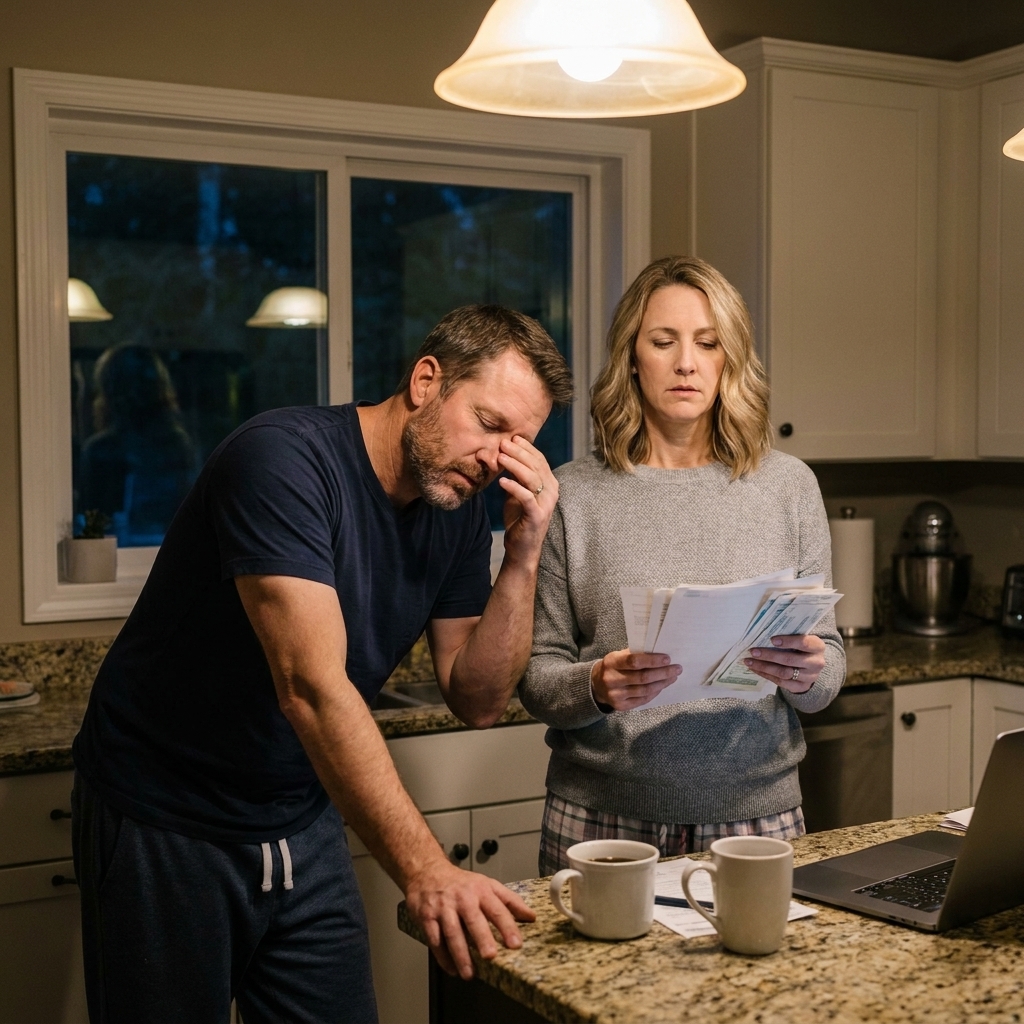
7) You imagine life without them
Fantasizing about leaving is more common than people admit, especially during long, lonely stretches. The question is not whether the thought has ever crossed your mind. The question is whether it is becoming a plan, or whether you are emotionally exiting while still sharing a mortgage.
Signals the exit ramp is closer
- You feel relief when your partner is not home.
- You are investing emotionally elsewhere, even if it is “just texting.”
- You catch yourself thinking, “Maybe this is just who we are now.”
Why to seek help now
When one or both partners are in “quiet quitting” mode, the relationship often needs a guided reset to decide what is possible. Therapy can help you clarify whether you want repair, restructuring, or a compassionate separation plan. Clarity is kinder than limbo.
If you saw yourself here
It is normal to feel conflicted after reading a list like this. Part of you may want help, and another part may want to minimize it or power through. That tug-of-war is common.
You do not need to wait until you are in crisis. If you checked two or three boxes, consider that your relationship is asking for care, not judgment.
Simple next steps
- Pick one goal: “We want to fight fair,” “We want to rebuild trust,” or “We want to feel like a team again.”
- Choose a starting rhythm: Many practices begin with weekly sessions for around 6 to 10 weeks, then adjust based on goals, finances, schedules, and how intense things feel.
- Ask about approach: Many therapists use evidence-based models like Emotionally Focused Therapy (EFT), the Gottman Method, or Integrative Behavioral Couple Therapy (IBCT).
- Make space for practice: real change happens in the days between sessions.
What progress can look like
Couples therapy can feel better and worse before it feels better for good. That is not failure. It is often the relationship finally telling the truth out loud.
- You start catching the pattern sooner, even if you still fall into it sometimes.
- Apologies get more specific, and repair happens faster.
- You can talk about hard topics without spiraling into old roles.
- You feel more “we” than “me versus you,” even during conflict.
Practical barriers
If you want help but the logistics feel daunting, you are not alone.
- Cost: Ask about sliding scale slots, shorter session options, or group workshops. Some practices offer interns at reduced rates.
- Insurance: Coverage varies. Ask your insurer about outpatient mental health benefits and whether “family therapy” or “couples therapy” is included.
- Scheduling: Telehealth can make it possible when childcare or commuting is the bottleneck.
- Finding a good fit: Look for a licensed couples therapist (often LMFT, psychologist, LCSW, LPC) who states they are trained in couples work and names a model they use (EFT, Gottman, IBCT). Ask how they handle high-conflict sessions and repair after ruptures.
If your partner will not go
This is common, and it does not automatically mean your relationship is doomed. It usually means your partner is scared: of being blamed, of being “made the bad guy,” of dredging things up, or of having to feel feelings with an audience.
What to try
- Lead with hope, not accusation: “I miss us. I want help getting back to each other.”
- Offer a time-limited experiment: “Can we try 4 sessions and reassess?”
- Choose the therapist together: autonomy lowers defensiveness.
- Go solo anyway: individual therapy can help you change patterns, clarify boundaries, and decide next steps. One person shifting can sometimes change the whole dance, even though it is not a guarantee.
When counseling is not the next step
There are situations where standard couples counseling may not be appropriate right away, especially if there is ongoing abuse, coercive control, or fear of retaliation for what is said in session. In those cases, individual support and safety planning come first.
Many couples therapists screen for intimate partner violence and may recommend individual work, specialized services, or a different plan before attempting joint sessions.
If you ever feel unsafe, reach out to local emergency resources or a domestic violence hotline in your area for confidential guidance.
A closing thought
Couples counseling is not a sign your relationship is failing. Often, it is a sign that you still care enough to learn how to love each other better.
If you are reading this with a lump in your throat, let that be information. Not a verdict. Just a gentle nudge toward support.