
Parenting & Family Dynamics
Start with what feels useful today. There’s no need to have every answer at once.

How to Tell a Young Child They Are Going to Therapy
Tell them early, tell them simply, and tell them the truth at a child-sized level. For most kids ages 4 to 10, the most reassuring message is: therapy is a place to help feelings and problems feel more manageable, and they are not in trouble . You do not need a perfect speech. One calm, concrete...
Read more →
How to Help Your Teen Cope With a Breakup
A teen breakup can look “small” to adult eyes, but to your child it can feel like identity, belonging, and future all cracked at once. The most helpful thing you can do is take the pain seriously while keeping your response steady . Start here: offer closeness, validate the loss, and protect the...
Read more →
Teen Anxiety vs. Normal Stress: How Parents Can Tell the Difference
Teen stress is real. Deadlines, social pressure, sports, jobs, college talk, family changes, and an online world that never sleeps can make even the most steady kid feel wrung out. The difference between normal stress and anxiety that needs more support often involves four common markers: how...
Read more →
What to Do When You Find a Vape or Drugs in Your Teen's Room
Finding a vape, pills, weed, or anything drug-related in your teen’s room can land in your body like a siren. Anger, fear, guilt, heartbreak. Sometimes all at once. In the first 24 hours, your goal is simple: keep everyone safe, get clearer information, and respond in a way that makes it more...
Read more →
Why Is My Teen So Angry?
Teen anger can feel like it comes out of nowhere. One minute you are asking about homework, the next you are being yelled at like you are the enemy. Most of the time, anger is not the whole story. It is the emotion that shows up on the surface when something underneath feels overwhelming, unsafe,...
Read more →
Signs Your Teen May Have an Eating Disorder
If you are wondering whether what you are seeing is “just teen dieting” or something more serious, trust that question. Eating disorders are not a phase or a vanity issue. They are health conditions that can affect the heart, brain, mood, and growth, and they can show up in subtle, everyday ways...
Read more →
How to Help a Teen Who Is Being Cyberbullied
Cyberbullying can make a teen feel like there is nowhere to hide. The most helpful first move is usually this: stay close, stay calm, and get practical . You can support your teen without taking their phone away, while also collecting what you need to report it and stop it. This article walks you...
Read more →
How to Tell if Your Teen Has Depression or Is Just Moody
Teen moodiness is real. So is teen depression. The frustrating part is that from the outside, they can look similar: door slams, eye rolls, long silences, “I’m fine” delivered like a courtroom objection. A helpful way to separate typical ups and downs from something more concerning is to look for...
Read more →
How to Help Your Teen Through Panic Attacks
If your teen is having a panic attack, your job is simple and hard at the same time: help them feel safer in their body , reduce stimulation, and stay with them until the wave passes. Panic attacks often look dramatic, but they are usually not dangerous. They are also miserable. Having a plan helps...
Read more →
What to Do When Your Teen Refuses to Go to School Because of Anxiety
If your teen is refusing to go to school because of anxiety, the most helpful first move is to lower the heat, keep the boundary, and shift to small next steps . You do not have to solve everything before the first bell. You are trying to interrupt the panic and avoidance cycle, then build a plan...
Read more →
Should Your Teen See a Therapist of a Certain Gender?
Yes, it can make sense to request a therapist of a certain gender for your teen, especially if it helps them feel safe enough to show up and talk. But a gender match is not a guarantee of trust, skill, or comfort, and the “right” choice sometimes changes once therapy actually begins. If you’re...
Read more →
What a Teen Therapy Treatment Plan Shows Parents
A written treatment plan is one of the first official documents you may see after your teen starts therapy. It can be reassuring to have something concrete. It can also be frustrating if it feels vague, overly clinical, or like it was written for an insurance company instead of a real family. Here...
Read more →
Psychiatric Hold vs. a Planned Hospital Stay for a Teen
If you are trying to understand the difference between a psychiatric hold and a planned hospital stay for your teen, the simplest distinction is this: a hold is an emergency, time-limited legal process used when a teen is believed to be an immediate danger to themselves or others (or unable to...
Read more →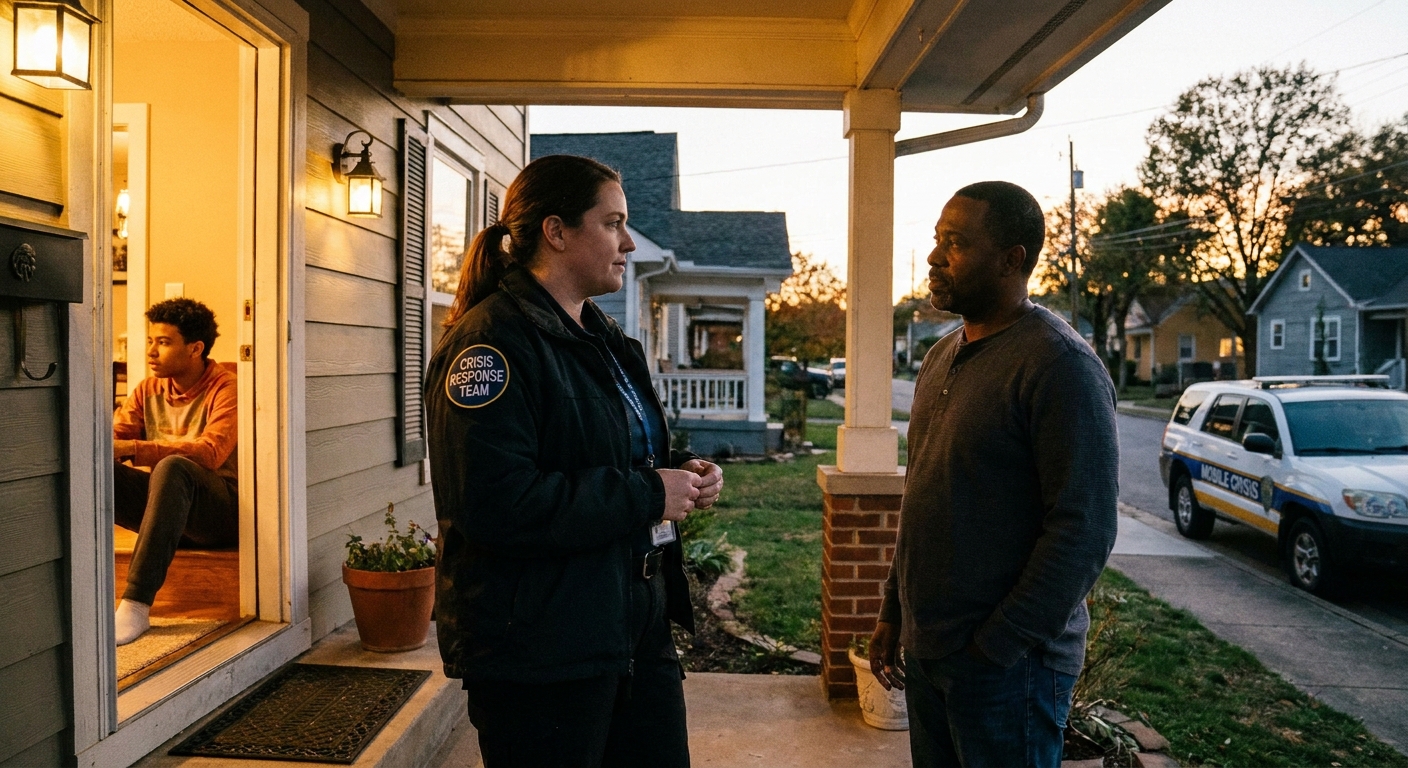
Mobile Crisis Team vs. the ER for a Teen
If you are deciding between a mobile crisis team and the emergency room for your teen, you are already doing something brave. You are taking distress seriously, even if your teen is minimizing it or you are second-guessing yourself. Here is the simplest way to choose: go to the ER or call your...
Read more →
What a Therapy Safety Plan Means for Your Teen
When a clinician says your teen has a “safety plan,” it can land with a thud. Most parents hear danger and their minds sprint ahead of the information. In plain language: a therapy safety plan is a written, step-by-step plan your teen can follow when they notice warning signs that their emotions or...
Read more →
Virtual IOP vs. In-Person IOP for a Teen
If your family has been offered an Intensive Outpatient Program (IOP) and the program says you can do it virtually or in person , you are not choosing between “real treatment” and “not real treatment.” You are choosing a delivery method , and that choice has very practical consequences: hours,...
Read more →
Can a Parent Stop a Teen’s Therapy?
Yes, in many situations a parent may be able to stop or pause a teen’s therapy because parents often control consent , scheduling, and payment. But it is not always that simple. The rules can change based on your teen’s age, your state’s consent laws , custody arrangements, and whether there are...
Read more →
HMO vs. PPO Coverage for Teen Therapy
When a teen finally says “maybe I should talk to someone,” the last thing you want is to get stuck in insurance fine print. The simplest way to think about it is this: HMOs often trade flexibility for lower costs , and PPOs often trade higher costs for more choice . This article walks you through...
Read more →
LMFT vs. LCSW vs. LPC for Teen Therapy
When you are trying to find a therapist for your teenager, the letters after a clinician’s name can start to feel like a pop quiz you did not study for. Here is the simple truth: LMFT, LCSW, and LPC are typically master’s level clinical licenses that can qualify someone to provide weekly teen...
Read more →
What to Do When a New Insurance Plan Drops a Teen's Therapist
A new job, an annual plan change, or a quiet network update can suddenly turn your teen’s therapist into “out of network.” If you are reading this with that sinking feeling in your stomach, you are not overreacting. For a teen, losing a therapist can feel less like a billing problem and more like...
Read more →