

Teen stress is real. Deadlines, social pressure, sports, jobs, college talk, family changes, and an online world that never sleeps can make even the most steady kid feel wrung out.
The difference between normal stress and anxiety that needs more support often involves four common markers: how intense it is, how long it lasts, how much it drives avoidance, and whether it’s shrinking your teen’s life.

Stress vs. anxiety in one sentence
Stress is usually tied to a specific pressure and eases when the pressure passes. Anxiety can show up even when nothing obvious is happening, and it tends to stick around, spread to multiple areas, or keep your teen from living their normal life.
It is also possible for your teen to feel both at once. A big test can be stressful. The belief that failing that test means their entire future is over, plus days of stomachaches and refusing school, is where anxiety often enters the picture.
What normal teen stress looks like
Normal stress can be loud and dramatic, especially in adolescence. It can include tears, irritability, snapping at siblings, or needing extra downtime.
Common signs of stress that still fall in the “expected human reaction” category:
- Short-lived spikes around predictable events, like exams, tryouts, a performance, or a tough friend situation.
- Complaints that come and go, like a headache the night before a presentation, then relief afterward.
- Functioning is mostly intact. They still go to school, see friends, eat enough, sleep enough, and do their responsibilities with only minor disruption.
- Recovery happens after rest, reassurance, problem-solving, or the stressful event passing.
Stress deserves care and skills, even when it is normal. But it usually does not keep widening its footprint.
What teen anxiety can look like
Anxiety is not just “worrying a lot.” It is often a system-wide alarm that gets stuck in the on position.
One helpful way to think about it is this: stress is often about the situation. Anxiety is often about the alarm response to the situation, and that alarm can start showing up even when the situation changes.
1) Physical symptoms that show up repeatedly
Teens often experience anxiety in the body first, and it can look like unexplained or hard-to-pin-down health issues.
- Stomachaches, nausea, diarrhea, or frequent bathroom trips
- Headaches, muscle tension, jaw clenching
- Racing heart, tight chest, shortness of breath
- Shaky hands, sweating, feeling overheated
- Trouble falling asleep, frequent waking, nightmares
- Appetite changes, especially eating much less
One stressful week can cause this. Anxiety tends to make it a repeating cycle, especially on school nights or before social events.
A quick safety note: if physical symptoms are frequent, severe, or new, it is worth checking in with your teen’s pediatrician. Anxiety is common, but so are medical issues that can mimic or worsen anxiety.
2) Avoidance becomes the main coping skill
A stressed teen might complain, procrastinate, or need a pep talk, but they eventually show up. With anxiety, you often see shrinking:
- Increasing school absences, frequent visits to the nurse, or begging to stay home
- Quitting activities they used to like because it feels “too much”
- Refusing presentations, practices, driving, sleepovers, parties, or public places
- Stalling routines: long showers, can’t leave the house, repeated outfit changes
- Compulsive reassurance-seeking: constant “Are you mad?” “Did I do it wrong?” “Promise I won’t fail?”
Avoidance makes sense in the moment because it reduces anxiety fast. The problem is that it can teach the brain: “We escaped. That means the danger was real.” Over time, anxiety often expands.
3) Duration: it’s not resolving, it’s looping
Normal stress comes in waves and then recedes. Anxiety can persist for weeks, or it can be a near-daily loop that reappears even when one problem is solved.
As a rule of thumb, I pay close attention when symptoms are present most days for several weeks, or when there is a clear downward shift that is not bouncing back with rest and support. Some anxiety diagnoses require symptoms to be present for months, but you do not have to wait for a timeline to “qualify” if your teen is struggling or becoming impaired.
4) Impairment: school, friends, sleep, or family life is getting hit
One of the clearest differences is whether your teen can still do the ordinary parts of being a teen.
Red flags for impairment:
- School: grades drop quickly, missing assignments snowball, they cannot focus, they melt down over normal feedback, or they frequently refuse school.
- Friends: social withdrawal, constant conflict, or panic around being judged, posted about, or left out.
- Sleep: insomnia becomes routine, they are exhausted most mornings, or they rely on excessive naps that then worsen nighttime sleep.
- Home: more blowups, more isolation, or the household becomes organized around preventing their distress.
When it might not be anxiety
Persistent worry and physical symptoms can absolutely be anxiety. They can also be anxiety plus something else, or something else that looks like anxiety from the outside.
It can be wise to rule out or consider things like depression, ADHD, trauma, substance use, learning differences, sleep disorders, thyroid issues, anemia, medication side effects, and high caffeine or energy drink use. If you are seeing a big shift in mood, sleep, school attendance, appetite, or physical symptoms, looping in your pediatrician is a steady first step.
Stressors that can mask anxiety
Some teen stressors are so common that parents can accidentally normalize anxiety symptoms. A few patterns I see often:
- Grades and perfectionism: they are doing well on paper, but emotionally they are falling apart.
- Social media pressure: fear of screenshots, being left on read, comparison spirals, and late-night scrolling that disrupts sleep.
- College and future pressure: “If I do not get into the right school, my whole life is ruined” thinking.
- Sports and performance culture: injuries, tryouts, or a coach’s criticism triggering panic or avoidance.
- Family stress: divorce, conflict at home, a sick relative, or financial strain.
If your teen is saying “I’m fine” but their body, sleep, or functioning is saying otherwise, trust the pattern more than the words.
Calm first steps at home
You do not have to solve anxiety in one conversation. The goal is to lower shame, gather information, and start small supports that do not accidentally reinforce avoidance.
- Start with observation, not labels. “I’ve noticed your stomach hurts most school mornings and you’ve missed first period three times this month.”
- Ask two questions: “What feels hardest about that moment?” and “What would make it 10 percent easier?”
- Do a brief body reset together. Try a short walk, a shower, a snack with protein, or slow breathing for 60 seconds. Keep it practical, not preachy.
- Make the day smaller. Instead of “get through school,” try “get to first period,” then reassess.
- Limit reassurance loops. Offer one warm response, then shift to coping: “I hear you. My answer is the same. Let’s pick your next step.”
- Protect sleep like it’s medicine. Consistent wake time, screens out of the bedroom if possible, and a predictable wind-down routine.
- Track patterns for 2 weeks. Note sleep, physical symptoms, school attendance, avoidance, and what helps. This can be incredibly helpful if you seek an evaluation.
If your teen has panic attacks, you may also want: How to Help Your Teen Through Panic Attacks.

School support options
If anxiety is affecting attendance, grades, or your teen’s ability to get through the day, school can be part of the support plan. You can ask about options like checking in with the school counselor, adjusting workload temporarily, creating a calmer re-entry plan after absences, or exploring a 504 plan evaluation if symptoms are persistent.
If you are unsure where to start, this may help: School Counselor vs. Outside Therapist for Your Teen.
Scripts for sensitive talks
When you want to open the door
“I’m not here to interrogate you. I’m noticing you seem on edge a lot lately, and I care about how it feels in your body and your mind. Do you want to talk now, or would another time feel easier?”
When your teen says, “I’m fine”
“Okay. I’ll respect that. I’m still going to keep an eye on the stomachaches and the school mornings, because that looks miserable. If you want to handle it together, I’m in.”
When you need a gentle boundary on avoidance
“I believe you feel awful, and staying home makes sense to your brain right now. Also, staying home tends to make this worse long-term. Let’s problem-solve how to get you to school with support.”
When you are considering therapy
“You don’t have to be in crisis to talk to someone. I’m seeing this anxiety take up a lot of space, and I’d like you to have more tools than white-knuckling it.”
If you need help with that exact talk, start here: How to Tell Your Teen They Need Therapy.
When to get an evaluation
You can start with your pediatrician, a licensed teen therapist, or a child and adolescent psychiatrist depending on what is available and how intense symptoms are. You do not need a diagnosis in hand to ask for help.
Consider a professional evaluation when you notice any of the following:
- School refusal, frequent absences, or regular “I can’t” mornings that are escalating
- Panic attacks, or intense physical symptoms that repeatedly disrupt the day
- Persistent sleep disruption that is affecting functioning
- Major social withdrawal or loss of friendships due to fear and avoidance
- Rapid drop in grades or inability to concentrate that is new
- Big behavior changes, including irritability that feels out of character and constant overwhelm
- Self-harm, suicidal thoughts, or statements like “I don’t want to be here”
- Substance use as a way to cope with feelings
- Anxiety after a traumatic event, including harassment, assault, a serious accident, or violence
To learn what the first appointment can look like, you may find this helpful: What to Expect at Your Teen’s First Therapy Appointment.
What not to do
When your teen is anxious, your nervous system tends to fire up too. That is normal. A few common traps to avoid:
- Don’t debate feelings. “You have nothing to worry about” can land as “You don’t get it.” Try: “That sounds scary. Let’s take one step.”
- Don’t rush to fix. Problem-solving is useful after your teen feels understood.
- Don’t punish panic. Consequences rarely reduce anxiety. Support plus structure works better.
- Don’t let anxiety write every rule. Accommodations should help your teen re-enter life, not shrink it further.
If conversations keep escalating, these tools can help you stay grounded: 10 Strategies to Improve Communication With Your Teen.
FAQ parents ask
Can a high-achieving teen still have anxiety?
Absolutely. Some anxious teens look “fine” from the outside, especially perfectionists. Watch for the cost: sleep loss, stomachaches, tears, irritability, constant reassurance-seeking, or a life that feels joyless even when achievements are high.
How long should I wait before getting help?
If symptoms are mild and your teen is functioning, you might try a couple of weeks of supportive routines and see if things ease. If symptoms are escalating, causing impairment, or include safety concerns, it is reasonable to seek help sooner.
What if my teen refuses therapy?
This is common. Start with collaboration and choice: offer a couple of provider options, ask what would make it less awful, and consider beginning with a pediatrician visit. This guide can help you think it through: Should You Require Your Teen to Attend Therapy?
What if I’m worried I’m making it worse?
Most parents are trying their best in a high-pressure season. If you have been accommodating anxiety to keep the peace, you are not alone. You can pivot gently, one small boundary and one small support at a time.
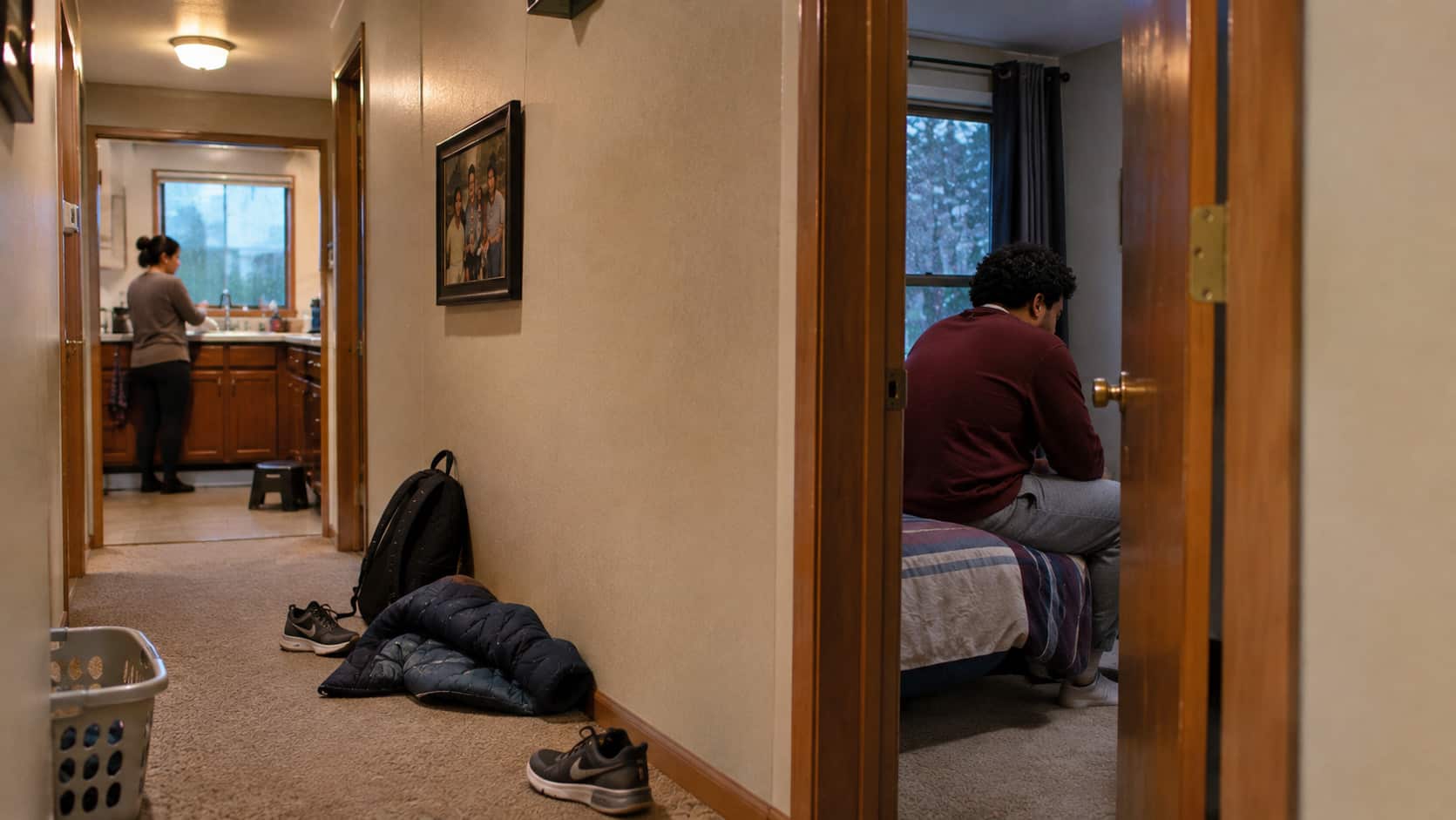
One small next step
Pick just one:
- Write down three specific observations you have noticed (sleep, stomachaches, avoidance, school mornings).
- Choose a low-pressure time to talk, like a car ride or while folding laundry.
- Try a two-week pattern tracker and bring it to your teen’s pediatrician.
- If your teen is open, start reading together: How to Help a Teen Open Up Without Pressuring Them.
You do not have to have perfect certainty to be a steady presence. You just need enough clarity to take the next kind, practical step.