

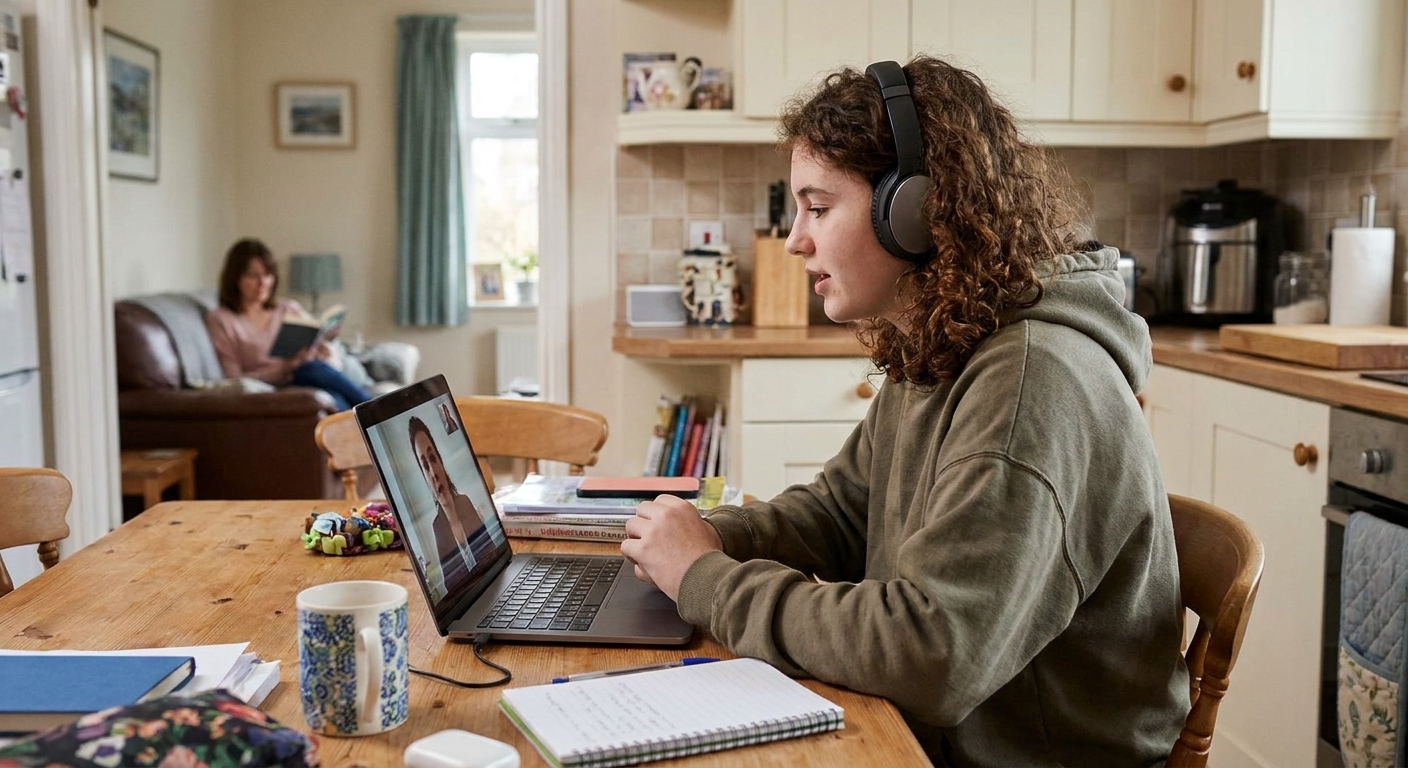
If your family has been offered an Intensive Outpatient Program (IOP) and the program says you can do it virtually or in person, you are not choosing between “real treatment” and “not real treatment.” You are choosing a delivery method, and that choice has very practical consequences: hours, school logistics, who needs to be home, privacy, and how supported your teen feels.
In general, virtual IOP can be a strong fit when transportation is hard, anxiety makes leaving the house tough, or your home environment is stable enough for sessions. In-person IOP tends to shine when your teen needs more structure, fewer distractions, easier engagement, or more predictable privacy.
What IOP usually looks like
Most teen IOPs meet several days a week for a few hours at a time, often after school, sometimes during the day. Many programs offer a mix of group therapy, individual check-ins, family sessions, and skill-building (often CBT or DBT-informed). Some programs also coordinate with a prescriber or psychiatric provider for medication support, but not all do.
Even when the schedule is similar, the experience can feel very different on a screen versus in a building. The goal here is to match the format to what your teen can realistically do consistently and safely.
Hours and daily rhythm
Virtual IOP: the day can blur
Virtual IOP typically means logging in from home for set blocks of time. That saves commute time, but it can also make the day feel like one long stretch of being “on,” especially if your teen already does a lot of school or social life through screens.
- Easier: no driving, faster transition from school to program, less fatigue from getting ready.
- Harder: switching from “home mode” to “treatment mode,” staying attentive in group, resisting multitasking.
A small routine can help create separation. For example: a snack, a five-minute reset (shower, change clothes, or a quick walk), then logging in from the same spot each day with notifications silenced.
In-person IOP: built-in separation
Going to a clinic creates a physical boundary between home and care. For some teens, that structure is the whole point. For others, leaving the house is the biggest barrier.
- Easier: fewer temptations to disengage, clearer start and stop times, staff can read body language.
- Harder: transportation, time off work for rides, fatigue after a long day.
School coordination
One of the most stressful parts of IOP is not therapy itself. It is trying to keep school from collapsing around it.
Questions to ask the IOP about school
- What are the program hours? Ask for exact start and end times, and whether they ever run over.
- Do you coordinate with schools? Some programs can provide attendance verification and general participation notes.
- Is there protected time for homework? Not all IOPs build this in, so it helps to ask directly.
- What happens if my teen has a test? Ask about planned absences and make-up expectations.
If you need help thinking through what to share, this can be useful: What to Tell the School When Your Teen Starts Therapy. It focuses on protecting your teen’s privacy while still getting practical support.
Adult supervision at home
Some virtual teen IOPs require an adult to be in the home during program hours. Others do not, or they handle supervision differently. Requirements can vary by program and by state, but when programs insist on it, it is usually about safety, supervision, and emergency response.
Common requirements for virtual participation
- An adult is home and reachable during sessions.
- The teen participates from a private, quiet space with the camera on.
- The family provides an address on file and updated emergency contacts.
- There is a plan for what happens if your teen disconnects or escalates.
If your work schedule makes this hard, ask whether the program allows another trusted adult to cover, or whether there is a hybrid option. Some families rotate coverage with a co-parent, grandparent, or sitter who is comfortable with the responsibility.
Privacy on camera
Virtual IOP can raise a very teen-specific worry: “Everyone can hear me.” Even when nobody is trying to listen in, teens often hold back if they feel exposed.
Practical ways to increase privacy at home
- Choose the most sound-buffered space you have. A bedroom with a door or a basement room is often more private than a kitchen table.
- Use headphones with a built-in mic if possible. It helps with sound leakage and audio clarity.
- Add a simple noise layer outside the door, like a white noise machine or a fan.
- Set a household “do not knock” rule during group time unless there is an emergency.
- Talk about camera boundaries ahead of time. For example, “We will not walk behind you on camera, and we will not ask what was said after group.”
If privacy inside the house is genuinely impossible, some families use a parked car as a temporary workaround. If you do that, treat it like a safety checklist: a secure location, good ventilation and temperature control, a reliable connection, and a plan for what happens if the call drops.
For a broader overview of privacy in teen care, you might also want: What Can a Therapist Share With Parents of a Teen?
Engagement
Some teens open up more on a screen. Others shut down completely. Neither reaction is a moral issue. It is a fit issue.
Virtual often works best when
- Your teen can stay on camera without constant prompting.
- Your home environment is calm enough for focused participation.
- Your teen is motivated by convenience and less social pressure.
- Leaving the house is a major barrier due to anxiety, health issues, or transportation.
In person often works best when
- Your teen zones out, shuts down, or multitasks on screens.
- They need staff to notice subtle cues, like agitation or withdrawal.
- Home feels too distracting, too chaotic, or too emotionally charged.
- The peer and group component works better face to face for them.
If your teen is resistant either way, this can help with the conversation: How to Tell Your Teen They Need Therapy.
Parent bandwidth
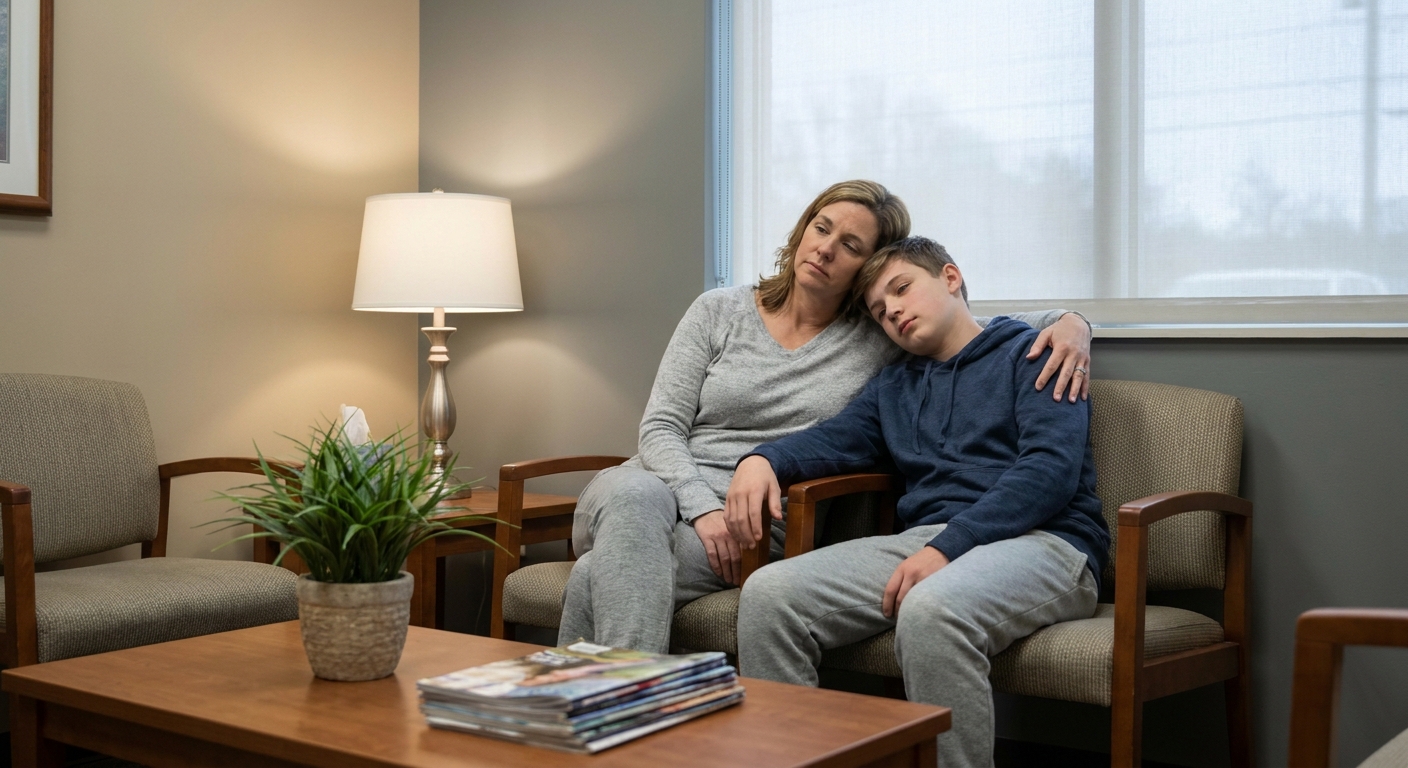
When families compare virtual and in-person, they often focus on what their teen prefers. That matters. But the format also needs to match the adults’ capacity to keep it running.
Virtual can reduce
- Commute time and gas costs.
- Time off work for driving.
- After-school logistical juggling for siblings.
Virtual can increase
- Time spent troubleshooting tech and internet issues.
- Pressure to supervise at home during sessions, if required.
- Conflict about camera rules, participation, or privacy.
In person can reduce
- At-home privacy concerns.
- Distraction and avoidance.
- The sense that treatment is just “more screen time.”
In person can increase
- Transportation demands and scheduling stress.
- Late-day exhaustion, especially if the program runs long.
- Coordination with custody schedules when parents live separately.
If your teen splits time between homes, you may also appreciate: Therapy for a Teen in Two Homes.
Safety and crisis planning
With in-person IOP, staff are physically present. With virtual IOP, staff are relying on what they can see and what your teen reports. That does not make virtual unsafe, but it does mean the crisis plan needs to be crystal clear.
Ask both formats these questions
- How do you assess risk day to day?
- What happens if my teen refuses to participate?
- What is your protocol if my teen disconnects suddenly? (Especially important for virtual.)
- Who do you call first in an emergency?
- What level of parental supervision do you expect after sessions?
If your teen is having thoughts of self-harm, is using substances heavily, or cannot stay safe between sessions, ask the program directly whether IOP is the right level of care right now. Sometimes the right next step is a higher level of support, at least temporarily.
And if you are trying to understand who is who on the care team, this can help: Psychiatrist vs. Therapist for a Teenager.
Tech and location rules
Technology basics
Virtual care sounds simple until it is not. Before you commit, ask what the program expects: a stable internet connection, a device with a working camera and mic, and a private space. If your family does not have reliable tech, ask whether the program has workarounds, like offering an on-site room for virtual groups, helping you problem-solve low bandwidth, or adjusting expectations temporarily.
Where your teen is located matters
For virtual IOP, licensing rules often require your teen to be physically located in a state where the program is allowed to provide care. That can affect travel, school breaks, and switching between households across state lines. Ask upfront: “Can my teen attend if we are temporarily out of state?” and “What happens if custody exchanges cross state lines?”
Privacy and records
Reputable programs typically use HIPAA-compliant platforms, but it is still worth asking specific questions about confidentiality, recordings, and what shows up in portals and insurance statements.
What to ask a virtual IOP
- Do you record any sessions, groups, or skills classes? If so, why and who can access them?
- What platform do you use, and is it designed for healthcare privacy?
- What are your rules about teens using chat during group?
- How do you handle other participants’ privacy in a group setting?
For many parents, the surprise is how much can show up on an insurance explanation of benefits. This is worth reading before you decide: What a Teen Therapy Insurance Statement Shows the Family.
How to choose
When everything feels urgent, decision-making gets mushy. A small structure helps.
- List two non-negotiables for your teen. Examples: “I can do it only if it’s after school,” or “I cannot talk about this at home on camera.”
- List two non-negotiables for the adults. Examples: “We cannot drive across town four days a week,” or “An adult cannot be home every afternoon.”
- Ask the program how they handle your non-negotiables. Get answers in writing when possible, like via the intake email summary.
- Choose the option with fewer daily failure points. Not the option that sounds best on paper, the one your family can realistically execute.
What to say to your teen
Teens often hear “IOP” and think: I’m in trouble, I’m broken, I’m being controlled. You can lower the temperature by framing the decision as a practical fit question.
Script: collaborative and calm
“We’ve been offered the same level of support in two formats: online or in person. I’m not asking you to convince me you’re fine. I’m asking you to help me pick the version you can actually do. What would make it easier to show up and participate?”
Script: when your teen wants virtual for privacy
“I hear that doing this from home feels safer. My worry is that the screen will make it easier to check out. If we try virtual, can we agree on a setup that gives you privacy and also helps you stay present, like headphones, door closed, and camera on?”
Script: when your teen refuses in person
“I’m not going to force you to pretend this is easy. We still need real support in place. If we start virtually, we will review in two weeks whether it is working. If it’s not, we will revisit in person. We are choosing steps, not forever.”
If it is not working
Families sometimes think switching formats means they failed. More often, it means you got new information.
If virtual is not going well, common signs include frequent disconnections, camera refusal, multitasking, or your teen reporting it is not helping. If in person is not going well, you might see escalating dread, refusal to get in the car, or behavior that worsens after groups because the day is simply too much.
You can ask the program: What would you change first, before we switch? Then set a short trial period. If you need help assessing progress, this can support your next conversation: How to Tell if Teen Therapy Is Helping.