

If you are deciding between a mobile crisis team and the emergency room for your teen, you are already doing something brave. You are taking distress seriously, even if your teen is minimizing it or you are second-guessing yourself.
Here is the simplest way to choose: go to the ER or call your local emergency number if there is immediate danger or you cannot keep everyone safe right now. “Immediate danger” can look like active self-harm, a suicide attempt, an overdose or unknown ingestion, access to a weapon during threats, severe aggression you cannot contain, or any situation where supervision is not enough.
If your teen is in crisis but seems medically stable and you can keep the environment safe while you wait, a mobile crisis team may be able to assess your teen where they are and help you make a next-step plan.
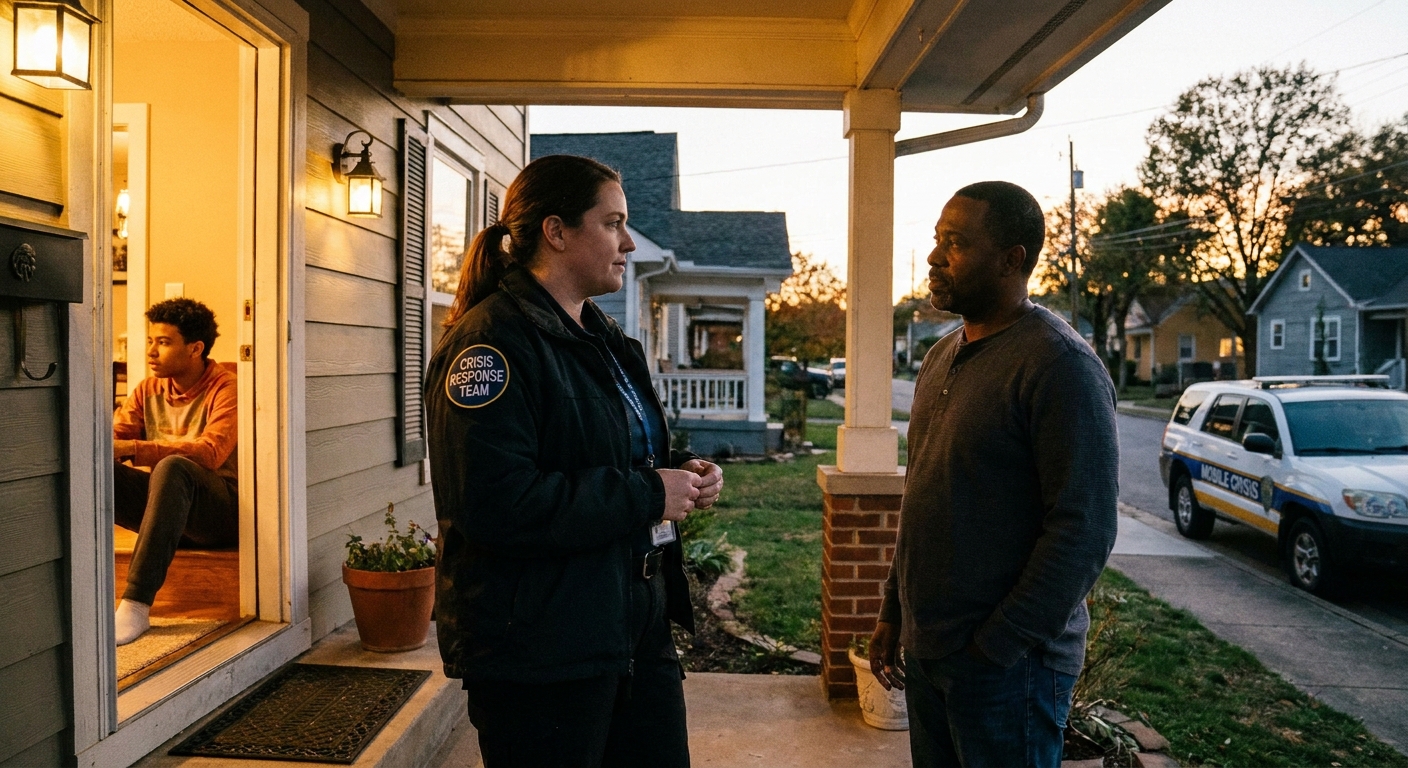
What a mobile crisis team is
A mobile crisis team is often a community-based behavioral health response that can come to your home, school, or another safe location. In some areas it is run through a county system, a hospital, or a nonprofit. Some places route requests through a local crisis line, and in many U.S. communities, calling 988 can connect you to local crisis services and help you figure out what options exist where you live.
The goal is to assess what is happening, reduce immediate risk, and help you decide what level of care makes sense next.
Depending on your area, the team may include a licensed clinician, a case manager, a nurse, and sometimes a peer support specialist. Some teams can consult with an on-call psychiatrist by phone or video, but many do not prescribe. Mobile teams also typically do not carry or dispense medications in the field.
What a mobile crisis team can do
Assess safety and level of risk with both you and your teen, usually through conversation and observation.
De-escalate and help everyone get back to a steadier baseline.
Create a safety plan for the next 24 to 72 hours, including who to call, where to go, and what to change at home to reduce risk.
Help you decide next steps, such as urgent outpatient follow-up, a next-day crisis clinic, or going to the ER if the situation is beyond what can be managed at home.
Make referrals to community services and sometimes help schedule follow-up.
What a mobile crisis team may not be able to do
Provide medical testing or rule out medical causes for symptoms.
Guarantee immediate placement in a hospital bed or program.
Start weekly therapy immediately. They can refer you, but ongoing therapy is a separate process.
Make your teen participate in most situations. If risk is high, the team may recommend or help coordinate a higher level evaluation. Involuntary evaluation processes vary a lot by location and may involve designated responders, physicians, or law enforcement.
What the ER is best for
The ER is designed for urgent medical evaluation and stabilization. That matters because teen mental health crises can overlap with sleep deprivation, substances, medication issues, injuries, panic symptoms that mimic medical problems, and other conditions that need medical screening.
If your teen is not safe, is severely agitated, is disoriented, has taken something unknown, or you are seeing symptoms that could be medical, the ER is usually the clearest choice.
Go to the ER now if
There is an overdose, poisoning, or unknown ingestion, even if your teen seems “fine.”
There is loss of consciousness, fainting, seizure-like activity, or trouble breathing.
There is severe intoxication, a head injury, significant self-harm wounds, or any injury that needs medical attention.
There are signs of psychosis with unsafe behavior, extreme agitation, or confusion you cannot manage safely at home.
There are weapons involved or threats with means and opportunity.
You cannot provide safe supervision for the next few hours.
What the ER can do
Medical screening, including vital signs, labs, and evaluation for medical concerns when indicated.
Immediate safety measures in a controlled setting.
Psychiatric evaluation, often by an on-call clinician or psychiatrist, sometimes via telepsychiatry.
Medication support when clinically appropriate and available.
Coordinate admission if inpatient psychiatric hospitalization is needed and a bed is available.
What the ER often cannot do well
This is not because staff do not care. It is because emergency systems are built for stabilization, not continuity.
Provide a quiet, therapeutic environment. Waits can be long and the setting can be overstimulating.
Offer detailed family therapy or a deep dive into long-term patterns.
Start weekly therapy immediately. Discharge planning varies widely by hospital and community resources.
One practical reality to know about: if your teen needs a psychiatric bed and none are open, many ERs keep patients in the ER (often called “boarding”) while placement is arranged. That wait can be hours or, in some regions, longer.
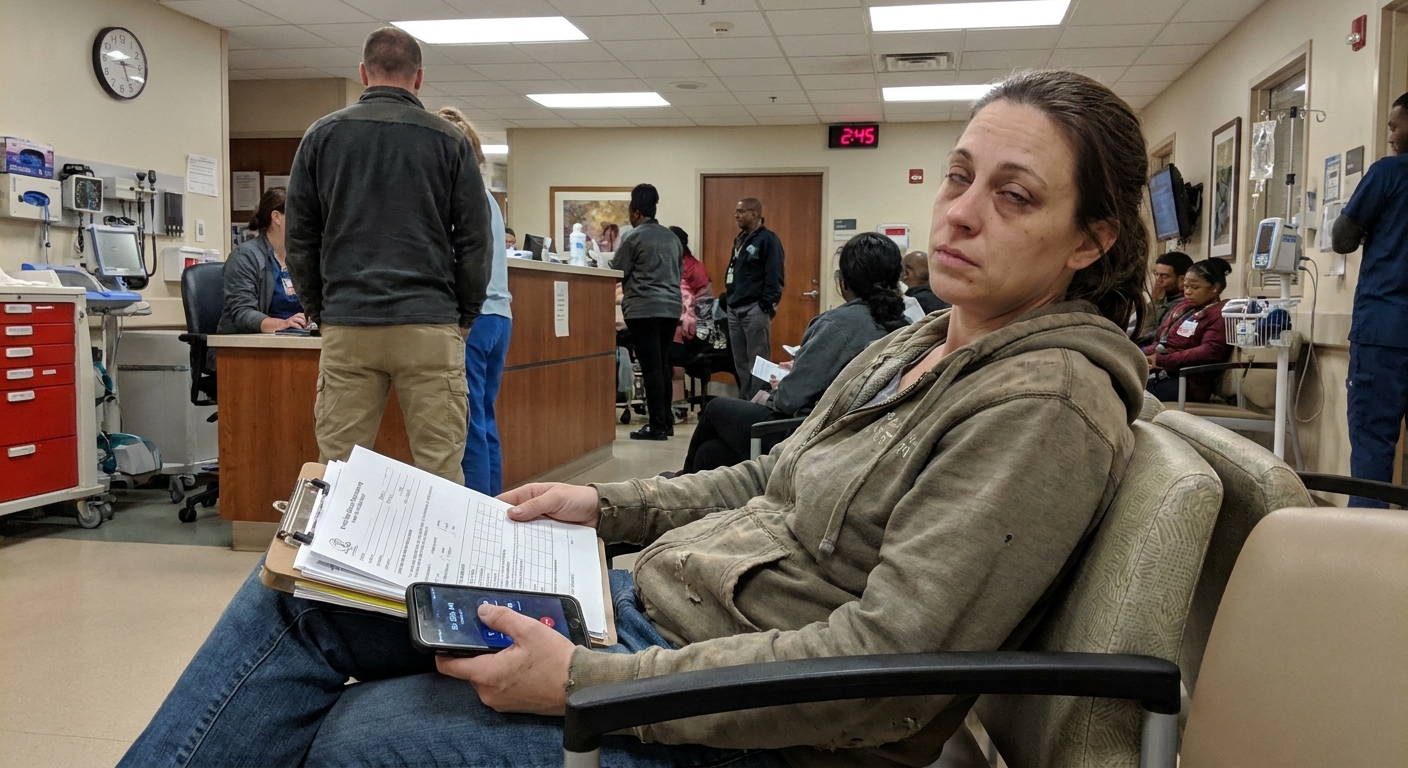
How to decide fast
When you are scared, your brain wants certainty. Most families do not get certainty. You get a best next step, chosen with the information you have.
Start with safety: Can you keep your teen and everyone else safe for the next few hours?
Check for medical concerns: Are there concerning physical symptoms, or are you not sure what is going on physically? (Examples: trouble breathing, loss of consciousness, severe intoxication, head injury, unknown ingestion.)
Consider cooperation: Will your teen talk with a clinician at home, or is the conflict escalating?
Think about the environment: Would leaving the house make things worse, or would it reduce volatility?
Choose the option that reduces risk fastest: Not the perfect option, the safest one.
Mobile crisis tends to fit when
Your teen is distressed but seems medically stable, meaning there are no red-flag physical symptoms and no known ingestion or injury that needs medical evaluation.
You can supervise and maintain a safer environment while you wait.
Your teen is more likely to talk at home than in a hospital setting.
You need help de-escalating and making a plan for the next day or two.
The ER tends to fit when
You believe there is immediate danger or you cannot maintain safety.
There may be medical involvement or you need medical clearance.
Your teen is so escalated that a home visit cannot safely contain the situation.
You need the fastest path to a higher level of care evaluation.
What it feels like
Parents often ask me this because the unknown adds panic. Here is the real-life version, with the important caveat that every community runs differently.
Mobile crisis: more like a home visit
Expect a conversational assessment. They may ask to speak with your teen alone for part of the time, then bring you back in to discuss safety planning.
Many teams are skilled at meeting teens where they are. Some teens will talk more freely at home. Others feel invaded by a visit. Both reactions are common.
ER: more like medical intake plus psych consult
Expect triage first. Depending on staffing and volume, you may wait for the psychiatric portion after medical screening.
ER care can feel procedural. That is not coldness. It is the system doing what it is built to do: stabilize and assess for next level of care.
How to reach mobile crisis
Because this is the part families get stuck on at 2 a.m., here is the simplest way to try.
If you are in the U.S., calling 988 can connect you to the Suicide and Crisis Lifeline, and in many places they can help route you to local mobile crisis or other urgent supports.
Some counties or regions have their own crisis line separate from 988. If you already know that number, use it. If you do not, 988 can often help you figure out what exists where you live.
If there is immediate danger, call your local emergency number rather than waiting for a mobile response.
What to bring and say
In crisis, details fly out of your head. A short “just-the-facts” summary helps both a mobile team and an ER clinician.
Bring (or have ready)
Insurance card and ID if you have them.
A list of current medications, supplements, and dosages.
Names and contact info for current providers if any.
Any relevant diagnoses or school supports (IEP/504) if applicable.
A charged phone and a charger.
Comfort items if your teen will tolerate them, like a hoodie or fidget.
A simple script
To the clinician: “I am worried about my teen’s safety tonight. Here is what I’m seeing, here is what changed recently, and here is what I have tried at home.”
To your teen: “I’m not punishing you. I’m getting you support. We can talk about privacy and next steps after we know you are safe.”
If your teen refuses to go, you might also like: Should You Require Your Teen to Attend Therapy?
What neither option does
I want to say this clearly because it trips families up. A mobile crisis visit and an ER visit are urgent interventions. They are not the same thing as starting ongoing weekly therapy.
You may get referrals, a discharge plan, or a recommendation for outpatient therapy, family therapy, a day program, or inpatient care. But the scheduling, matching with a provider, insurance approvals, and follow-through still tend to land on the family after the immediate crisis has stabilized.
If you need help figuring out what ongoing care could look like, these can help next:
Privacy basics
One of the hardest parts of teen crisis care is realizing you may not get every detail. Clinicians often aim to balance teen confidentiality with parent involvement and safety planning.
You can always ask, and clinicians will share what they can:
“What are the safety concerns you are monitoring?”
“What should I watch for tonight and over the next few days?”
“What is the plan if things escalate again?”
For a deeper look at what therapists can share with parents, see What Can a Therapist Share With Parents of a Teen?
After the crisis
The day after an ER visit or a mobile crisis visit can feel like an emotional hangover for the whole household. You do not need a perfect plan. You need a workable one.
Write down the names and recommendations you were given, even if they are incomplete.
Ask your teen one non-leading question: “What part of last night felt worst for you?” then pause.
Reduce stressors for 24 hours if you can: fewer debates, fewer lectures, more quiet supervision.
Make one call to schedule follow-up, even if the first appointment is weeks out.
Tell the school what they need to know to support safety and attendance, without oversharing. See What to Tell the School When Your Teen Starts Therapy.
If police show up
Sometimes a crisis escalates fast, or the only available way to transport a teen safely involves law enforcement. If this is a possibility where you live, it can help to know you are allowed to advocate in the moment.
If you call for help, you can say: “This is a mental health crisis with a teen. Is a crisis-trained team available?” If the answer is no, keep your requests simple and safety-focused: fewer people in the room if possible, slow and calm communication, and clear instructions. Your job is not to manage the whole system. Your job is to keep everyone as safe as you can until the right care takes over.
FAQ
Is calling a mobile crisis team serious enough?
If you are worried about safety, you are not overreacting. Mobile crisis exists for exactly that grey-zone moment when you know something is wrong, but you are unsure whether the ER is necessary.
Will mobile crisis automatically send my teen to the hospital?
Not automatically. Their job is to assess risk and recommend the safest next step. If they believe risk is high or safety cannot be maintained at home, they may recommend the ER or help coordinate a higher level evaluation depending on local rules.
Will the ER admit my teen?
Sometimes, but not always. Admission usually depends on clinical criteria, bed availability, and the evaluation findings. Many teens are discharged with follow-up recommendations if the team believes they can be safe with supervision and a plan.
What if my teen refuses to talk?
This happens often. Clinicians can still assess through observation, your report, and brief check-ins. You can help by staying calm and sticking to simple language: “You don’t have to explain everything. We just need to make sure you are safe.”
What if we are in two households?
If co-parenting is part of your situation, clarify who has legal authority to consent and who can be contacted. This article may help you think through logistics: Therapy for a Teen in Two Homes.