The move to college can scramble a therapy routine that was finally working. The good news is your teen usually has more than one solid path forward: staying with their current therapist by telehealth (when allowed), switching to campus counseling, or setting up a local provider near school.
What matters most is continuity. If your teen is doing well in therapy, try to plan the handoff before move-in week, not after the first crisis hits.

Start with your teen’s preference
Before you compare programs and policies, ask your teen what feels most doable. The best plan is the one they will actually use when things get hard.
Try something like:
“College is a big change. Do you want to keep seeing your therapist from home if we can, try campus counseling, or find someone near school? We can pick the easiest first step and adjust later.”
If they shrug or shut down, offer two choices instead of three. Decision fatigue is common during senior year and the first weeks on campus.
Campus counseling vs your current therapist
Here is the honest tradeoff: campus counseling is convenient and designed for student life, while an established therapist offers relationship continuity and deeper long-term work. Many students use both at different times.
When campus counseling can be a great fit
- On-campus access for urgent moments, especially if they live in a dorm and need support fast. Some centers offer urgent walk-in or same-day options, while others have limited slots or waitlists.
- Group options (anxiety groups, grief groups, social skills, DBT skills) that can be powerful and practical.
- Coordination with campus life, like academic stress, roommate conflict, and identity development.
- Lower cost for students, depending on tuition, fees, and how the center is structured.
When staying with the current therapist makes sense
- They finally trust this person, and starting over feels like too much.
- They are working on trauma, family systems, or long-term patterns that do not reset at move-in.
- They tend to minimize symptoms and need a therapist who already knows their tells.
- They want privacy from campus and prefer off-campus care.
A middle path that works for many students
Some teens keep their therapist as the “home base” and use campus counseling as an add-on for urgent support, groups, or skill-building. This can be especially useful during midterms, finals, breakups, or roommate stress, which tend to show up right on schedule.
Telehealth out of state
Many parents assume, “We can just do Zoom.” Sometimes you can. Sometimes you cannot.
Therapy licensure is largely state-based, and the rules often depend on where the student is physically located during the session. If your teen is attending college in another state, the current therapist may not be able to treat them while they are sitting in that state, even if everyone agrees it would be easier. Rules vary by state, license type, and whether the therapist has specific permissions to practice across state lines, so it is worth asking directly.
What to ask the current therapist now
- Can you see my teen by telehealth while they are in another state?
- If not, can you see them only when they are physically back home (school breaks and summers)?
- Do you have any interjurisdictional practice options that would make this possible?
- What is your recommended care plan for the first semester based on my teen’s history?
Telehealth privacy in a dorm
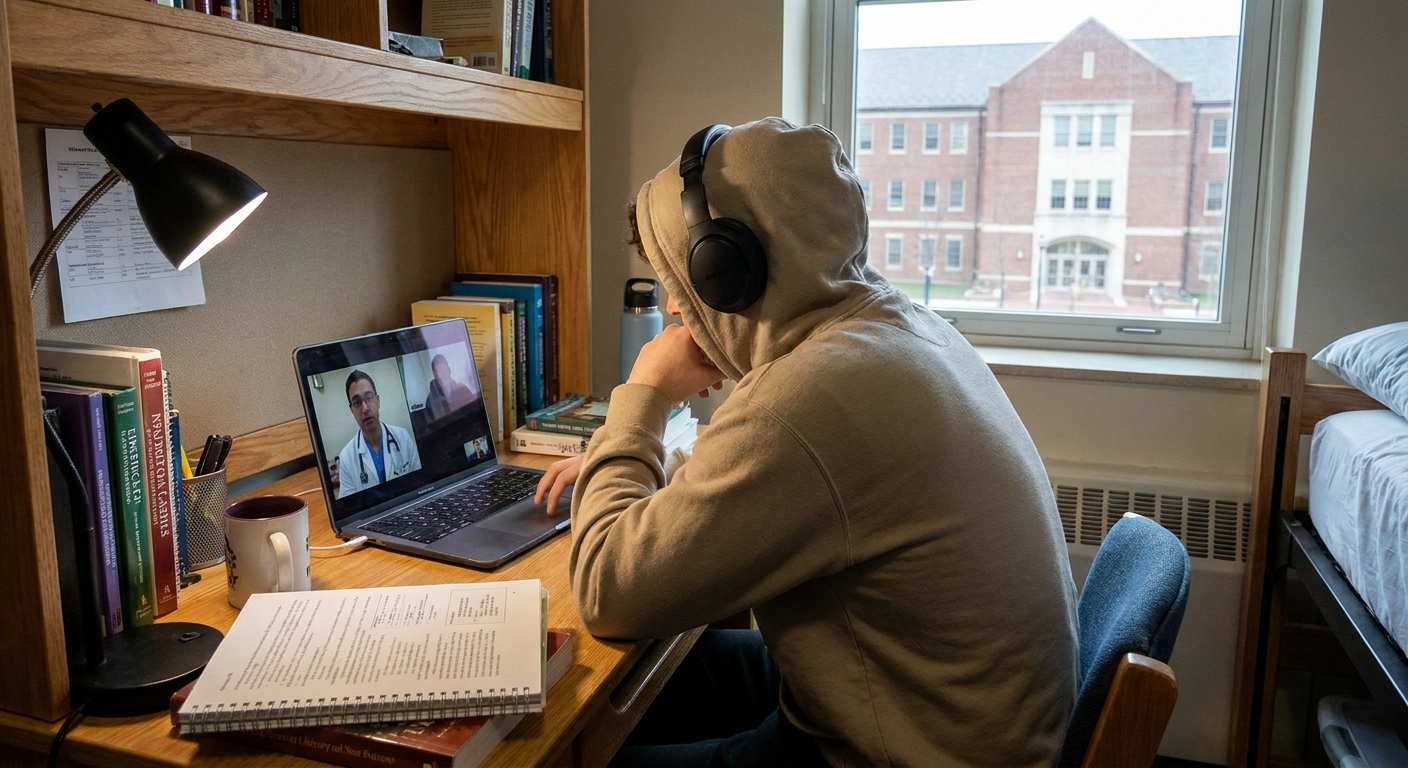
Even when telehealth is allowed, privacy can be the real obstacle. Help your teen brainstorm a plan: a reserved study room in the library, a quiet corner in a student center with headphones and a white-noise app, a walk outside, or scheduling sessions when a roommate is in class. The goal is a space where they can talk without whispering or censoring themselves.
Plan around the school calendar
College schedules are unpredictable. A therapy plan that ignores midterms, finals, and long stretches without breaks is the plan most likely to disappear.
Common scheduling options
- Weekly for the first 6 to 8 weeks, then reassess once routines settle.
- Every other week plus “booster” weeks during high-stress times.
- Standing appointment time (same day and time) to reduce decision-making.
- Break-based therapy (sessions only when home) plus campus counseling during the semester.
If you are unsure what “enough” looks like, this can help: Weekly therapy vs a day program for your teen. The needs are different, but the way you think about intensity and support transfers well to college planning.
Insurance and logistics
Therapy plans can fall apart for boring reasons, not emotional ones. A little logistics work now saves a lot of stress later.
- Check coverage near campus. Ask your insurer whether there are in-network therapists in the school area and whether telehealth is covered when your teen is out of state.
- Clarify out-of-network options. If you will pay out of pocket, decide what is realistic for the semester.
- Know the practical details. Does your teen need their insurance card, a photo of it, a portal login, or a way to submit claims?
- Ask about visit limits. If your plan caps therapy sessions, it helps to know early. If this is a concern, read What to do when insurance limits teen therapy visits.
Medication planning
If your teen takes psychiatric medication, continuity needs a medication plan too. Ideally, do this before they are down to the last refill.
- Ask the prescriber how refills work when your teen is away at school, including what happens if the prescription is a controlled substance.
- Decide who will handle follow-ups: campus health, a local prescriber near school, or the current prescriber if they can legally continue care across state lines.
- Put pharmacy details in one place: the campus-area pharmacy address, phone number, and transfer process.
If you are weighing prescriber options, this overview can help: Psychiatrist vs therapist for a teenager.
Records, releases, and parent updates
When your teen goes to college, your role changes. That can feel tender, especially if you were the one scheduling, driving, paying, and gently nudging them through the door.
Even when you are paying, a college-age teen may control what information is shared. Many therapists cannot update parents without the student’s written permission. Confidentiality rules can also vary depending on age, state law, and whether care is provided through a private provider or through a campus clinic with school record policies.
What your teen can sign (if they choose)
- Release of information so the therapist can coordinate with a campus counselor or a new local provider.
- Limited parent release that allows the therapist to share safety concerns or high-level themes, not session details.
- Emergency contact permissions and a plan for when the therapist would reach out.
If you want to understand what therapists can and cannot share with families, read: What can a therapist share with parents of a teen?. The rules shift with age and setting, but the privacy principles are similar.
A simple transition plan
You do not need a perfect plan. You need a written one that your teen can follow on a bad day.
- Decide the “first semester provider.” Current therapist (if allowed), campus counseling, or a local therapist near school.
- Schedule the first appointment now. Ideally it lands within the first 2 to 3 weeks on campus.
- Ask about urgent and after-hours options. How to get help the same day, after hours, and what to do if they feel unsafe.
- Complete releases. Provider-to-provider coordination, and any limited parent release your teen is comfortable with.
- Make a “when it gets hard” list. 3 coping actions, 2 people to text, 1 place to go on campus.
If campus counseling is limited
Some campus counseling centers cap the number of individual sessions or focus on short-term care. That does not mean your teen cannot get meaningful support. It just means you may need a two-layer plan.
Questions your teen can ask
- How long is the typical wait for a first appointment?
- Do you offer urgent visits, and how do I access them?
- Do you offer groups (anxiety, depression, DBT skills, grief, social connection)?
- Do you refer students to community therapists, and do you keep a list?
- What happens if I need longer-term weekly therapy?
If you are already worried about access, you may also want: What to do while your teen is on a therapy waitlist.
What helps parents (without taking over)
This is the tightrope: you want to keep them safe, and they need to feel like their life belongs to them. The goal is supportive structure, not surveillance.
Low-pressure support you can offer
- Logistics help: “Want me to sit with you while you email the counseling center?”
- Money clarity: explain what insurance you have, what you can cover, and what you cannot, without shame.
- Routine check-ins: a weekly call that is not only about grades or therapy.
- Language for hard moments: help them practice what to say when asking for support.
If conversations about mental health tend to go sideways fast, try a calmer approach from: 10 strategies to improve communication with your teen.
Scripts that respect independence
- Support offer: “Do you want comfort, problem-solving, or just company while you figure it out?”
- Gentle nudge: “I noticed you have not mentioned therapy in a while. Is the plan still working, or do we need a new one?”
- Boundary plus care: “I will not track your appointments, but I do want us to have a plan for what you will do if you feel unsafe.”
When to level up care
Most college transitions are bumpy, not dangerous. Still, if your teen is deteriorating quickly, missing large amounts of class, not sleeping for days, using substances heavily, or talking about not wanting to live, it is time to escalate support.
Options can include urgent campus services, evaluation by a psychiatrist, or more structured treatment. These overviews may help you think clearly:
If your teen refuses therapy
This happens more often than parents expect, even for teens who benefited at home. Sometimes it is avoidance. Sometimes it is a clumsy attempt at independence. Sometimes they are genuinely doing better and want a break.
Your most effective next step is usually curiosity plus a smaller ask.
- “Was therapy not helping, or is it just too hard to fit in right now?”
- “Would you be open to one check-in session this month, just to reassess?”
- “If you do not want therapy, what support would you use instead when stress spikes?”
If they stopped in the past and you are trying to re-open the door, this may help: How to invite your teen back after they stop therapy.
Frequently asked questions
Should my teen switch therapists before college?
Sometimes, yes, especially if telehealth will not be allowed once they are out of state. But if your teen is attached to their current therapist, it can be gentler to keep that relationship through the summer and plan a warm handoff to a campus or local provider right after move-in.
Can my teen do therapy only during breaks?
They can, and it is better than nothing if it is the only feasible option. The risk is that many of the hardest moments happen mid-semester. Consider adding a campus counseling connection or a local provider near school so they have support when they are actually there.
How do we know if therapy is working at school?
Look for functional signs rather than perfect happiness: they recover from stress a bit faster, they reach out for help sooner, and crises are less intense or shorter. If you want more concrete markers, see How to tell if teen therapy is helping.
What if they feel worse after starting therapy again?
Some people feel more raw early on because they are finally naming things they have been avoiding. But worsening can also mean a poor fit, the wrong intensity of care, or a mismatch between therapy style and what they need right now. This guide walks through next steps: What to do if your teen feels worse after starting therapy.
A last word for the parent
Launching a teen who has struggled can stir up a very specific kind of fear, the quiet, vigilant kind that sits in your chest while you smile and fold the extra towels. If that is you, you are not overreacting. You are adjusting to new distance while still caring deeply.
Your job is not to control the transition. Your job is to make sure your teen knows what help looks like and how to reach it, even on a messy day.