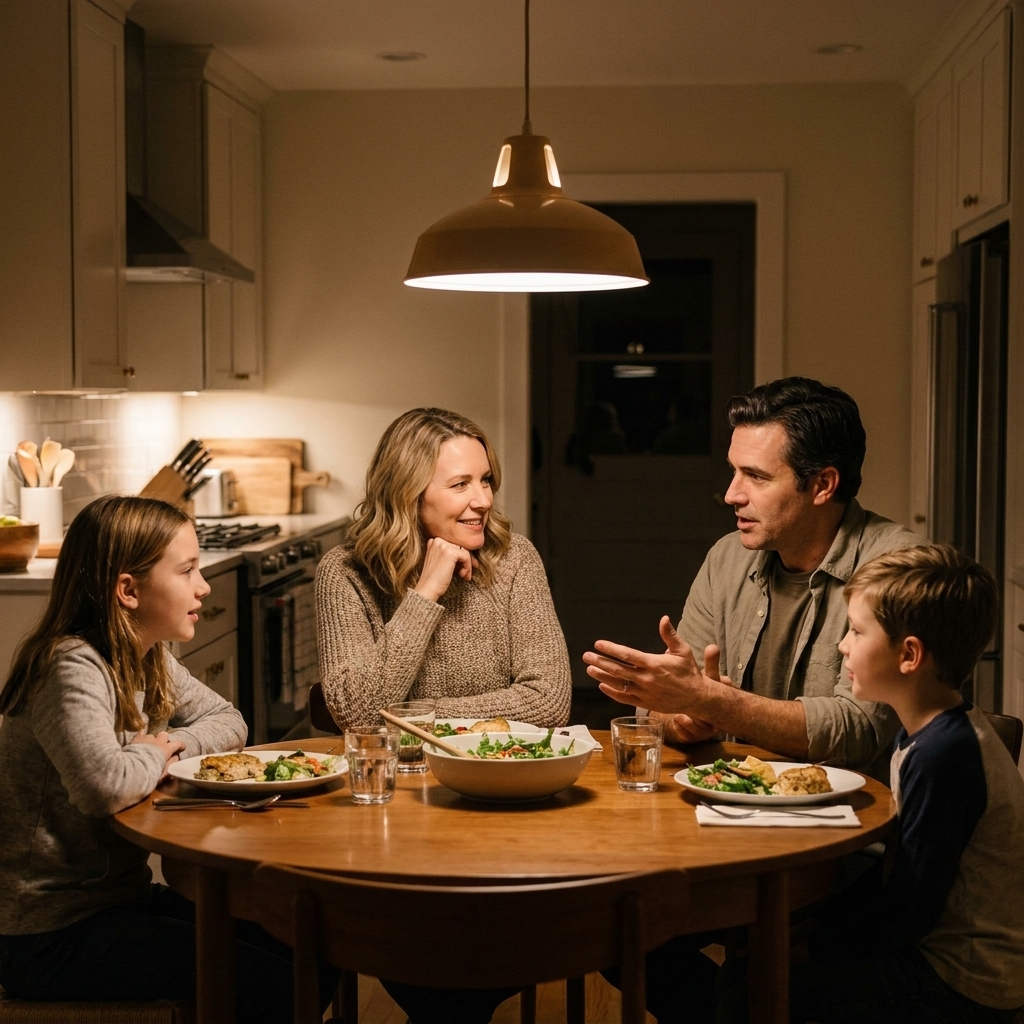
Blended families do not struggle because anyone is “bad at rules.” They struggle because everyone walks in with a full set of invisible norms: bedtime, phone use, snack freedom, tone of voice, what counts as respectful, and what happens when someone breaks trust. Then one day, a parent says, “New house rule,” and a kid hears, “New boss.”
The goal is not to create a household that runs like a military drill. The goal is to create enough shared expectations that your home feels predictable, fair, and emotionally safe for everyone. Especially the kids who did not ask for any of this.
This is general guidance. Your family’s best plan may look different, especially if you are navigating trauma, abuse concerns, or court orders.
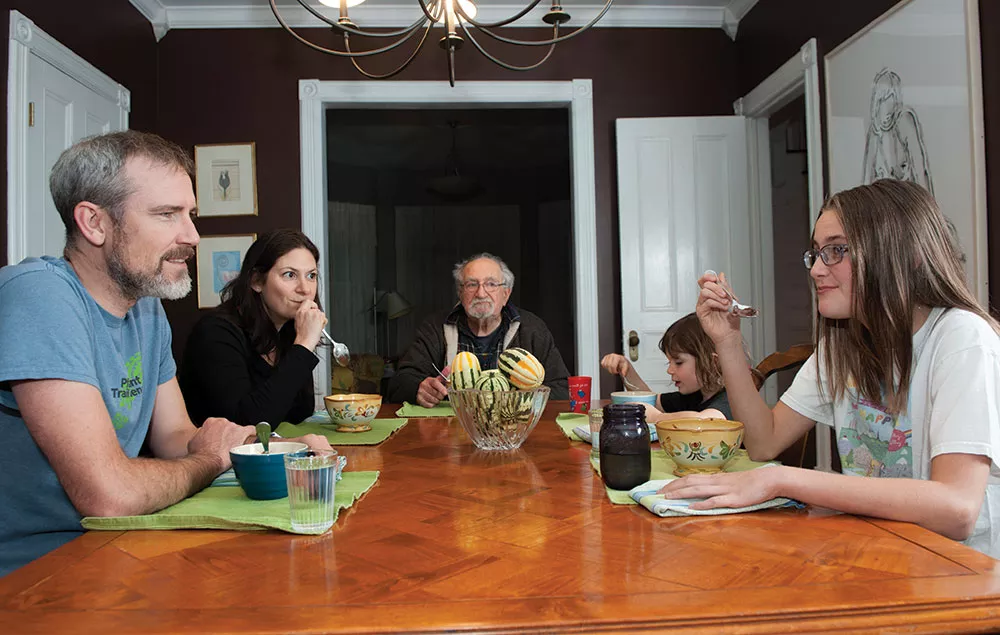
What rules are for
In my work with families, I often ask adults to finish this sentence: “Rules exist to protect…” If the only honest answer is “my sanity,” that is understandable, but it is not a shared mission. Many kids do not buy into rules that feel like adult convenience dressed up as morality.
Strong blended-family house rules tend to do three things:
- Create safety. Physical safety, online safety, emotional safety.
- Create belonging. Everyone knows what to expect and how to succeed.
- Reduce loyalty binds. So kids do not feel like adapting to this home means betraying the other parent or the other household.
If you keep those three purposes in view, you will usually set fewer rules, enforce them more consistently, and argue about them less.
Align as adults first
If you are parenting with a partner and you are not aligned, the kids will feel it quickly. Not because they are manipulative masterminds, but because they are excellent emotional forecasters. They can sense pressure in the room.
Make an authority map
In many blended families, the biggest landmine is not the rule itself. It is who gets to enforce it.
- Clarify roles. Is the stepparent enforcing day-to-day rules, or mainly supporting the biological parent at first?
- Decide how corrections happen. Many families do best when the biological parent handles major consequences early on, while the stepparent focuses on relationship-building and gentle reminders.
- Agree on a public phrase. Something like: “We are going to talk about it and get back to you.” This prevents on-the-spot disagreements that become instant wedges.
Pick a short non-negotiable list
Every home needs a few non-negotiables. Keep the list short and sturdy. Think: physical aggression, harassment, sneaking out, substances, online sexual content safety that fits your child’s age and local law, and anything tied to medical needs or legal custody agreements.
If firearms or other weapons are part of your household or culture, make safe storage and handling a non-negotiable and follow local laws and best practices.
Everything else can be phased in and negotiated.
Sort what matters
When two households merge, you usually have a mix of value differences and habit differences. You will burn a lot of energy if you treat every difference like a moral issue.
A quick sorting exercise
- Safety rules: seatbelts, pool safety, medication, internet privacy, teen curfews.
- Respect rules: no name-calling, no slamming doors, ask before borrowing.
- Function rules: chores, cleanup, laundry rhythm, where backpacks go.
- Preference rules: shoes in the house, snack timing, bedtime wind-down style.
Start with safety and respect. Delay most preference rules until your family has more trust in the bank.
To make online safety less vague, choose a few concrete expectations you can actually enforce: what gets posted about kids, location sharing settings, what apps require a parent’s approval, and what happens if someone receives a concerning message.

Introduce rules calmly
If you announce rules like a billboard, you will get billboard-sized resistance. Instead, introduce rules like you are building a shared home, because you are.
Step 1: Name the transition
Kids often settle when adults state the obvious: “We are still learning how to live together. We want this home to feel fair and calm for everyone.”
This is not a speech. It is a tone.
Step 2: Ask for input
Input is not the same as voting. A helpful script:
“We are going to set a few house rules so things feel predictable. You get a say in what helps, and we will decide the final version as the adults.”
This reduces the bait-and-switch feeling: “Why did you ask me if you were just going to do what you wanted?”
Step 3: Use a starter set
In the first few months, aim for 5 to 8 rules max. If you need 25 rules, what you actually need is a calmer pace and more adult alignment.
Here is a sample starter set you can literally post on the fridge:
- We speak respectfully. No insults, threats, or mocking.
- We knock before entering bedrooms.
- We ask before borrowing.
- Devices follow a clear schedule. Especially at night.
- Shared spaces get reset daily. Ten minutes beats a weekend blowup.
- Conflict has a repair plan. Cool down, talk, make it right.
Step 4: Give the why in one line
Not a lecture. One sentence.
- “We knock because everyone deserves privacy.”
- “Phones charge in the kitchen because sleep matters and the internet is too big at 1 a.m.”
- “We reset shared spaces because everyone lives here, not just the person with the loudest opinion.”
Step 5: Run a 30-day trial
This is a strong pressure-release valve. Frame it as a test, not a forever identity.
“Let’s try this for 30 days and then revisit what is working and what is annoying.”
Many kids get less oppositional when they believe the system can change.
For your 30-day check-in, keep it simple. Three questions is enough:
- What feels more fair or calmer now?
- What keeps tripping us up?
- What is one small tweak we will try next?
Who decides what
In a blended family, “fair” is tricky. Equality is not always fairness, and consistency across households is not always possible. The aim is predictability and transparency.
Use three lanes
- Adult-only lane: safety rules, legal and custody boundaries, medical issues, finances, who lives where.
- Shared lane: routines that affect everyone, like quiet hours, chores, device charging, shared-space cleanup.
- Kid lane: bedroom setup, clothing style, hobby time, and some scheduling preferences, within reason.
When a kid pushes back, you can calmly place the issue in its lane: “That is adult lane. I hear you, and it is still adult lane.” This ends debates that never end.
Prevent resentment
Kids track fairness the way accountants track receipts. They notice everything, including what you hoped they would not notice.
Common traps
- Different standards for biological kids and stepkids. This can happen unintentionally, especially if a stepparent is stricter with a stepchild, or a biological parent is softer with their own child out of guilt.
- Different standards by age, without explanation. Teens get later bedtimes. That is normal. Say it plainly.
- Rules used as a proxy for grief. Kids sometimes fight rules because they are grieving the old family structure. The rule is just the safest target.
Reduce the “why do they get to” spiral
- Use principle-based rules. “Everyone’s devices charge outside bedrooms” is easier to defend than “Because I said so.”
- Explain age differences upfront. “When you are 14, we will revisit curfew.”
- Give each child a win. If one kid loses late-night gaming, let them choose Friday dinner. Small autonomy reduces big backlash.

Two-household reality
Many blended families live with transitions between homes. You may not be able to control what happens in the other household, and trying to often creates more stress than it solves.
A realistic goal
Instead of insisting that both homes match perfectly, focus on a few shared principles:
- Safety and supervision
- Respectful communication
- School responsibility
- Basic sleep protection
If co-parenting communication is possible and safe, keep it short and practical. “At our house, phones charge in the kitchen at night. Just letting you know, no need to mirror it.”
If there is a custody order or parenting plan, let it be the guardrail. Do not put kids in the middle as messengers or negotiators. Keep adult conflict adult.
Transition days need less
The day a child arrives back can feel like emotional jet lag. Consider a lighter load for the first few hours: simple dinner, predictable routine, minimal lectures. You can enforce boundaries without turning the reunion into a correction marathon.
Chores and money
Chores: visible and time-limited
Chores tend to go better when they are:
- Specific. “Empty dishwasher” beats “help more.”
- Timed. “Ten minutes after dinner” beats “whenever.”
- Matched to capacity. A teen can do laundry. A younger child can sort socks or wipe the table.
Also, be honest: your home is not a democracy, but it is a community. Kids still deserve voice and dignity, and communities need contribution.
Spending and “my parent lets me”
In blended families, money can become symbolic fast. A new rule about DoorDash or allowance can feel like “You are not my real parent.”
Try anchoring money rules to shared values:
- Transparency: “We do not do secret spending.”
- Equity: “We aim for comparable, not identical.”
- Repair: “If something gets broken, we talk about how to make it right.”
Consequences that teach
When a family is newly blended, harsh or intense punishments can backfire for many kids. They can strengthen the “you are not my parent” storyline and make the home feel less safe.
A simple ladder
- Reminder. “Try that again with a respectful tone.”
- Reset. Brief break, change of room, cooling off.
- Repair. Apology, replaced item, helping fix what was disrupted.
- Restriction. Short, connected to the behavior, and explained.
- Rebuild plan. For repeated issues: clear steps to earn back trust.
The earlier you can stay on the “repair” rung, the less you will need the “restriction” rung.
A blended-family nuance
Early on, it often works best if the biological parent delivers major consequences, with the stepparent present as calm support. Over time, as trust grows, enforcement can become more shared. Trust is the entry fee.
Age and development matter
For younger kids, rules work best when they are short, visual, and immediate. For teens, rules work best when they protect safety and sleep, and when you connect privileges to demonstrated responsibility. If your teen is arguing every rule into the ground, move the debate to a planned check-in, not bedtime.
If your child is neurodivergent
Many families get better results with fewer words and more structure: visual schedules, warnings before transitions, clear choices (“Do you want to clean up now or in five minutes?”), and consequences that are predictable and not sarcasm-based. Literal language helps. So does building in sensory breaks.
When rules blow up
Even well-designed rules can detonate. Sometimes because the rule is flawed, and sometimes because the moment is tender. Repair does not mean abandoning the rule. It means tending the relationship while you hold the boundary.
A three-part script
- Name the feeling: “I can see you are furious.”
- Hold the boundary: “The rule is still phones out of bedrooms.”
- Offer a path: “We can talk about what makes nights hard for you, and we can revisit the plan in our 30-day check-in.”
If you find yourself negotiating in the heat of the moment, pause. “We are not solving this while everyone is activated.”
When adults disagree
This is normal. It is also one of the most important places to slow down, because kids can feel when one adult is being undercut.
Keep it private
- Do not litigate in front of the kids. They will store it as evidence.
- Ask what the rule represents. Often it is not about shoes or screen time. It is about control, fear, guilt, or a need for respect.
- Choose one house, two perspectives. Your kids can tolerate difference. They struggle with chaos.
If disagreements keep repeating, consider a few sessions with a family therapist familiar with stepfamily dynamics. A neutral room can interrupt years of circular fights.
Safety escalations
Some situations are bigger than house rules. If conflict includes threats, physical violence, intimidation, self-harm talk, sexual abuse concerns, or credible fear for anyone’s safety, pause the rule debate and prioritize protection. Reach out to local emergency services, a crisis line, your pediatrician, or a qualified mental health professional. Safety comes first, and it is not something you troubleshoot alone.
FAQ
Should a stepparent set rules?
A stepparent can help shape household expectations, but early on it usually works best when the biological parent takes the lead on big rules and major consequences. A stepparent’s influence often grows fastest when the relationship feels safe and respectful, not managerial.
How soon should we change rules?
If possible, avoid sweeping changes in the first couple of weeks. Start with a small set of safety and respect rules, then revisit at 30 days. That review point matters. It signals that the system is responsive, not rigid.
What if the other household has different rules?
You can acknowledge the difference without criticizing the other parent: “Different houses have different rules. In this house, we do it this way.” Consistency inside your home is more achievable than consistency across homes.
What if one child follows rules and the other refuses?
First, protect the rule-follower from becoming the “easy kid” who gets ignored. Then look for what is underneath the refusal: grief, anxiety, loyalty conflict, neurodivergence, or a power struggle that has become the child’s way to feel in control. Keep consequences consistent, and increase connection and predictability.
A closing thought
In a blended family, rule-setting is rarely just about behavior. It is about belonging. If you can communicate, again and again, “You are safe here, you matter here, and we can learn this together,” the rules stop feeling like walls and start feeling like rails.
And if you have an evening where everyone melts down and dinner ends in slammed doors, you are not failing. Repair is not a detour from the work. Repair is the work.