

If your teen is struggling in school and someone suggests “testing,” it can feel like you have to pick the right door immediately. The truth is simpler: school evaluations are built to decide school eligibility and supports, while private psychological evaluations are built to answer clinical and learning questions in more depth.
This article will walk you through what each type of evaluation is for, who pays, who gets the report, and what the results can and cannot change at school.
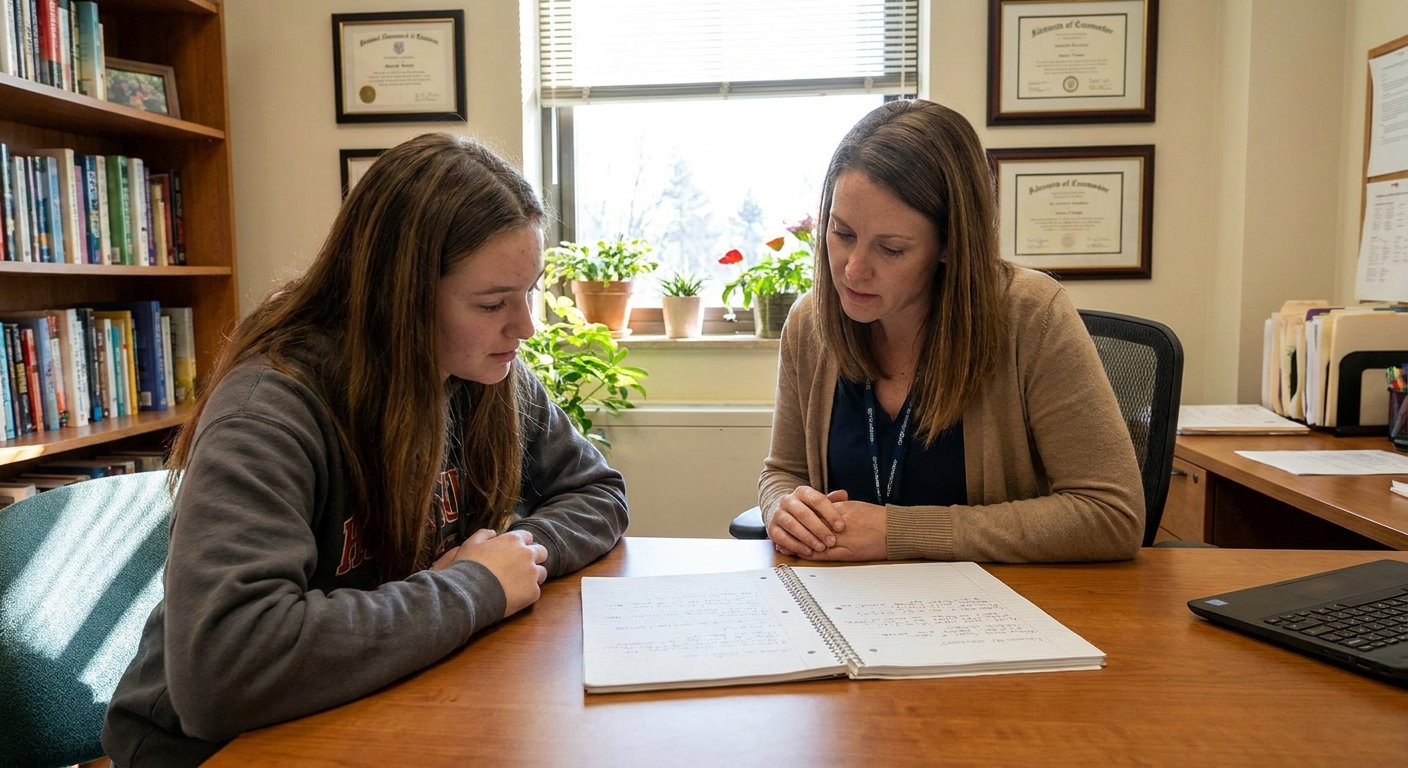
Quick answer: what each is for
School testing (a school evaluation) is designed to answer: Does this student qualify for special education under IDEA, or for accommodations under Section 504, and what supports will the school provide?
In many districts, the same team may discuss both IEP and 504 needs. In other districts, the 504 process is separate and may rely more on records, observation, and rating scales rather than a full testing battery.
Private testing (a private psychological evaluation) is designed to answer: What is going on for this teen across learning, attention, emotions, and behavior, and what recommendations make sense for home, school, and treatment?
School evaluation: what it includes
When a school evaluates a student, it is usually because there is a concern that the student may have a disability that affects learning, behavior, communication, or functioning at school.
What it typically includes
The exact tests depend on the concern, but a school evaluation often includes some mix of:
- Academic testing (reading, writing, math skills)
- Cognitive testing (general thinking and problem-solving skills)
- Speech-language evaluation (language processing, pragmatics, articulation if relevant)
- Behavior and social-emotional rating scales completed by parents and teachers
- Observations in the classroom
- Review of records (grades, attendance, discipline, prior interventions)
What it is built to decide
School testing is usually targeted to educational impact and eligibility decisions, such as:
- IEP eligibility (special education under IDEA)
- 504 eligibility (accommodations under Section 504)
- Goals, accommodations, and services the school will provide
What it can change at school
If your teen qualifies, school testing can lead to changes like:
- Specialized instruction (often called resource support, meaning support in a resource room, a small group, or push-in help in class, depending on the school)
- Related services such as speech-language therapy, school counseling services, occupational therapy, or social skills support if the school determines educational need
- Classroom accommodations (extended time, reduced-distraction setting, breaks, preferential seating)
- Behavior supports (a behavior plan, check-in/check-out systems)
What it usually cannot do by itself
- Guarantee a specific teacher, class, or schedule
- Replace school discipline policies in situations involving safety or serious violations
- Provide long-term, weekly psychotherapy the way a community therapist can
Screening vs. a full evaluation
This is one spot where families get stuck. A school may offer general supports first, like classroom interventions or an MTSS or RTI process. Those supports can be helpful. But if there is a reasonable suspicion of a disability, you can still request a formal special education evaluation in writing.
If the school suggests “let’s try interventions first,” it is okay to ask, calmly and directly: Are we doing a general intervention plan, a 504 evaluation, a special education evaluation under IDEA, or some combination?
Private evaluation: what it includes
Private testing is often pursued when parents want more detail than the school evaluation provides, when the timeline at school feels slow, when results feel incomplete, or when the question is not only “services,” but “why is this happening?”
What it typically includes
Private psychologists often pull from a wider set of tools and spend more time integrating history and patterns across settings. A private evaluation may include:
- A longer developmental, medical, and family history interview
- Academic and cognitive testing
- Attention and executive functioning measures
- Social-emotional and behavioral screening
- Personality measures when appropriate
- Teacher input and school record review, with your permission
- A more detailed recommendations section, often for home and therapy too
If you are weighing different kinds of private testing, see Neuropsychological vs. Psychological Testing for a Teen.
What it can change at school
A private report can be powerful because it gives language for patterns teachers may be seeing but not fully naming. It can support requests for:
- A 504 plan or IEP evaluation (or re-evaluation)
- Specific accommodations that match the teen’s needs
- More targeted classroom strategies
- Documentation for certain standardized testing accommodations, depending on the testing program’s rules
One practical detail: documentation requirements for standardized testing accommodations can be strict, and some programs care about how recent the testing is.
What it cannot guarantee
A private evaluator can recommend services, but the school still decides eligibility and what it provides. Some recommendations may be reasonable but not feasible within the school’s staffing model.
Independent Educational Evaluation (IEE)
If you disagree with a school evaluation under IDEA, you can ask the district about an Independent Educational Evaluation (IEE). In general, that is a request for an outside evaluation, and the district will either agree to fund it or initiate a process to defend its evaluation. Procedures and timelines vary, so it helps to ask the school to put their IEE process in writing.
Who pays
School evaluations are typically at no cost to families when the school suspects a disability and you provide consent. Many schools also complete 504 evaluations at no cost, though the process and scope can differ from special education evaluations.
Private evaluations are typically paid for by families, sometimes partially reimbursed by insurance or paid through out-of-network benefits. Some providers offer sliding scale options, but many do not, and waitlists can be long.
If finances are a major factor in your decision making, you may find this helpful: How to Afford Therapy for Your Teenager. While it is about therapy, the planning mindset often translates to evaluation costs too.
Who sees the report
School evaluation reports
School evaluation results become part of your teen’s education record. They are generally accessible to school personnel with legitimate educational interest, and they may follow your teen within the district. If your teen transfers, records are often sent to the new school, but what transfers and how it is used can vary. You can ask what is included and what your rights are around education records.
Private evaluation reports
A private report belongs to you and your teen. You choose whether to share it with the school, and you can choose to share:
- The whole report
- Only the recommendations page
- A summary letter
- Specific sections (for example, academic scores and accommodations)
If you are wondering what to disclose and what to hold back, it can help to bring the private evaluator into the conversation and ask for a “school-facing” summary.
Timelines
Families often tell me the hardest part is the waiting, especially when your teen is melting down nightly or their grades are sliding fast.
School timeline
School evaluations have procedural steps: referral, consent, testing, team meetings, eligibility decisions. Many areas use a consent-to-completion timeline that is often around 60 school days, but timelines vary by state and district.
Private timeline
Private testing can move faster once scheduled, but it can be time-heavy for your teen. Many evaluations involve multiple sessions, long testing blocks, and a feedback appointment.
If school stress is affecting your teen’s mental health, you might also appreciate 7 Signs Your Teen Needs More Support at Home.
What results can change at school
This is the part I wish more parents were told upfront, gently and clearly.
What can change
- Eligibility for an IEP or a 504 plan
- Formal accommodations across classes
- Service minutes and goals (if an IEP is created)
- How progress is measured and reported
What often does not change quickly
- A school’s staffing limits or program availability
- Whether motivation improves in a deep, sustainable way without other supports
- Family conflict around homework
- Social dynamics like exclusion or bullying without additional school action
How to decide
Here are some realistic forks in the road I see families face. You can use these as a gut-check, not as a rulebook.
You might start with school testing if
- You suspect your teen needs formal school supports and you want them funded through the school
- Your teen’s challenges are showing up mainly in academics or classroom functioning
- You are comfortable with the results being part of the education record
You might consider private testing if
- You want a deeper explanation of attention, mood, learning profile, or complex patterns across settings
- You already have school testing and it did not answer your key questions
- You need more detailed recommendations for home routines or treatment planning
You might do both when
- You want the school to complete eligibility decisions, but you also want a private clinician’s deeper lens
- Your teen’s profile is complicated and you need more than one viewpoint
- You anticipate disagreement about eligibility and you want additional data
A manageable next step
If you think a school evaluation may be appropriate, one of the simplest moves is to put your request in writing so there is a clear paper trail.
- Write a short letter or email to the school (often to the special education coordinator, counselor, or principal) requesting an evaluation.
- Name your concerns in plain language: grades, missing assignments, attention, anxiety, behavior, reading comprehension, shutdowns.
- Ask what the next step is and what timeline the school follows.
- Keep a folder of emails, meeting notes, and reports.
A simple script
I am requesting a comprehensive evaluation to better understand my teen’s needs and determine eligibility for supports at school. I am concerned about their academic performance and daily functioning in class, including difficulty completing work and sustaining attention. Please let me know the next steps and any consent forms needed to begin the evaluation process.
If your teen resists
Many teens hear “testing” as “something is wrong with me.” You can lower the temperature by focusing on what the evaluation is for.
What you can say
- “This is not about blaming you. It is about making school less miserable.”
- “We are trying to figure out what supports match your brain and your stress level.”
- “You get a voice in what we share and what we ask for.”
If you are also considering therapy support alongside school concerns, How to Tell Your Teen They Need Therapy can help you find calmer wording.
When to get urgent help
Testing can be important, but it is not the emergency lever. If your teen is talking about self-harm, suicide, not feeling safe, or you are noticing dangerous risk-taking, seek immediate professional help through local emergency services or a crisis line in your country.
If your teen seems worse after starting mental health support, this may also help you think clearly about next steps: What to Do If Your Teen Feels Worse After Starting Therapy.
FAQ
Can the school ignore a private evaluation?
A school team generally should consider relevant outside information you share, including private evaluations. But it may decide it needs additional school-based data, or it may disagree about eligibility. You can ask how the team considered the private findings and what school data they used to make decisions.
Should I share the whole private report with the school?
Sometimes yes, sometimes no. If the report includes sensitive family history or mental health details that are not needed for school supports, consider sharing a targeted summary and recommendations, and keep the conversation focused on educational impact and accommodations.
Will a diagnosis automatically get my teen an IEP or 504?
Not automatically. Schools look at whether a disability substantially limits major life activities (504) or whether the student needs specialized instruction due to educational impact (IEP under IDEA).
Can a private evaluation change past grades?
A private report can support requests for accommodations moving forward. Changing past grades is a separate school decision and often depends on district policy, teacher discretion, and whether the accommodation request was in place at the time.
If you are in this decision right now, you are probably carrying more than paperwork. You are carrying worry, and maybe the quiet fear that one wrong move will set your teen back. You can choose one step at a time, and you can ask the school and private providers very direct questions until the path feels clear.