

Some teens open up more when they are not sitting across from someone. That is the basic idea behind walk-and-talk therapy: your teen meets with a therapist and they talk while walking outdoors, usually on sidewalks, a nearby trail, or a loop around a medical campus. Office therapy is the traditional model: a private room, consistent seating, and predictable boundaries.
If you are deciding between the two, the short answer is this: walk-and-talk can be a great fit for teens who talk more easily when they are moving, but office sessions are often better for privacy, consistency, and situations that call for closer monitoring. The right setting depends on your teen’s needs, the clinician’s policies, and local standards of care. Many clinicians also blend both, using walking sessions sometimes and the office other times.
How they feel different
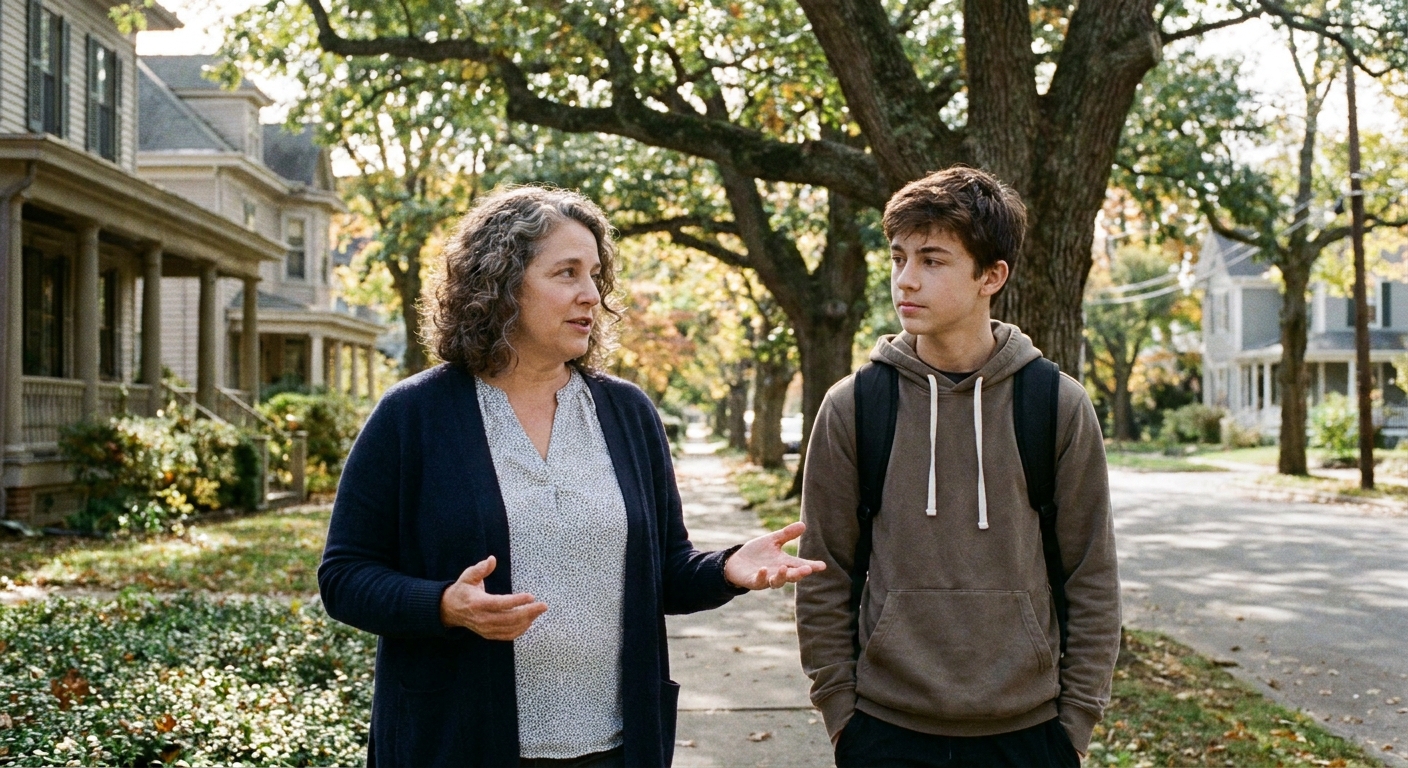
Teens often describe office therapy as intense at first because it is direct and face-to-face. Walk-and-talk can feel less pressurized because there is less eye contact and more natural pauses.
Walk-and-talk tends to offer
- Less intensity in the moment, which can help a teen who shuts down when they feel watched.
- Movement that supports regulation, especially for anxious, restless, or overstimulated teens.
- Conversation side-by-side, which can feel more like a mentoring chat than an interview.
Office sessions tend to offer
- Stronger privacy, including better protection against being overheard.
- More clinical tools on hand, like worksheets, art materials, grounding items, or structured skill practice.
- Fewer variables like weather, noise, or unexpected people walking by.
Privacy in public
Privacy is the biggest tradeoff with walk-and-talk. Therapists still follow confidentiality rules, but privacy cannot be guaranteed in a public setting. Because of that, clinicians typically review informed consent for this format, including the limits of privacy and what happens if someone approaches or recognizes your teen.
Common concerns parents ask about
- Someone overhearing sensitive details. Even if voices are low, certain topics carry. A stranger does not need the full story to catch enough to feel exposing.
- Running into classmates, neighbors, or family friends. The teen may worry about being seen with “a therapist,” even if no one actually knows who the adult is.
- Being recorded. Most people are not out filming, but public spaces increase uncertainty. Teens who are highly concerned about peer attention can find this stressful.
How therapists usually handle it
Many clinicians build a simple privacy plan before the first walking session. You can ask what your teen’s therapist typically does in these situations:
- Agree on a “public-safe” topic list. Some teens keep deeper trauma details, names, or school specifics for office sessions.
- Use code words or category language. For example, “the math situation” instead of a teacher’s name.
- Plan what to do if you pass someone. Options include pausing, switching to neutral talk, or simply saying hello and continuing.
- Choose routes with more space. Wider paths, quieter times of day, and less crowded parks reduce overhearing.
One helpful detail is to let your teen lead this. Ask them what feels safe to discuss outdoors, what topics are office-only, and what they want the therapist to do if someone says hello.
Weather and logistics
In real life, walking sessions succeed or fail on logistics. A lot of teens are sensitive to discomfort, and a cold wind can turn “I might talk today” into “I hate this, can we go.”
Questions to ask before you commit
- What is the bad-weather plan? Do they automatically switch to the office, reschedule, or use a covered walkway?
- What happens in extreme heat or poor air quality? Some clinics have firm policies, especially during summer or wildfire season.
- Is there a bathroom nearby? It sounds minor until it is not.
- How will they handle noise? Construction, traffic, lawn equipment, and crowds can interrupt a teen’s train of thought.
- What is the expected pace and distance? This matters for teens with asthma, chronic pain, mobility concerns, or body-image sensitivity.
Office therapy is often easier for families who are juggling school schedules, sports, and multiple caregivers. It also offers more predictability for teens who get dysregulated by last-minute changes.
Safety and when walking is not a fit
Some clinics will not offer walk-and-talk at all for teens, or they only offer it under specific conditions. That is usually about safety, risk management, and clinical appropriateness. Policies can also vary based on licensure rules, insurer expectations, and a practice’s documentation requirements.
A clinic may decline walk-and-talk when
- Your teen is in a higher-risk period, such as active suicidal thoughts, self-harm behavior, or severe impulsivity. In those cases, a private, controlled environment often supports more reliable assessment and safety planning. The appropriate level of care varies, and some teens may need a higher level of care rather than any outpatient format.
- There are concerns about running off, aggression, or elopement during dysregulation.
- There are significant confidentiality risks, such as a small community where the chance of being recognized is high, or a teen who is terrified of being seen in therapy.
- The teen’s needs require materials or a stable setup, like structured exposure work, certain trauma approaches, or more intensive skills practice.
- Local safety conditions are unpredictable, including unsafe routes, poor lighting in winter afternoons, or lack of private walking space.
Situational awareness basics
Even when walk-and-talk is clinically appropriate, many therapists stick to clear safety norms: well-traveled routes, daylight or well-lit areas, staying in public spaces, and avoiding secluded paths. If a clinician cannot clearly explain their route and safety plan, it is fair to choose an office setting instead.
Who often benefits from walk-and-talk
Walking sessions can be particularly helpful when the main barrier is getting your teen to talk at all. Movement and side-by-side conversation can lower the stakes enough to get started.
Walk-and-talk is often a good fit when a teen
- Feels awkward with eye contact or “sitting and talking.”
- Opens up more while driving, doing chores, or pacing.
- Has mild to moderate anxiety and finds movement calming.
- Gets stuck in long silences in the office and then feels ashamed.
- Has a strong preference for being outdoors and feels trapped inside clinical spaces.
It can also support rapport-building early on. Once trust is stronger, some teens transition to office sessions for deeper work, or they alternate depending on the week.
Who often does better in an office
For other teens, the office is exactly what helps. The room becomes a container, a consistent place where the teen can practice naming feelings without scanning for who might walk by.
Office sessions are often a good fit when a teen
- Worries intensely about being seen or overheard.
- Is dealing with bullying, rumors, or social fallout at school.
- Has trouble focusing in stimulating environments.
- Is processing trauma, complicated grief, or deeply personal family topics and wants maximum privacy.
- Has medical considerations that make walking uncomfortable or unsafe.
If your teen’s therapist recommends starting in-office, you can still ask about small adjustments that make it feel less intense, like sitting at an angle instead of face-to-face or starting with low-pressure topics for the first few weeks.
Questions to ask before choosing
You do not need to grill a therapist, but you do deserve clear answers. These questions also help you compare clinicians who offer different options.
- “Do you offer walk-and-talk for teens, and if so, for what ages?”
- “Where do you walk, and how private is it at typical session times?”
- “What is your plan if we run into someone my teen knows?”
- “What is your bad-weather plan?”
- “Are there clinical situations where you require office sessions?”
- “What do you cover in informed consent for walk-and-talk, especially around privacy?”
- “How do you document and handle confidentiality when sessions happen in public?”
If you want a broader list of screening questions, see Questions to Ask a Teen Therapist Before You Book.
How parent logistics work for minors
Walk-and-talk adds a practical question that does not come up as much in office therapy: where does the parent go during the session, and how do handoffs happen?
Ask about the setup
- Drop-off and pick-up. Will you meet at the office first, a parking lot, or a specific outdoor spot?
- Where the parent waits. Some practices ask parents to stay nearby in a car. Others have a waiting room if the walk starts and ends at the clinic.
- Check-ins. Many therapists do a brief parent check-in at the start or end, while still protecting the teen’s confidentiality.
- Emergency contact plan. How will the therapist reach you quickly if needed during an outdoor session?
If you want to think through the right level of parent involvement overall, How Parents Take Part in a Teen’s Therapy can help you find a workable balance.
How to offer the choice
When parents are anxious, it is easy to oversell therapy. Teens pick up on it quickly. A calmer approach is to offer a limited, real choice and let them have dignity inside the process.
A simple script you can use
“I want to get you support because things have been feeling heavy lately. Some therapists meet in an office, and some can do walking sessions. If you had to choose a starting point, which would feel more doable?”
If your teen is resistant to therapy overall, you may also appreciate How to Tell Your Teen They Need Therapy and How to Help a Teen Open Up Without Pressuring Them.
If you are unsure, try a blended plan
Many families do best with a flexible approach. Think of it like choosing the right tool, not declaring allegiance to one format.
Examples of blended plans
- First month walking, then reassess. Build rapport first, then decide whether office sessions feel easier.
- Alternate weeks. Walking for check-ins and stress management, office for deeper topics.
- Office in winter, walking in spring. Let the seasons work for you instead of fighting them.
When to switch settings
Switching formats is not a failure. It is information.
Consider switching to office sessions if
- Your teen starts holding back because of fear of being overheard.
- Sessions keep getting disrupted by noise, crowds, or weather.
- The therapist needs more consistent assessment, structure, or privacy.
Consider switching to walk-and-talk if
- Your teen freezes in the office and cannot get traction after several sessions.
- Your teen reports feeling “trapped” or overly self-conscious sitting still.
- Movement clearly helps mood and openness between sessions too.
If the mismatch is more about the therapist than the setting, you may want When to Switch Your Teen’s Therapist.
FAQ
Is walk-and-talk therapy evidence-based?
Walking is a setting, not a therapy method by itself. Evidence-based approaches can be used in either setting, but some techniques are easier to deliver in an office where you can write things down, use handouts, or slow the pace.
Will insurance cover walk-and-talk sessions?
Coverage depends on the clinician’s billing practices, licensure, and your plan. The walking itself is usually not the deciding factor. More often it comes down to whether the session meets your insurer’s outpatient psychotherapy requirements, including documentation and “place of service” rules. It is reasonable to ask the provider how they bill and whether the session is considered standard outpatient psychotherapy under your plan.
Can my teen do walk-and-talk if they do not want to be seen with a therapist?
Sometimes yes, sometimes no. Some teens feel less conspicuous walking side-by-side than sitting in a waiting room. Others feel more exposed outdoors. Your teen’s opinion matters here, because anxiety about being seen can shut the session down.
What if my teen has anxiety and the walk makes it worse?
That can happen, especially if the route feels too public or unpredictable. If your teen becomes more on-edge outside, an office may actually be the more calming choice.