

If your teen is enrolled in therapy but keeps missing the standing appointment, you are not alone. It can feel like you finally lined up help, only to watch it slip through your fingers one Thursday at 4:00.
In most families, repeated missed sessions are not “laziness” so much as a signal. Your job is to figure out what the missed sessions are communicating, reduce the friction you can control, and coordinate with the clinic so your teen does not quietly fall off the schedule.
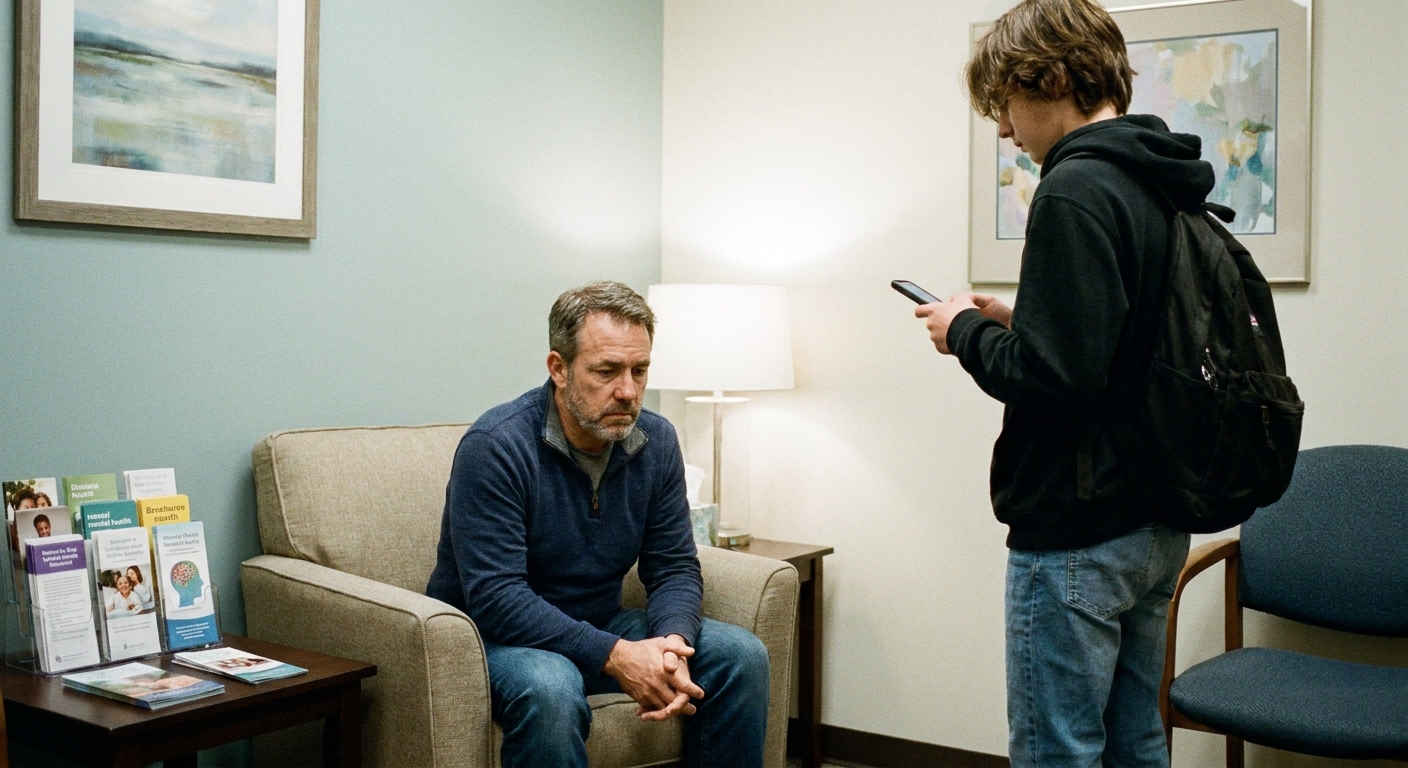
Start with one calm, specific conversation
Pick a neutral time, not in the car on the way to therapy and not right after a missed session. Aim for curious and concrete, not a courtroom cross-examination.
You can open with something like: “I noticed you have missed the last couple sessions. I’m not here to punish you. I want to understand what’s getting in the way so we can make a plan.”
- Name the pattern without labels. “You missed last week and canceled the week before.”
- Ask one question at a time and tolerate some silence.
- Offer choices for next steps instead of one demand.
What to ask your teen
Teens are more likely to answer questions that are specific and that do not assume a motive. You are trying to identify the obstacle: emotional, relational, or practical.
Ask about the therapy experience
- “What is the hardest part about going, the hour itself or getting there?”
- “Do you feel understood by your therapist, even a little?”
- “Is there anything your therapist does that makes you shut down?”
- “Do you leave feeling lighter, heavier, or just tired?”
- “Do you worry they will tell me something you say?”
Ask about worry, embarrassment, or fear
- “Is it awkward to talk to an adult you don’t know well?”
- “Do you feel like therapy means something is ‘wrong’ with you?”
- “Are you worried about running into someone you know?”
- “Is there something you are afraid will come up in session?”
Ask about logistics that are easy to overlook
- “Is the time bad because of sports, homework, or a class you hate missing?”
- “Do you feel rushed or hungry when we go?”
- “Would it be easier if we did telehealth some weeks?”
- “Do you want reminders, or do reminders make you more resistant?”
If your teen says some version of “It’s pointless,” try: “What would make it less pointless? A different time, a different person, or a different kind of help?”
One more question that can shift the whole tone: “What would you want therapy to help with by next month?” A concrete goal can turn “pointless” into “I’m trying this for a reason.”
For more ideas on lowering pressure while still staying connected, see How to Help a Teen Open Up Without Pressuring Them and 10 Strategies to Improve Communication With Your Teen.
Common reasons teens skip and what helps
Here are patterns I saw often in family work, with fixes that are small enough to try this week.
They feel exposed or judged
They may like the therapist as a person, but still hate the vulnerability hangover, that wiped-out feeling afterward.
- Try: “Would it help if you had a plan for the first 10 minutes, like a topic list or one goal?”
- Try: Ask the therapist (with your teen’s permission) to spend a few sessions on pacing and coping after difficult topics.
They do not trust the privacy boundaries
Some teens skip because they assume therapy is a pipeline to parental lectures.
- Try: Revisit confidentiality in plain language. “I don’t get a play-by-play. I do want to know if there’s a safety issue.”
- Try: Add one clarifier that builds trust: confidentiality rules can vary by state, your teen’s age, and clinic policy, and the therapist can explain their exact limits at your next visit.
- Try: Read What Can a Therapist Share With Parents of a Teen? and discuss what applies in your state and clinic.
They hate the format
A teen who struggles with sitting still, eye contact, or talking on demand may need a different approach.
- Try: Ask about skills-based approaches like CBT or DBT. (More on that here: CBT vs DBT for Teenagers.)
- Try: Consider a different modality such as Art Therapy vs Talk Therapy for Teens.
The schedule is quietly punishing them
Right after school, right before practice, during the one class they feel competent in, or at a time that triggers social anxiety can turn therapy into one more weekly “failure.”
- Try: Shift the time, shorten the commute, or explore Online Therapy vs In Person Therapy for Teens.
- Try: Build a transition ritual. Snack, ten minutes of quiet in the car, music on the drive home, no immediate debrief.
No-show fees or money stress are part of the problem
Some teens avoid because they know each miss costs money, or because they feel guilty about the financial strain and would rather disappear than talk about it.
- Try: Ask the clinic about the cancellation window, no-show fees, and how to avoid being charged when you have to reschedule. Make it a practical conversation, not a moral one.
They are getting worse before they get better
Some teens feel raw when therapy begins to touch real pain. Skipping can be avoidance, not a vote against healing.
- Try: Ask, “Do you feel worse after therapy?” without blame. Then read What to Do If Your Teen Feels Worse After Starting Therapy.
- Try: Coordinate with the therapist about grounding skills and pacing.
What to tell the clinic
When sessions are being missed, the clinic is not only managing your family’s care. They are also managing a scarce appointment slot. A clear, collaborative call may help prevent an unintentional discharge and can create options you did not realize existed, although some practices have strict no-show policies.
A simple script you can use
“Hi, I’m calling about my teenager’s therapy appointments. They are still a client there, but we’ve had trouble consistently making the standing time. I’d like to talk about options so they can stay in care. What would you recommend: a different time, telehealth, a check-in session with me and my teen, or a brief call with the therapist to troubleshoot fit and barriers?”
Specific things worth asking
- Whether you can temporarily shift to a different day or time.
- Whether telehealth is available for some sessions.
- Whether the therapist can do a short parent-teen check-in at the start or end of a session to clarify goals.
- How the clinic handles repeated cancellations and what keeps your teen on the therapist’s caseload.
- What the cancellation window is, and whether no-show fees can be avoided with enough notice.
- Whether there are reminders they can send to your teen directly, if your teen wants that.
If your teen is in two households, you may also find this helpful: Therapy for a Teen in Two Homes.

When it may be a poor fit
Teens skip for lots of reasons, and many are fixable. But sometimes a pattern of misses is the most respectful data you have: this relationship or approach is not working for your teen.
Signs it may be a poor fit
- Your teen consistently says they feel judged, lectured, or “talked at.”
- Your teen reports the therapist shares too much personal opinion or pushes a specific agenda that does not feel aligned with your family’s values.
- Your teen’s anxiety spikes specifically around therapy, not around the topic they are working on.
- After multiple sessions, your teen cannot name a single thing therapy is for, even in basic terms (goals have not been clarified).
- Your teen is willing to try again with a different person or format, which often means it is not “therapy” they reject, it is this setup.
How to talk about switching
Try: “Sometimes it takes a couple tries to find the right match. If it doesn’t feel like a fit, we can problem-solve that. I’m not mad at you and I’m not blaming the therapist. I want you to have support that actually helps.”
If you are considering a change, this can guide you through the decision: When to Switch Your Teen’s Therapist. And if you want to ask better screening questions before the next appointment, see Questions to Ask a Teen Therapist Before You Book.
A two-week plan
You do not have to solve everything today. You are aiming for one workable step that reduces misses and increases your teen’s sense of control.
- Choose one barrier to address first (time, privacy worries, therapist fit, after-school exhaustion, money stress).
- Offer two options to your teen. Example: “Do you want to try telehealth, or do you want me to ask for a different time?”
- Pick one short goal together. Example: “By next month, I want panic before school to be less intense,” or “I want fewer blowups at home.”
- Call the clinic and ask what keeps your teen on the schedule if they miss again, plus the cancellation window.
- Set a low-pressure debrief rule after session. Example: “I’ll ask only: do you want a snack or quiet?”
- Revisit after two sessions and ask: “Is this helping even 5 percent? What would make it 10 percent?”
If you are still at the stage of getting your teen to accept therapy at all, start here: How to Tell Your Teen They Need Therapy. If the bigger question is whether you should make therapy mandatory, that is a separate decision with its own pros and cons. You can read about it here: Should You Require Your Teen to Attend Therapy?.
When to get support fast
Repeated missed sessions can sometimes sit on top of something more urgent than “motivation.” If any of these are true, loop in the therapist, pediatrician, or a crisis resource immediately.
- Statements about not wanting to live, self-harm, or feeling unsafe.
- Rapid changes in sleep, eating, or functioning at school.
- Substance use that is escalating or becoming risky.
- Panic symptoms that make it hard to attend school or leave the house.
- Violence in the home, dating relationship, or online threats.
You can also watch for broader signs your teen needs more support at home: 7 Signs Your Teen Needs More Support at Home.