Anxiety in kids is rarely a flashing neon sign. More often, it is a series of small signals that can look like “a phase,” “an attitude,” or “they are just tired.” As a former family therapist and a mom who has had plenty of evenings where the mood in my house could be described as “emotionally sponsored by snacks,” I want to offer a gentler reframe.
When a child is anxious, their brain is doing its best to keep them safe. The problem is that the alarm system sometimes goes off when there is no real fire. Your job at home is not to eliminate every stressor. It is to help your child feel understood, teach a few skills, and create enough calm that their nervous system can settle.
Below is a checklist of five easily missed signs of anxiety, plus practical ways to support your child at home. You do not need to do all of this perfectly. Small, consistent moments of connection go a long way.
Quick note: This article is educational and not a substitute for medical or mental health advice. When in doubt, loop in your pediatrician or a licensed clinician.
How anxiety can show up
Childhood anxiety can show up as worry, of course. It can also show up as irritability, perfectionism, avoidance, stomachaches, or sudden clinginess. Some kids talk about it. Many kids show it.
If you are reading this and thinking, “Wait, is that what has been happening?” take a breath. Not every anxious behavior means an anxiety disorder. But patterns that are persistent, intense, or interfering with school, sleep, friendships, or family life deserve attention.
Also, anxiety is not the only possible explanation. ADHD, autism, learning differences, sleep issues, migraines, thyroid concerns, and GI conditions can mimic or amplify anxiety. That is one reason it helps to look at the whole picture.
Sign 1: More meltdowns or anger
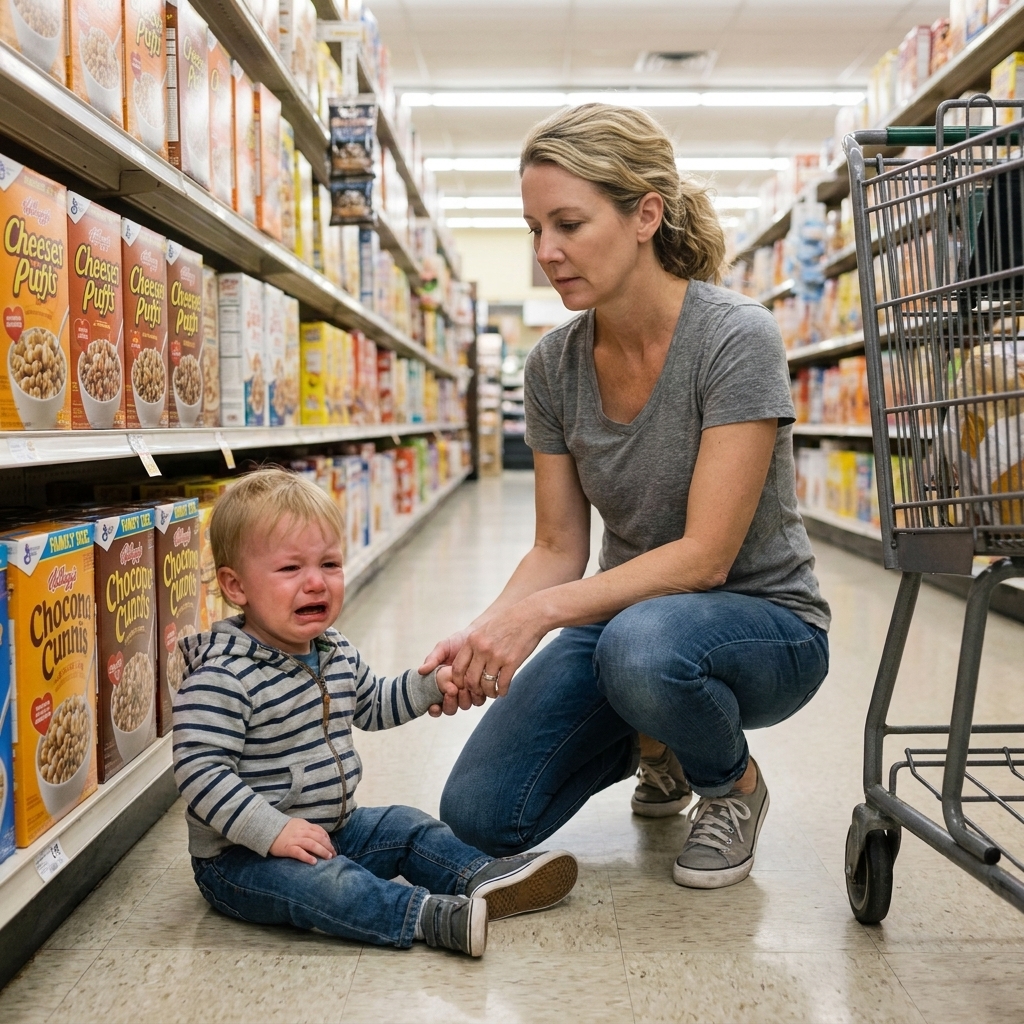
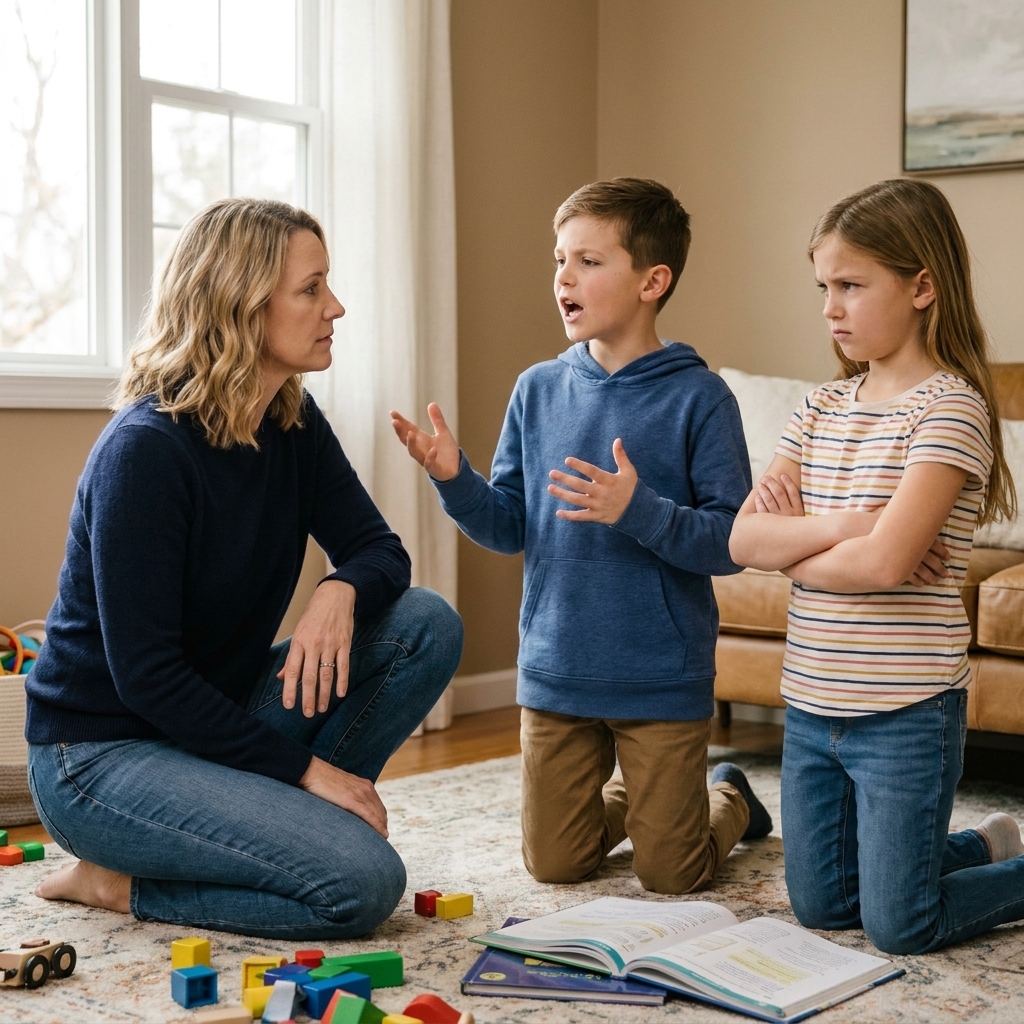
For many kids, anxiety does not feel like fear. It feels like frustration. When the body is on high alert, it takes very little to tip into fight mode. A minor sibling comment becomes unbearable. Homework feels like a personal attack. The “no” you calmly offered lands like a siren.
What you might notice
- Short fuse, especially after school or before bed
- Defensiveness, arguing, or frequent tearfulness
- Overreacting to small changes or requests
- More conflict with siblings or parents
How to support them at home
- Name the pattern without shaming. Try: “I’m noticing it’s been easier to get flooded lately. I wonder if something has been feeling big inside.”
- Lower the temperature first, then talk. When your child is escalated, their stress response is in charge, and reasoning does not land well. Offer water, a snack, a quiet corner, a short walk, or simply proximity.
- Use a two-step script. Step 1: validate. Step 2: set the limit. “I get that you’re overwhelmed. And I’m not okay with yelling. Let’s take two minutes and try again.”
- Build a decompression routine. Many kids need a predictable buffer after school: 20 minutes of snack and silence, music, movement, or pet time before questions and tasks.
When anxiety is driving the bus, your calm is not a reward. It is a regulation tool.
Sign 2: Stomachaches or headaches
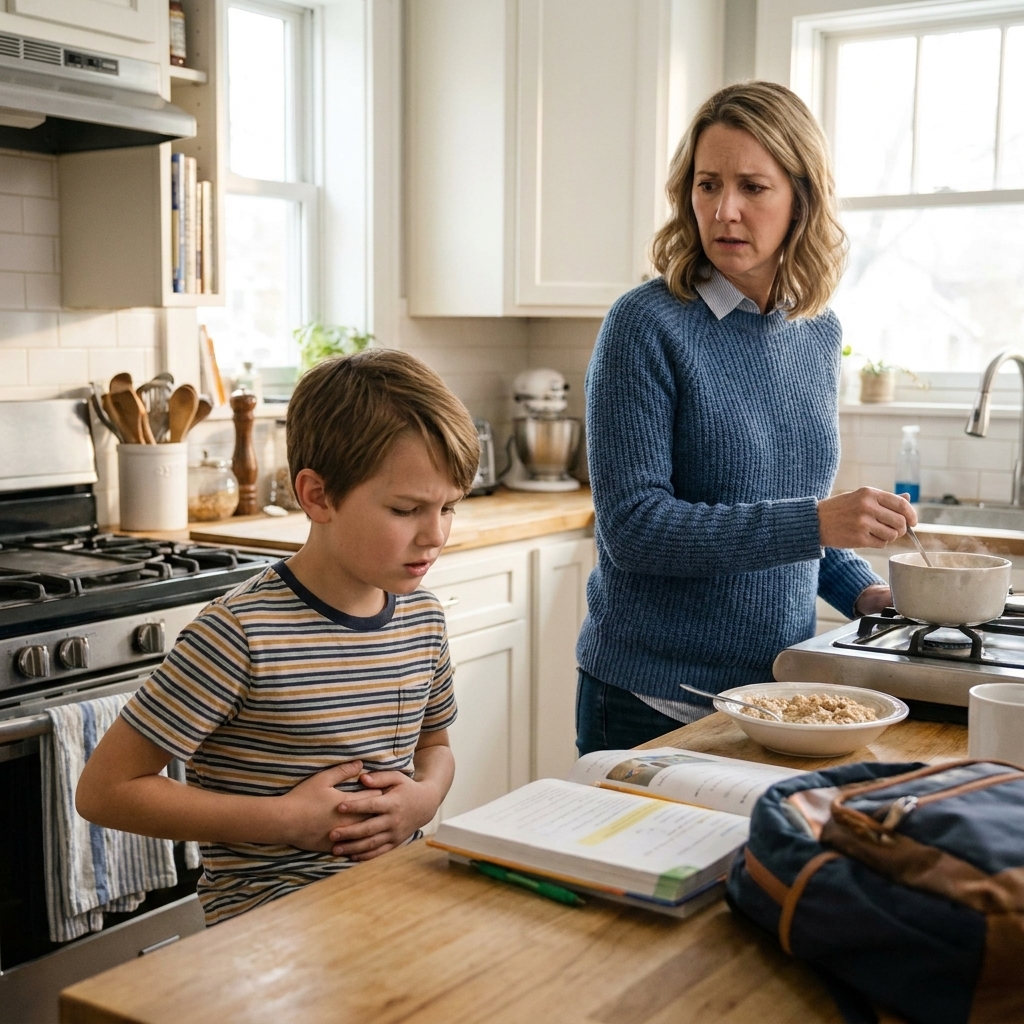
Kids usually are not faking when they say their stomach hurts. Stress hormones can genuinely impact digestion, muscle tension, and headaches. Even when there is not a clear medical cause, the discomfort can be very real. Anxiety often shows up in the body before a child has the words for it.
What you might notice
- Frequent tummy troubles before school, sports, tests, parties, or sleepovers
- Headaches late afternoon or evening
- Trips to the nurse, but no fever and symptoms fade at home
- Increased bathroom visits when something feels uncertain
How to support them at home
- Rule out medical concerns. If symptoms are persistent, severe, or new, check in with your pediatrician. Peace of mind matters.
- Connect body sensations to emotions. “Sometimes our stomach hurts when we’re worried. Is there anything on your mind about today?”
- Teach a simple body reset. Try square breathing: inhale 4, hold 4, exhale 4, hold 4, repeat four times. It can help some kids, especially if you practice when calm so it is available when stressed.
- Create a comfort plan that still keeps life moving. Warm tea, a heating pad, and a five-minute check-in can coexist with going to school if your child is medically okay. The message becomes: “We take your feelings seriously, and we trust your strength.”
Sign 3: Avoidance or perfectionism
Anxiety often disguises itself as “not caring.” In reality, many kids avoid because they care a lot. If they cannot guarantee success, they would rather not try. Perfectionism is anxiety wearing a tidy outfit.
What you might notice
- Putting off homework, projects, or studying until the last minute
- Refusing to start something unless you sit with them
- Erasing repeatedly, rewriting, or melting down over small mistakes
- Quitting activities they used to enjoy
How to support them at home
- Shift the goal from perfect to started. Make two-minute starts the household norm. “Open the document. Title it. That’s the win.”
- Praise effort strategies, not outcomes. “I noticed you asked for help and then tried again. That’s resilience.”
- Break tasks into tiny steps. Anxiety shrinks when tasks are specific. “Do homework” becomes “do three math problems, then take a break.”
- Normalize mistakes as information. Share your own small errors with gentle humor. “I just emailed the wrong attachment. I survived. The world continues to spin.”
- Practice gentle approach, not escape. Avoidance lowers anxiety in the short term, but it often makes the fear grow over time. If your child is avoiding, aim for a small brave step with support. Example: instead of skipping the birthday party, you go for 15 minutes and agree on a signal if they need a break.
Sign 4: Sleep and reassurance loops
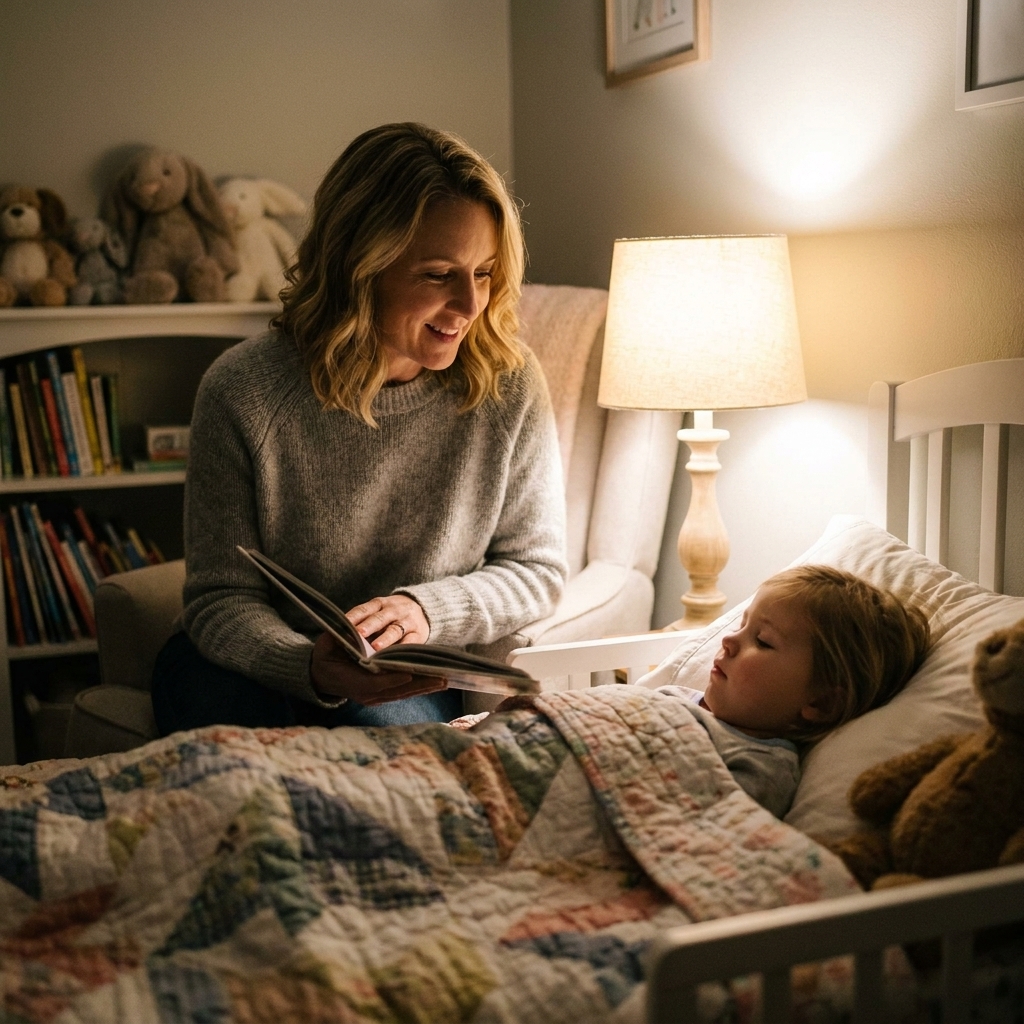
Nighttime is when distractions drop away and worries get a microphone. Some kids struggle to fall asleep. Others fall asleep fine but wake up often. Some start needing you more: extra hugs, extra questions, extra trips out of the bedroom.
What you might notice
- Difficulty falling asleep, frequent wake-ups, nightmares
- Bedtime stalling, repeated questions, repeated requests
- Fear of being alone, fear of what-if scenarios
- New rituals that must be done just right
How to support them at home
- Offer a predictable bedtime rhythm. Anxiety loves predictability. Keep the order consistent: hygiene, story, lights, brief check-in, goodnight.
- Do a worry drop earlier in the evening. Ask: “Any worries you want to put on the shelf for tonight?” Write them down and agree on a time tomorrow to revisit.
- Use a reassurance limit with warmth. If reassurance becomes a loop, try: “I can answer that one time, and then we practice trusting your brave brain.”
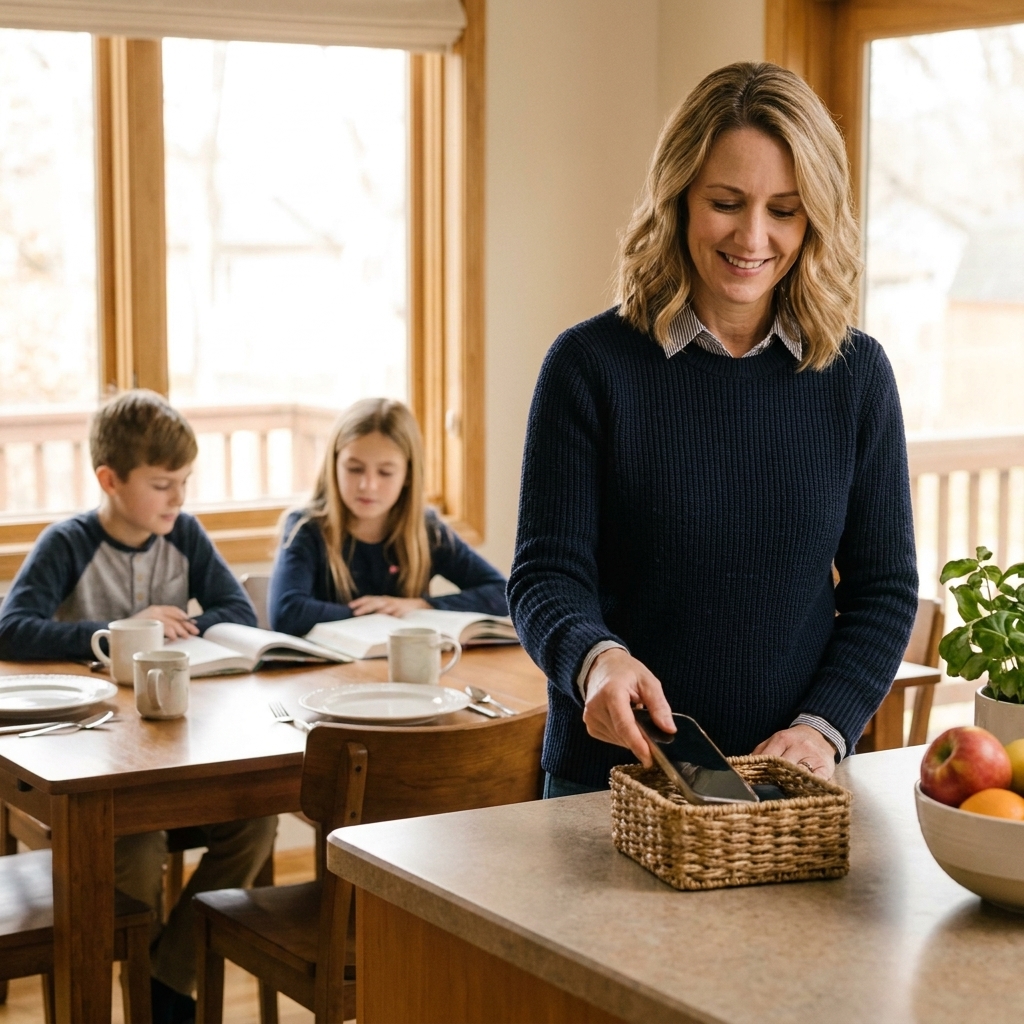
- Support sleep basics. Screens off 30 to 60 minutes before bed, a cool dark room, and calming sensory input (white noise, a cozy blanket) can help some kids. If you use a weighted blanket, make sure it is an appropriate weight, your child can remove it independently, and you have checked with your pediatrician or OT if there are respiratory or sensory concerns.
Sign 5: Social sensitivity or checking
Some anxious kids become watchful. They scan for disapproval. They replay conversations. They avoid friends because social situations feel risky, or they become intensely people-pleasing to prevent rejection.
What you might notice
- Not wanting to attend parties, playdates, or team events
- Excessive apologizing or asking “Are you mad at me?”
- Spiraling after feedback from a teacher or coach
- Overanalyzing texts, facial expressions, or tone
How to support them at home
- Be curious, not corrective. “What did you imagine they meant?” helps more than “Don’t be silly.”
- Teach a likely explanation practice. Make a habit of generating three neutral explanations before accepting the worst-case story. “Maybe your friend was tired. Maybe they were distracted. Maybe they didn’t see you.”
- Role-play hard moments. Practice what to say if someone is unkind or if they feel left out. Scripts reduce panic.
- Protect your home as a soft landing. When they do risk social connection, meet them with warmth afterward. “I’m proud of you for showing up, even if it felt awkward.”
A simple plan for this week
If your child is showing a few of these signs, you do not need a 27-step program. Start with a small, steady plan.
1) The 2 x 10 connection
This is the classic two-by-ten: 2 uninterrupted minutes a day for 10 consecutive days with your child, led by them. No teaching, no fixing, no phone. Just presence. It sounds almost too small to matter, but those two minutes can soften the whole day.
If you have more time, wonderful. If you do not, two minutes still counts.
2) Name feelings without forcing a talk
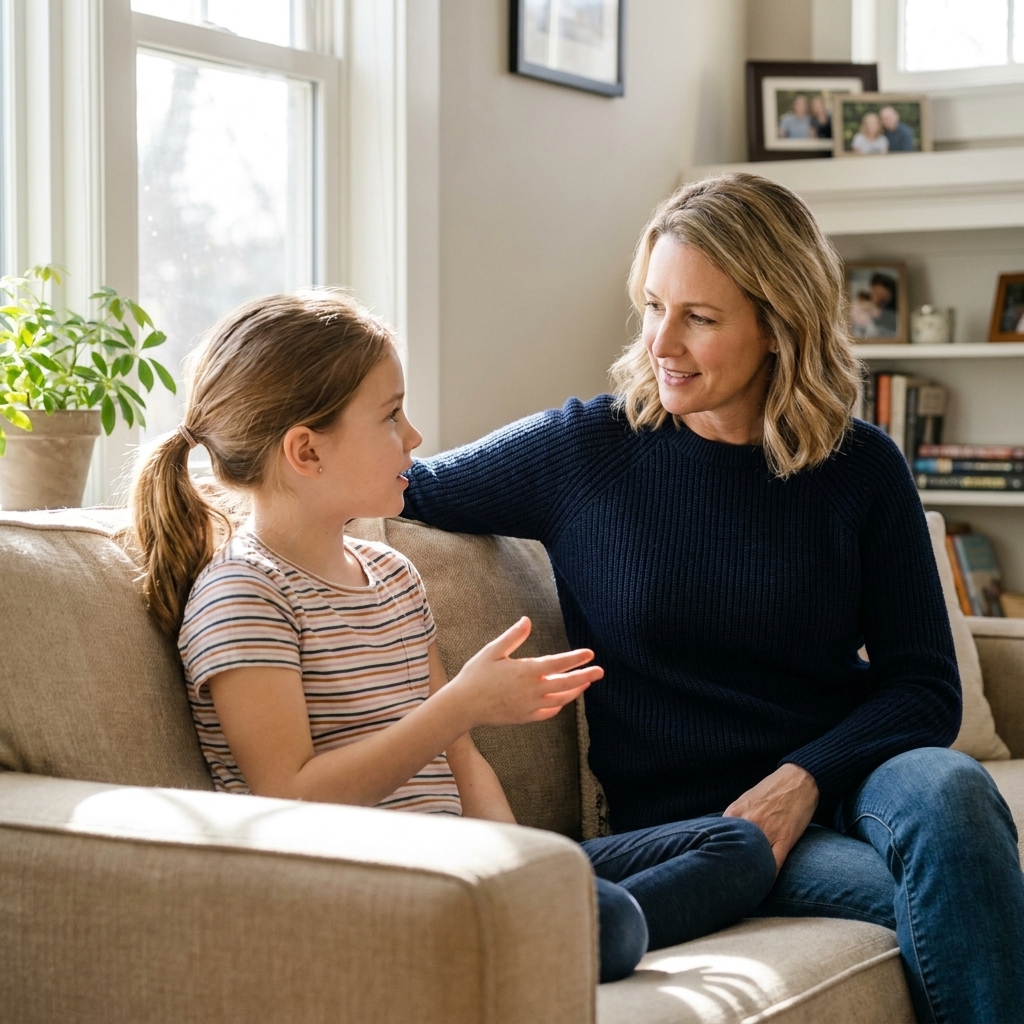
Some kids open up in conversation. Others open up while doing something side by side. Try: “I’m here if you want to talk, and I’m also okay sitting quietly with you.”
3) Practice coping skills when calm
Pick one or two tools: breathing, progressive muscle relaxation, a grounding exercise (5 things you see, 4 you feel, 3 you hear, 2 you smell, 1 you taste), or movement. These tools can help some kids. Practice during neutral moments so it becomes familiar.
4) Reduce hidden pressure
Anxiety spikes when kids feel constantly evaluated. Look for places to soften the edges: fewer rapid-fire questions, fewer rushed transitions, more warnings before changes, more choice where appropriate.
5) Keep expectations, add support
A supportive home is not a consequence-free home. It is a home where limits are steady and compassion is abundant. “We still go to school” can coexist with “and we will make a plan for the hard part.”
6) Partner with school when needed
If anxiety is showing up around school, consider a quick check-in with the teacher, school counselor, or nurse. Sometimes small accommodations make a big difference. In the US, persistent anxiety impacting learning may qualify for a 504 Plan or IEP evaluation, depending on the situation.
When to get extra help
Sometimes home support is enough. Sometimes your child needs a bigger team. Consider reaching out to your pediatrician, school counselor, or a licensed child therapist if:
- Anxiety is interfering with school attendance, sleep, eating, or friendships
- Meltdowns are frequent, intense, or escalating
- Your child is using avoidance more and more to cope
- You notice panic symptoms (racing heart, shortness of breath, trembling) that are recurring
- Your child talks about hopelessness, self-harm, or not wanting to be here
If your child mentions self-harm or suicidal thoughts, seek urgent support right away through your local emergency number or a crisis hotline in your country. You do not have to carry that fear alone.
Anxiety is often treatable, especially with evidence-based support like CBT, gradual exposure, and parent coaching. Getting help is not an overreaction. It is information gathering and support building.
FAQ
Is it anxiety or normal kid stress?
Normal stress usually comes and goes around specific events and does not consistently disrupt daily life. Anxiety tends to be more persistent, shows up across situations, or leads to ongoing avoidance, sleep problems, physical complaints, or frequent reassurance-seeking.
What should I say when my child is spiraling?
Start with connection: “I’m here. This feels really big right now.” Then offer a next step: “Let’s take five slow breaths together,” or “Let’s sit on the floor and feel our feet.” Once they are calmer, you can problem-solve.
Can I accidentally make anxiety worse?
Yes, but not because you love your child too much. Anxiety can grow when reassurance becomes endless or when avoidance becomes the main solution. The sweet spot is empathy plus small steps toward confidence.
What if my child refuses to talk?
Use side-by-side moments, keep questions short, and offer choices: “Do you want advice, comfort, or distraction?” You can also communicate with notes, shared journals, or a simple feelings scale from 1 to 10.
A final word for worried parents
If you see your child in these signs, it does not mean you have failed. It means you are paying attention. Anxiety can be loud, but with support, many kids learn to manage it and feel more like themselves again.
Start small. Stay steady. And when you need more support, reach for it. That is not panic. That is parenting.