
Most families argue sometimes. That is not a moral failure; it is a sign you are alive and sharing a kitchen.
But there is a particular kind of stretch that feels different. The tone in the house changes. The same fights keep reappearing like an unwanted pop-up ad. People start bracing for impact before anyone even speaks. In my years as a counselor, and in my own years juggling teens and caregiving and marriage stress, I came to think of this as a high-conflict season. Not necessarily a high-conflict family forever. A season.
This guide will help you name what you are seeing, understand why it happens, and decide when it is time to get extra support.
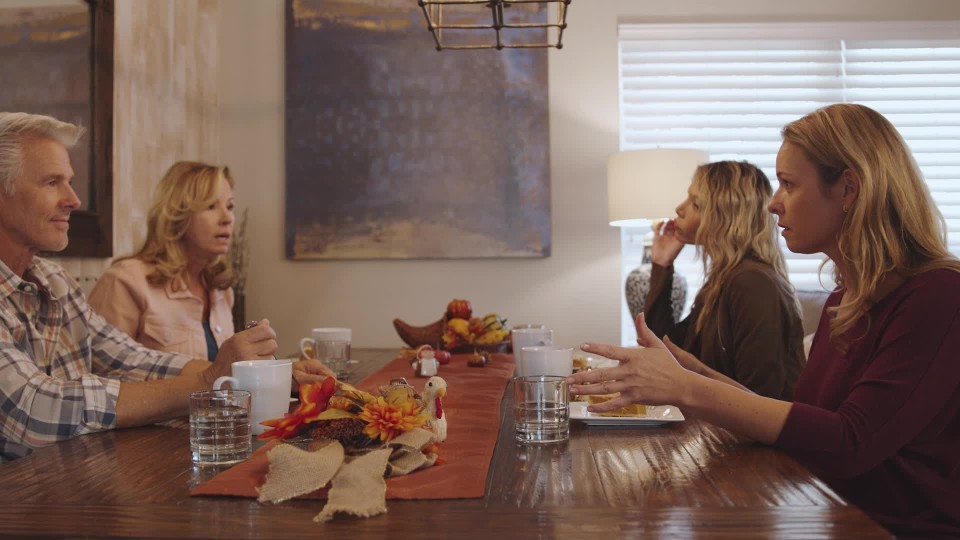
What a “high-conflict season” means
A high-conflict season is when disagreement stops being occasional and becomes the main weather system of the household. There is more heat than repair. More scoring points than solving problems. People are reactive, defensive, or withdrawn, and the conflict spreads into multiple relationships.
It can be triggered by something obvious like a divorce, an aging parent’s decline, a move, money stress, or a new baby. Or it can build slowly, especially when everyone is tired and no one feels heard.
Normal conflict can be uncomfortable but still productive. High-conflict seasons feel repetitive, escalating, and hard to recover from.
7 signs your family is in a high-conflict season
1) The same fight keeps returning, with new costumes
You argue about dishes, but it is really about respect. You argue about screen time, but it is really about trust. You argue about your mother-in-law’s “help,” but it is really about boundaries.
What it looks like:
- Partners: Every discussion about money turns into “You never listen” and “You always control everything.”
- Parent and teen: Curfew becomes a weekly courtroom drama, even when the teen is mostly following the rules.
- Siblings: Old childhood roles snap back into place, and you are suddenly 12 again at a holiday dinner.
Why it happens: The surface topic is safer than the real fear underneath, like “I’m carrying this family alone” or “I’m afraid you’ll leave.”
2) Conflict spreads to everyone, not just the original two
In high-conflict seasons, tension becomes contagious. One disagreement between spouses turns into a triangle with a child. A sibling dispute recruits parents. A conflict with an adult child pulls in grandparents, cousins, and group chats.
What it looks like:
- Your child becomes the messenger between parents, or the referee.
- Your sister calls you after every conversation with your brother to “process,” and now you are stuck in the middle.
- A grandparent begins taking sides, even subtly, with extra invites or financial “help.”
Why it happens: In family systems theory, triangling often reduces anxiety in the short term. It also makes it more likely the actual issue never gets resolved.
3) Repairs are rare, incomplete, or performative
Every family needs repair. In healthier conflict, there is some version of: “That went poorly. Can we reset?” In high-conflict seasons, fights end with silence, sarcasm, or a fake truce that evaporates by morning.
What it looks like:
- Apologies sound like legal documents: “I’m sorry you feel that way.”
- Someone gives gifts or does chores to smooth things over, but nothing gets talked through.
- You move on without resolution because everyone is exhausted, then the resentment piles up.
Why it happens: Repair requires vulnerability. When people feel unsafe emotionally, they choose distance or dominance instead.

4) You are walking on eggshells, or you have stopped trying
There are usually two common responses to chronic conflict. One is hypervigilance, trying to prevent the next blowup. The other is resignation, emotionally checking out.
What it looks like:
- Parenting: You avoid bringing up grades, vaping, or friend drama because you cannot handle another explosion.
- Marriage: You keep conversations transactional: rides, bills, groceries. No feelings, no future plans.
- Extended family: You dread texts because any message could turn into an argument about politics, parenting, or “who visits whom.”
Why it happens: Your nervous system learns that connection equals danger. Avoidance can feel like peace, but it is usually just numbness.
5) The tone has shifted from “problem” to “person”
This is a big one. High-conflict seasons often include character attacks, global labels, and contempt. Not just “This behavior is hurting me,” but “You are the kind of person who always does this.”
What it sounds like:
- “You’re selfish.”
- “You’re just like your father.”
- “You never cared about this family.”
- “You always ruin everything.”
Why it happens: When we feel powerless, blaming someone’s identity can feel like clarity. Unfortunately, it also makes change feel impossible.
6) Boundaries keep getting crossed, then argued about
In high-conflict seasons, boundaries are either too rigid or too porous. People push limits, then debate whether the limit was legitimate in the first place.
What it looks like:
- A grandparent repeatedly ignores your parenting rules, then calls you “too sensitive” when you speak up.
- A co-parent keeps changing pick-up times last minute, then accuses you of being controlling for wanting a schedule.
- An adult sibling expects immediate replies and gets angry when you do not respond within minutes.
Why it happens: Boundaries highlight power and roles. When roles are shifting, like after a new marriage, a diagnosis, or kids growing up, people test the edges.

7) The conflict is impacting health, school, work, or safety
This is often the line between “hard but normal” and “we need a different level of support.”
What it looks like:
- Kids complain of stomachaches or headaches that spike on high-tension days.
- You cannot sleep, or you feel constantly on edge.
- Someone is using alcohol or substances more to cope.
- Work performance drops because home life is consuming your attention.
- Arguments include intimidation, threats, property damage, or fear.
Why it happens: Chronic conflict can activate stress physiology. When the body is in fight-or-flight too often, everything suffers.
Important: If there is physical violence, threats, stalking, coercive control, or you feel afraid to disagree, that is not “a rough patch.” It is a safety issue. Reach out to local emergency services if you are in immediate danger. In the US, you can contact the National Domestic Violence Hotline at 1-800-799-7233 or thehotline.org. Verify hotline numbers and local resources at publication time, since services can change.
Why high-conflict seasons happen
Repeated conflict is rarely about one person being “the problem.” More often, it is a mix of stress, skills, and stuck patterns.
- Overload and burnout: Sleep deprivation, caregiving, financial strain, and packed schedules shrink everyone’s window of tolerance.
- Unspoken grief: Loss shows up as irritability, criticism, and numbness. Grief is not only death. It can be infertility, a child leaving home, a parent’s decline, or the marriage you thought you would have.
- Role changes: Teens pulling for independence, adult siblings negotiating elder care, stepfamily blending, or a partner taking on more work travel.
- Old family scripts: Patterns like scapegoating, favoritism, or conflict avoidance get activated under stress.
- Skill gaps: Many adults were never taught how to set boundaries, repair after conflict, or tolerate discomfort without escalating.
When it is more than normal tension
Here are a few practical “gut checks” I offered clients, and still use in my own home.
- Frequency: Are you arguing most days of the week, or recovering so slowly that it feels continuous?
- Intensity: Do arguments include yelling, name-calling, threats, or contempt?
- Recovery: Can you return to warmth and teamwork within a day or two, or does it linger for weeks?
- Reach: Is the conflict affecting multiple relationships and spreading through the family system?
- Impact: Is someone’s mental health, physical health, or functioning clearly declining?
If you are nodding along to several of these, you are not “bad at family.” You are likely in a season that needs more support than you can muscle through on willpower alone.
What helps right now
You may not be able to fix the whole system today. Start with what you can control: your tone, your timing, your boundaries, your repairs.
Safety note: If you are dealing with intimidation, coercive control, or violence, skip the collaboration tools and focus on safety planning and specialized support.
Lower the heat first
When emotions are high, logic is mostly decorative. Focus first on regulation.
- Call a time-out with a clear return: “I’m getting flooded. I need 20 minutes and then we can try again.”
- Change the setting: step outside, take a walk, do not keep arguing in a doorway or over the sink.
- Use shorter sentences. When we get anxious, we lecture. Lectures invite defensiveness.
Find the fear under the topic
Try this prompt: “What does this argument mean to you?”
- Screen time might mean “I’m afraid you’ll fall behind socially.”
- Holiday plans might mean “I don’t want to disappoint my parents.”
- Elder care decisions might mean “I’m terrified of losing Mom, and I feel alone in it.”
Make one boundary boring
A useful boundary is simple, specific, and focused on what you will do.
- “If voices go above normal speaking volume, I’m going to pause the conversation and revisit it after dinner.”
- “We can talk about politics for 20 minutes, and then we are switching topics.”
- “I won’t discuss my spouse with you. If you bring it up, I will end the call.”
Assume the most reasonable version
This is not about excusing harm. It is about not fueling the fire with worst-case interpretations. Ask yourself, “If they were scared or overwhelmed, what might they be trying to protect?” It softens your stance enough to stay effective.
A tiny reframe can help: instead of “They are trying to control me,” try “They might be anxious and reaching for certainty.” You can still say no. You just do it with less gasoline in your hands.

What repair can look like
Repair is not a speech. It is a small, believable turn back toward each other. A few scripts that actually work in real houses:
- Accountability: “I raised my voice. That was not okay. I’m sorry. Can we try that again, slower?”
- A redo: “I want to say this differently. What I meant was: I’m overwhelmed, and I need help.”
- A next step: “For tomorrow, let’s decide one concrete thing. I will do drop-off, you do pickup, and we revisit it Sunday.”
If the other person is not ready, you can still repair your side: “I don’t like how that went. I’m going to take a break and come back when I can be respectful.”
What to say to kids
When kids witness conflict, their brains tend to personalize it. Even teens do this, even if they roll their eyes while doing it.
After things cool down, consider a simple, steady message:
- “That argument was on us. It is not your fault.”
- “You do not need to fix it or take sides.”
- “You are safe. The adults are responsible for handling adult problems.”
If you have been using a child as a go-between, this is a good moment to undo it: “I should not have put you in the middle. From now on, I will talk to the other parent directly.”
When to consider professional support
You do not have to wait for a crisis to get help. Consider couples therapy or family therapy when:
- Arguments include contempt, threats, or repeated boundary violations.
- One person is shutting down completely, or leaving during conflicts.
- Kids are caught in the middle or showing stress symptoms.
- You are facing big transitions like blending families, infertility, addiction recovery, postpartum changes, elder care, or divorce decisions.
If your partner or family member refuses therapy, you can still go on your own. Individual therapy can help you clarify boundaries, reduce reactivity, and choose next steps with a steadier nervous system.
A note on culture and context
Conflict does not look the same in every family. Multigenerational households, immigration stress, financial pressure, religious expectations, and cultural norms around hierarchy and privacy can all shape what “boundaries” and “respect” mean.
The goal is not to copy someone else’s family model. The goal is to create enough safety and clarity that people can live together without constant harm.
A note for the sandwich generation
If you are parenting kids while caring for an aging parent, conflict can flare up fast. Siblings may disagree about money and medical decisions. Partners may disagree about time, space, and priorities. You may feel like you are failing everyone at once.
You are not failing. You are overloaded.
In these seasons, I encourage families to name the shared enemy as the situation, not each other. “Dad’s dementia is changing everything” lands differently than “You never help.” It does not solve the logistics, but it can soften the blame enough to cooperate.
Common questions
Is it normal for families to go through high-conflict seasons?
Yes. Many families have a season like this around adolescence, new babies, major moves, grief, or caregiving. The goal is not “never conflict,” but learning how to repair and protect relationships while you navigate change.
What if one person in the family is the main source of conflict?
Sometimes one person’s behavior drives much of the distress, especially with addiction, untreated mental health issues, or emotionally abusive patterns. Even then, the family system gets pulled into predictable roles. Support can help you stay grounded, set boundaries, and reduce enabling or escalation.
How do I know if my conflict is emotionally abusive?
Look for patterns of humiliation, intimidation, coercive control, threats, isolation, and fear. If you feel unsafe to express disagreement, or if conflict includes monitoring, punishment, or retaliation, reach out for specialized support.
One last thought
A high-conflict season can make you believe your family is broken beyond repair. In my experience, that is rarely the full story. More often, it is a sign that the family is stressed, stuck, and missing a few tools for this particular chapter.
That said, if abuse or violence is part of the picture, the goal is not “better communication.” The goal is safety.
If you recognized your home in these signs, take that as information, not shame. Name the season. Lower the heat. Make one small repair. Then make the next.