
Most families do not “choose” eldercare so much as they arrive there, tired and worried, carrying a notebook full of medication lists and a quiet fear of getting it wrong. I have been the adult child trying to keep a parent safe at home, and I have also sat with families in my therapy office as they wrestled with guilt, money, siblings, and the big question: Is it time to move, or can we bring care in?
This guide breaks down the real-world differences between in-home care and assisted living : what each typically costs, what each is good at, where each can fall short, and how to decide based on your loved one’s needs and your family’s bandwidth.

Quick definitions
In-home care
Support services brought into your loved one’s home. This can range from companionship and help with meals to hands-on personal care like bathing and toileting. It may be provided by an agency, an independent caregiver, or family.
- Non-medical home care: help with activities of daily living (ADLs) and household tasks.
- Home health care: medical services ordered by a physician or qualified practitioner and delivered under a plan of care, often short-term, typically provided by a Medicare-certified home health agency (skilled nursing visits, physical therapy, wound care).
- Private duty nursing: skilled nursing (RN/LPN) hired privately for more complex needs, sometimes many hours per day.
Assisted living
A residential community where your loved one has their own apartment or room and receives help with ADLs, meals, housekeeping, activities, and medication support. Assisted living is not the same as a nursing home, and most are not designed for extensive medical care. What an assisted living community can provide also varies widely by state regulations and by the specific community.

The heart of the decision
When families get stuck, it is often because they are trying to make a single decision that will cover every possible future. A gentler approach is to decide based on the next 3 to 6 months of needs, with a clear plan for what would trigger a change.
ADLs and IADLs
Most care plans hinge on how much help is needed with these basics.
ADLs (basic self-care):
- Bathing and grooming
- Dressing
- Toileting and continence care
- Transfers (bed to chair) and mobility
- Eating
IADLs (daily life tasks that keep someone safe and stable):
- Medication management
- Meal prep and grocery shopping
- Transportation
- Housekeeping and laundry
- Managing bills and appointments
As a rule of thumb: if your loved one needs help with one or two ADLs and is safe at home with support, in-home care can be a strong fit. If they need help with several ADLs, have frequent falls, or their cognition makes them unsafe alone, assisted living or a higher level of care often becomes safer. Sometimes it is also more affordable than trying to piece together near-constant home coverage.
Costs
Prices vary by region, schedule, and medical complexity. The “true cost” estimate comes from collecting two or three local quotes for each option, then comparing those numbers to your family’s realistic schedule needs.
Typical U.S. cost ranges
To give you a grounded starting point, these are commonly cited U.S. medians from the Genworth Cost of Care Survey (2023). Your local market may be higher or lower.
- Homemaker services (help with household tasks): about $5,892/month.
- Home health aide (hands-on personal care): about $6,292/month.
- Assisted living: about $5,350/month.
- Nursing home (skilled nursing facility): about $8,669/month for semi-private, $9,733/month for private.
Those home care figures assume a set number of hours per week. The cost changes dramatically as hours increase. Many families find the “tipping point” comes when coverage creeps toward evenings, overnights, and weekends.
In-home care: what families pay
- Non-medical home care: commonly billed hourly, often with minimum shifts (for example, 4 hours). Costs tend to rise for overnight coverage, weekend hours, or higher acuity.
- 24/7 coverage: often the most expensive scenario because you are effectively staffing a small team. Families frequently underestimate how quickly “a few hours a day” becomes “most of the day.”
- Private duty nursing: typically higher than non-medical care due to clinical licensing and complexity.
Hidden or easy-to-forget home costs:
- Home modifications (grab bars, ramps, stair lifts)
- Durable medical equipment (hospital bed, shower chair)
- Incontinence supplies
- Meal delivery or special diets
- Transportation to appointments
- Backup care when a caregiver is sick or quits
- Lost wages and burnout costs (missed work, strained health, and the mental load of managing care)
Assisted living: what families pay
Assisted living is typically a monthly fee that includes housing plus some services. Most communities add costs based on care level.
- Base rent: room or apartment, meals, housekeeping, activities
- Care level fees: added charges for ADL help, transfers, incontinence care, two-person assists
- Medication management: sometimes a separate fee
- Memory care: usually higher due to staffing and secure design
Costs families miss in assisted living:
- Community fee or move-in fee
- Rate increases (annual or with increased care needs)
- Transportation add-ons
- Extra charges for high-acuity needs
- Private caregiver hours on top of assisted living when needs exceed staffing
If your loved one needs near-constant supervision, assisted living can be less expensive than 24/7 home care. If they need light help and strongly want to stay home, in-home care can be the better value and the better fit.
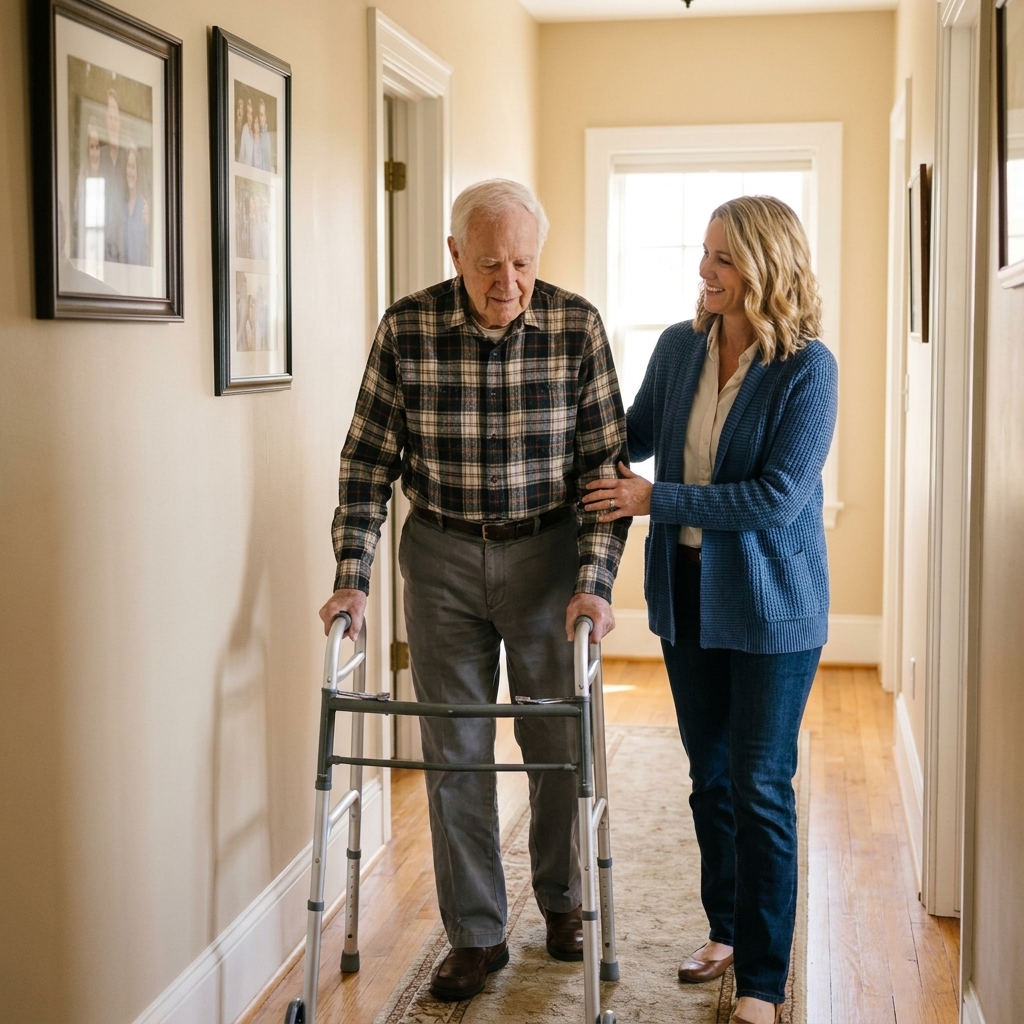
In-home care
Why families choose it
- Familiarity: Home is a powerful stabilizer, especially with early cognitive changes.
- Control and personalization: You can shape schedules, meals, routines, and even which caregiver is the best personality match.
- One-on-one attention: Particularly meaningful for someone who gets overwhelmed in busy environments.
- Couples can stay together: Often a big emotional win.
The tradeoffs
- Coverage gaps: Nights, weekends, and last-minute call-outs are where plans wobble.
- Home may not be safe: Stairs, isolation, clutter, wandering risk, and delayed emergency response.
- Family becomes the care manager: Scheduling, payroll, supervision, supplies, coordination with clinicians.
- Burnout risk : Even with paid help, families tend to carry the mental load and the worry.
Best-fit situations
- Help needed is moderate and predictable
- The home can be made safe and accessible
- There is a reliable family point person to manage care
- Your loved one is strongly attached to home and routines
- Cognition is stable enough to be safe with planned supervision
Home safety supports worth considering
- Medical alert system (and consider fall detection if appropriate)
- Grab bars, shower chair, non-slip mats, better lighting
- Door alarms or GPS support if wandering risk is present
- A written emergency plan (who responds, what to do at night, medication list posted where EMS can find it)
Assisted living
Why families choose it
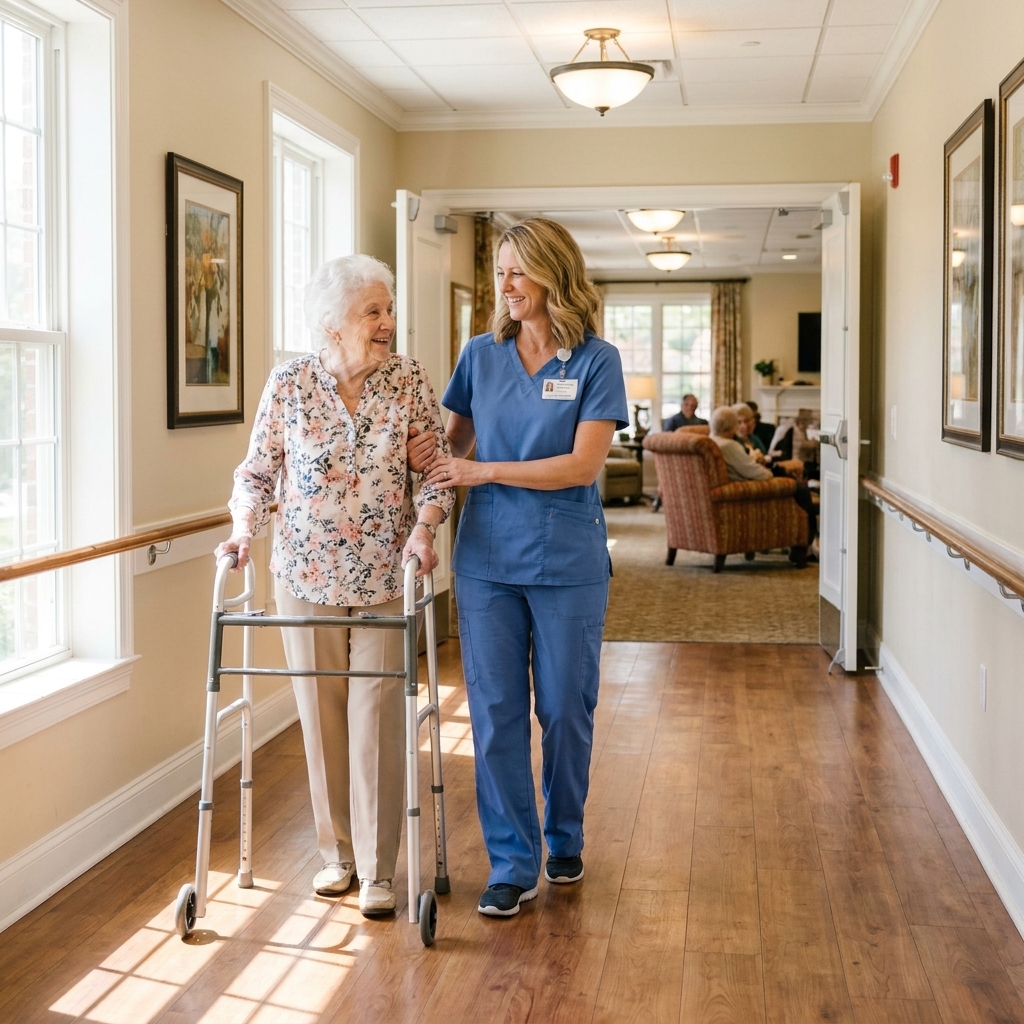
- Built-in structure: Meals, medication support, activities, housekeeping.
- Social contact: Loneliness is not a minor issue, it impacts health and mood.
- Safety: Staff presence, emergency response systems, accessible spaces.
- Relief for family caregivers: You can shift from “care manager” back toward “daughter/son/spouse,” even if it takes time emotionally.
The tradeoffs
- Loss of privacy and independence: Even in lovely communities, it is still communal living.
- Variable staffing and quality: Some places are exceptional, others are stretched thin.
- Adjustment period: Moving can spike anxiety or confusion at first.
- Care limits: Assisted living is not skilled nursing. What it can manage varies by state and community, and many settings have limits around advanced medical needs, two-person transfers, or certain dementia-related behaviors.
Best-fit situations
- Your loved one needs daily ADL help and medication oversight
- Safety is a concern at home (falls, wandering, leaving the stove on)
- Social isolation is worsening mood or cognition
- Family is overwhelmed by coordinating care
- A predictable monthly cost feels more manageable than piecing together shifts
Decision points
Cognition changes the math
Early dementia can sometimes be supported at home with routines and targeted help. As supervision needs increase, however, home care can quietly become a 24/7 requirement. Wandering risk, medication mistakes, and nighttime confusion are common tipping points.
Falls are a signal
A fall can signal a new baseline, or it can be a one-time event with a clear cause. Either way, a fall is worth taking seriously. After any fall, consider a medical evaluation and a practical safety review (vision, medications, footwear, mobility aids, home hazards, and whether supervision needs have changed).
Burnout is a health issue
When families tell me, “We can handle it,” I gently ask: Who is we? One adult child doing night checks while raising teenagers and working full-time is not a plan. It is an unsustainable setup that tends to break at the worst time.
Siblings can disagree
Different perspectives are normal. The sibling who lives far away often sees “Mom on her best day.” The local sibling sees “Mom at 2 a.m. after the third phone call.” Try to base decisions on observed needs, clinician input, and a written care plan rather than opinions alone.
Side-by-side check
In-home care is usually better for
- Strong preference to age in place
- Stable routine and manageable safety risks
- Light to moderate ADL support needs
- Personalized one-on-one companionship
- Families who can coordinate schedules and backups
Assisted living is usually better for
- Daily ADL help plus medication oversight
- Safety concerns and need for quicker response
- Loneliness and need for social engagement
- Families who need relief from constant logistics
- Situations where 24/7 home coverage is looming
Paying for care
This is where families often feel blindsided. Most long-term care is paid out of pocket, but there may be supports depending on income, service history, and insurance.
Medicare
Medicare typically covers medically necessary home health services (skilled nursing, therapy) when eligibility criteria are met. In general, this includes being homebound, needing intermittent skilled care, and having a physician or qualified practitioner certify a plan of care. It generally does not cover long-term custodial care like ongoing help with bathing, cooking, or companionship.
Medicaid
Medicaid can cover long-term care for eligible individuals, but rules and benefits vary by state. Some states offer home and community-based services waivers, and some offer limited support for assisted living through specific programs. Many assisted living communities still require significant private pay.
Long-term care insurance
If your loved one has a policy, ask for the benefit summary and elimination period (the waiting period before benefits start). Policies often cover in-home care, assisted living, or both, but the daily benefit cap and documentation requirements matter.
VA benefits
Some veterans and surviving spouses may qualify for VA benefits that help pay for care, such as Aid and Attendance. Eligibility depends on service history, health needs, and financial criteria.
Family agreements
If a family member is providing paid care, put it in writing. A clear caregiver agreement and clean documentation can reduce conflict and avoid problems later, especially if Medicaid is a possibility.
Where this fits in the care continuum
Sometimes families are choosing between more than two doors. Here is a simple map:
- Independent living: housing and amenities, minimal or no personal care.
- Assisted living: help with ADLs and medication support in a residential community.
- Memory care: more secure, structured support for dementia, often within or alongside assisted living.
- Skilled nursing (nursing home): higher medical care and supervision.
- CCRC (life plan community): multiple levels of care in one campus, usually with a specific contract and cost structure.
Questions to ask
If you are considering in-home care
- Are caregivers employees of an agency or independent contractors?
- What training is required for dementia, transfers, and fall prevention?
- What happens if someone calls out? How fast is backup provided?
- Is there a care supervisor who checks in regularly?
- How are notes documented and shared with family?
- What is the minimum shift length and weekend policy?
- How do you handle medication reminders versus medication administration?
If you are considering assisted living
- What is included in the base rate, and what triggers added fees?
- How is care level assessed, and how often can it change?
- What is staff-to-resident ratio on days, evenings, and overnight?
- How do you handle falls, wandering, or behavior changes?
- What is the process if someone needs more care than you can provide?
- Can residents age in place, or is a move to memory care or skilled nursing likely?
- How are medications managed, and who is responsible for refills?

How to evaluate quality
For both settings
- Check state licensing and read inspection reports when available.
- Ask how complaints are handled and what happens after an incident.
- Notice communication: do they answer clearly, or do they pivot into sales language?
For home care agencies
- Ask about hiring standards (background checks, reference checks, supervision).
- Ask how caregiver-client matching works and what happens if it is not a good fit.
- Ask how care notes are documented and whether families can access them.
For assisted living communities
- Ask about staffing patterns by shift, and clarify which roles are on-site overnight.
- Ask how they decide a resident has exceeded their care capacity.
- If possible, visit at a different time than the tour, such as early evening or a weekend.
One note on staffing ratios: they can be hard to compare because job roles differ. Use ratios as one data point, not the only one.
Red flags
In-home care red flags
- Vague answers about training, supervision, or background checks
- High turnover with no continuity plan
- Pressure to pay under the table without clear documentation
- No written care plan tied to specific needs and risks
Assisted living red flags
- Strong sales vibe with fuzzy details about staffing and fees
- Residents waiting a long time for help during a tour
- Unclear policy on falls, emergency response, or medication errors
- Promises that they can handle anything without explaining how
How to decide
Guilt loves a vague decision. Clarity comes from specific criteria. Try this three-step approach:
1) Name the non-negotiables
- Safety: falls, wandering, medication errors
- Dignity: hygiene needs met consistently
- Health stability: nutrition, hydration, appointments
- Connection: daily social contact, not just television
2) Write your triggers
Examples: two falls in a month, missed meds, weight loss, nighttime confusion, caregiver burnout, repeated 911 calls, or your loved one being alone when it is no longer safe.
3) Choose the right-now plan and schedule a review
Pick the best fit for the current season and set a date to reassess, often in 60 or 90 days. This keeps you from needing to predict the future and reduces family conflict because everyone knows another check-in is coming.
Choosing assisted living is not “giving up.” Choosing in-home care is not “doing it the hard way.” Both can be acts of love. The best choice is the one that keeps everyone safe enough and steady enough to stay connected.
FAQ
Does Medicare pay for in-home care?
Sometimes, but with important limits. Medicare typically covers medically necessary home health services (like skilled nursing visits or therapy) when eligibility criteria are met, often including homebound status, intermittent skilled need, and certification under a plan of care. It generally does not cover long-term non-medical custodial care like ongoing help with bathing, cooking, or companionship.
Is assisted living the same as a nursing home?
No. Assisted living is designed for help with daily living and medication support in a residential setting. A nursing home (skilled nursing facility) provides a higher level of medical care and supervision.
What if we choose assisted living and it does not work out?
This happens, and it is not a moral failure. Ask about trial stays, the refund policy for community fees, and the process for transitioning to memory care or skilled nursing if needs change.
Can we combine assisted living with private caregivers?
Often, yes. Some families add a private aide for companionship, outings, or extra support during a period of adjustment. Confirm the community’s policy on outside caregivers and coordination expectations.
How do we talk to a parent who refuses both options?
Start with values, not logistics. “I know home matters to you” lands better than “You cannot live alone.” Then focus on a small first step, like a home safety evaluation or a few hours of help twice a week. When possible, involve their clinician in documenting safety concerns. And remember: autonomy matters, but so does reality. If capacity and safety are compromised, families sometimes must make difficult decisions with medical guidance.
A final, gentle truth
Whatever you choose, there will be hard days. There will also be unexpectedly tender moments, like your dad laughing with a caregiver who knows his stories, or your mom discovering she likes bingo more than she will ever admit.
Your job is not to create a perfect ending. Your job is to build the safest, kindest next step with the information you have, and to keep recalibrating with love. If you are in the thick of it, you are not alone.