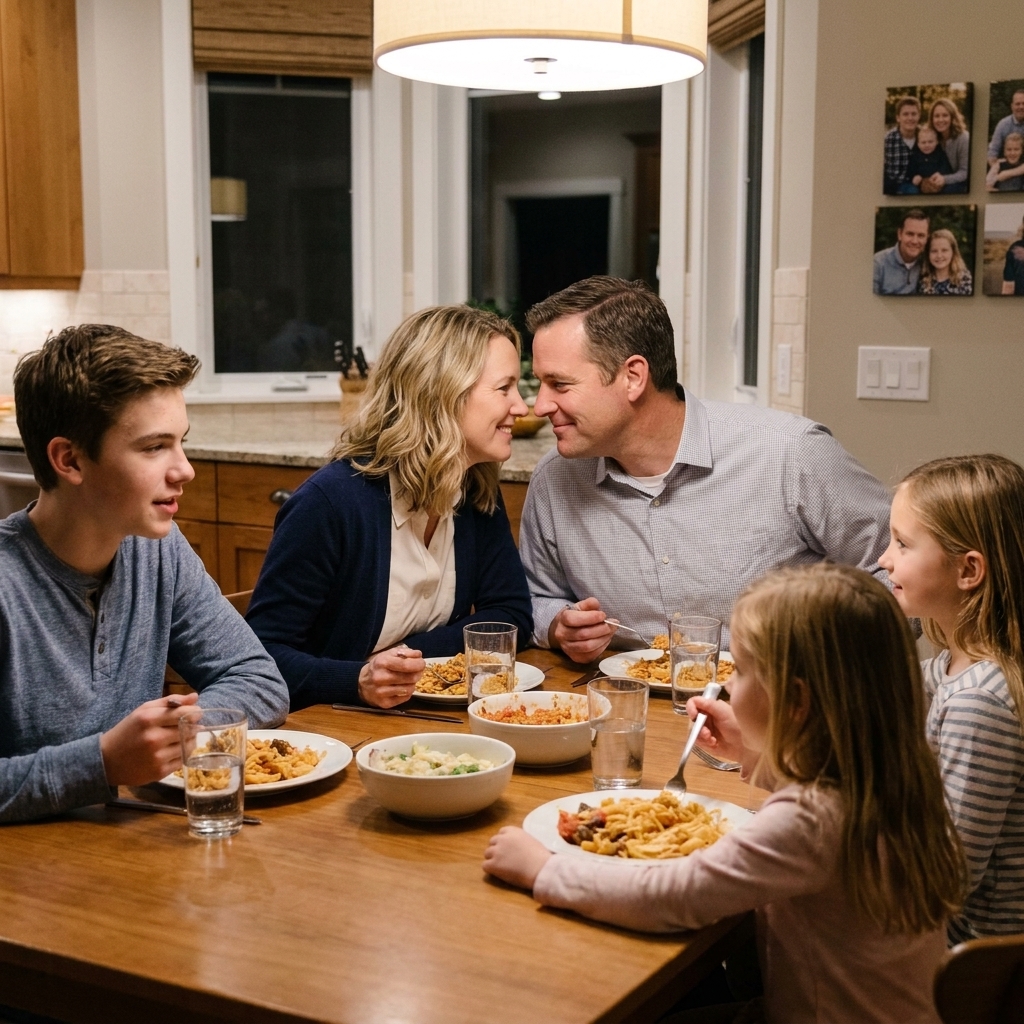
Becoming a stepparent is one of the few roles I can think of where you are asked to show up with love, patience, and maturity while everyone around you is taking notes. The kids. Your partner. The other parent. Sometimes even your own well-meaning relatives who have opinions they did not request permission to share.
Boundaries are what keep you from swinging between two exhausting extremes: overstepping (and getting resented) or disappearing (and getting lonely). The goal is not perfection. The goal is clarity that protects relationships while you build trust.

Start with a mindset that prevents conflict
New stepparents often enter with a quiet, noble hope: I'll be a stabilizing force. That can be true. But it helps to remember one grounding principle:
Connection comes before correction. Authority is earned through safety and consistency, not claimed through a title.
This does not mean kids run the house. It means you approach discipline like a long game. Early on, your most powerful role is to be a steady, kind adult who does what they say they'll do.
A quick reality check (so you don't take it personally)
Many kids experience a blended family as loss, even when the new arrangement is loving. They may be grieving the old family structure, feeling loyal to a parent who is not in the home, or testing whether you're “temporary.” Pushback is often an anxiety signal, not a character flaw.
Define your lane with your partner first
If you do nothing else, do this. Most stepparent boundary blowups are really partner alignment problems wearing a kid-sized costume.
Before you set a single rule, ask your partner to have a private conversation that covers three areas: house rules, discipline, and decision-making.
1) Agree on non-negotiable house rules
These are rules that apply to everyone in the home, including you and your partner. Think: safety, respect, and basic functioning.
- No hitting, threats, or name-calling.
- Everyone gets physical privacy in the bathroom and bedroom.
- Phones charged overnight outside bedrooms (if that's your value).
- We speak respectfully, even when angry.
When rules are framed as “how our home works,” they land better than “here is what the new stepparent demands.”
2) Decide who disciplines what (especially at the beginning)
A useful early structure is:
- You: reinforce house rules in the moment (tone, safety, respect).
- Your partner: handles consequences that impact privileges, money, schedules, or big emotions.
This protects you from becoming the default enforcer and helps kids feel less like you swooped in to control them.
3) Set a united plan for disagreements
You'll disagree. The boundary is where and how you disagree.
- No undermining each other in front of the kids.
- If one of you makes a call in the moment, revisit privately later.
- Create a phrase that buys time: “Let's talk and we'll get back to you.”
This is not about rigidity. It's about keeping kids out of adult power struggles.
Earn trust before you try to parent
Stepparenting can feel like starting a new job where you care deeply but no one gave you the password.
Trust is built through small, repeatable experiences: warmth, predictability, and respect for the child's relationship with their parent who is not in the home.
Do more noticing than fixing
In the early months, it helps to lean heavily toward positive interactions and keep corrections brief and calm. This is not fake cheerleading. It's choosing to notice what is already working.
- “I noticed you helped your sister with that. That was kind.”
- “Thanks for putting your plate in the sink without being asked.”
- “I like hearing what you think about that show.”
Create low-pressure connection rituals
Kids who are wary of closeness often do better with side-by-side connection rather than face-to-face intensity.
- Weekly taco night where everyone builds their own plate.
- A short walk with the dog after dinner.
- Car errands with music and minimal questions.
Set boundaries you can enforce
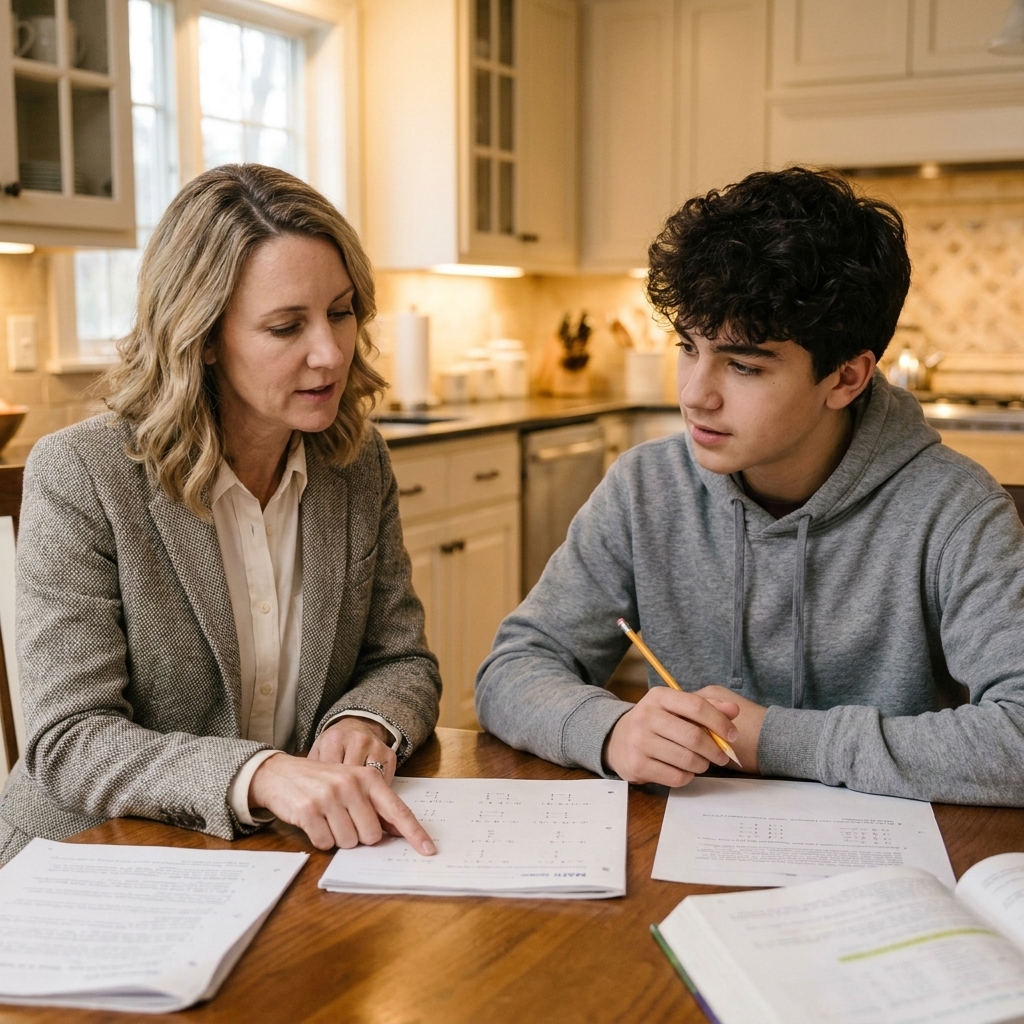
A boundary is not a lecture. It's a limit you can follow through on.
Use this formula:
When you X, I will Y, because Z.
Short. Calm. Repeatable.
Examples you can actually say out loud
- “When voices get loud, I'll take a break from the conversation. We can try again when we're calmer.”
- “When someone swears at me, I'm going to end the talk and get your parent. We can revisit it respectfully.”
- “When the rule is no phones at the table, I'll put my phone away too. Dinner is phone-free for everyone.”
- “If you're not ready to hug, that's okay. In this house we still say hello in some way.”
A note about consequences
The best consequences are:
- Related: tied to the behavior (mess leads to cleaning).
- Reasonable: not nuclear.
- Reliable: you can and will follow through.
In a blended family, I generally recommend your partner handles bigger consequences early on, while you focus on consistency and tone. As trust grows, you can share more authority.
Discipline now vs later
One of the most common questions I hear is: “Am I allowed to discipline them?” The better question is: “What level of discipline matches our current level of trust?”
In the early stage (first months)
- Correct immediate safety issues: “Stop. That's not safe.”
- Reinforce shared house rules: “In our house we don't slam doors.”
- Redirect and de-escalate, then loop in your partner for consequences.
- Support routines: bedtime reminders, getting out the door, household expectations.
In the later stage (after trust and consistency)
- Give consequences you and your partner already agreed on.
- Hold boundaries without needing to hand off every time.
- Have repair conversations: “Here's what happened, here's what we do next time.”
What to avoid (even if you're right)
- Trying to replace the other parent.
- Making rules unilaterally.
- Using “Because I said so” as your primary tool.
- Criticizing the other parent in front of the kids.
- Weaponizing gratitude: “After all I do for you…”
If you hear yourself about to say that last one, take a breath. We've all been there. It's a human moment, not a moral failing. It's also rarely effective.
When they say you're not my mom or dad
This line tends to arrive at the exact moment you're already tired and holding a laundry basket, which feels personal but is strangely universal.
What not to do: argue titles.
What to do: validate the truth inside it and return to the boundary.
Try these responses
- “You're right. I'm not. And I still care about you, and we still need to be respectful.”
- “I'm not here to replace anyone. I'm here to be a safe adult in your life.”
- “Totally fair. Your parent and I are the grownups in charge of this house, though, so the rule still stands.”
When you don't take the bait, you communicate emotional strength, which is one of the most stabilizing gifts you can give a kid in transition.
Protect your role without competing
Co-parenting and stepparenting pull on some tender insecurities. Even in the healthiest situations, it can sting to feel like an outsider in a family system that existed before you.
Boundaries here are about staying in your lane while refusing to become invisible.
Helpful lane markers
- Your partner communicates with their ex about schedules, money, medical decisions, and school matters, unless you all agree otherwise.
- You support the plan inside your home and keep your opinions for private conversations with your partner.
- You can be warm and civil without being the messenger, mediator, or emotional dumping ground.
If the other household has very different rules, it's tempting to comment. Instead, try: “Different houses, different rules. In our home, we do it this way.”

High-conflict co-parenting
If the other parent is high-conflict, boundaries have to get more practical. Your goal is less winning and more stability.
- Let your partner lead communication and keep it brief, factual, and calm.
- Use written channels when possible (email or a co-parenting app) so details are clear and less reactive.
- Don't use kids as messengers. If they show up carrying a complaint, you can say: “Thanks for telling me. That's something the grownups will handle.”
- Expect undermining and plan for it. You can still keep your home steady: “You don't have to like the rule. It's still the rule here.”
Know the legal limits
In many places, stepparents have limited legal authority, even when you're doing a lot of daily parenting. That can affect things like medical consent, school pickup lists, and access to records.
If you're unsure, ask your partner what the school or pediatrician requires and consider getting clarity in writing. It's not about mistrust. It's about avoiding a stressful surprise when a kid gets sick or a form needs signing.
Extended family boundaries
Grandparents, aunts, and friends can accidentally make things harder by pushing closeness too fast or comparing families.
You're allowed to set gentle guardrails like:
- “Please don't ask them to call me Mom or Dad. They'll choose what feels comfortable.”
- “We're not discussing their other parent at holidays.”
- “If you have feedback about the kids, bring it to us privately, not at the table.”
This is not about controlling others. It's about creating a home where kids don't feel like they're betraying anyone by relaxing.
Repair matters most
Even with boundaries, you'll have moments you wish you could redo. Welcome to being a human in a family.
Repair is a boundary too. It says: conflict is survivable here.
A simple repair script
“I want to revisit what happened. I got too sharp. That's on me. The rule still matters, but I want to say it with respect. Can we try again?”
Kids don't need flawless adults. They need adults who can own impact, return to calm, and stay consistent.
Take care of the stepparent too
Boundaries get harder to hold when you're depleted. If you're feeling resentment, numbness, or constant vigilance, don't treat that as proof you're not cut out for this. Treat it as a signal you need support.
- Make sure you and your partner have protected couple time, even if it's short.
- Get regular time that is just yours: a class, a friend, a quiet hour.
- Consider a stepparent support group or a therapist who understands blended family dynamics.
You don't have to earn rest by suffering.
When to get extra support
Sometimes boundaries are not enough because there are bigger forces at play: unresolved divorce grief, loyalty binds, trauma, or high-conflict co-parenting.
Consider family therapy or stepfamily counseling if:
- There is ongoing hostility or fear in the home.
- A child is acting out intensely at school or showing signs of anxiety or depression.
- You and your partner cannot align on basic rules.
- Transitions between homes reliably cause major dysregulation.
A therapist who understands blended families can help you create a realistic family structure, develop scripts, and protect the couple relationship, which often acts as the anchor for stability at home.
FAQ
How long does it take to feel like a real stepparent?
It varies widely, but many clinicians observe that it often takes a year or two for a blended family to feel steadier, sometimes longer if the divorce was recent or the kids are teens. Think in seasons, not weeks. Early discomfort isn't proof you're failing.
Should a stepparent be involved in discipline at all?
Yes, but the level matters. Early on, focus on house rules, respect, and safety while your partner handles bigger consequences. Over time, as trust builds and you and your partner stay aligned, your disciplinary role can expand.
What if my partner expects me to do all the parenting work?
That's a boundary conversation with your partner, not the kids. Be specific: “I can help with rides and dinners, but I'm not comfortable being the main disciplinarian. Let's decide together what's mine and what's yours.”
What if the kids are polite but distant?
Polite and distant can be a form of safety. Keep showing up with consistency and low-pressure connection. Don't demand closeness. Invite it.
Do these tips work for stepmoms, stepdads, and LGBTQ+ families?
Yes. The dynamics are about roles and trust, not gender. Adjust the language to fit your family and the titles everyone uses.
A closing thought
If you're trying to establish boundaries as a new stepparent, you're already doing one of the hardest parts: taking the role seriously.
Boundaries in a blended family are not about power. They are about predictability, respect, and emotional safety. The most effective stepparents I have known in my work with families and in my own life are not the loudest. They are the steadiest.
Steady counts. Especially on the days it feels like no one notices.