
When your partner is the primary caregiver, it can feel like your relationship has an uninvited third roommate. It takes up space, rearranges priorities, and somehow produces an endless supply of small emergencies. If you are watching the person you love slowly run out of steam, you may swing between wanting to rescue them and feeling powerless because you cannot fix the situation.
You do not have to choose between standing back and taking over. There is a middle path: steady, specific support that protects your partner’s dignity and protects your relationship from becoming only a management team.

How caregiving stress shifts a relationship
Caregiving is love in action, but it is also chronic stress. Over time, chronic stress can change how the brain and body respond to daily life. Small misunderstandings can land harder. Joy can feel muted. Patience thins out. And because caregiving is often emotionally loaded, grief and fear may be constantly humming in the background.
If any of this feels familiar, it is not proof your relationship is failing. It is usually proof your relationship is overloaded.
Common ripple effects
- Role drift: One partner becomes the planner, advocate, chauffeur, medication manager, and crisis responder. The other may feel like they are watching from the sidelines.
- Communication narrows: Conversations become transactional: Who called the pharmacy? What time is the appointment? Did anyone eat?
- Intimacy takes a hit: Not because love disappears, but because exhaustion, resentment, and mental load crowd it out.
- Emotional whiplash: Your partner may snap, then apologize, then cry, then go numb. Stress is not polite.
- Isolation: Caregivers often stop seeing friends and doing normal couple things. You can end up lonely together, which is a special kind of ache.
Signs your partner may be burning out
Burnout is not just “tired.” It is depletion that does not reliably reset after a good night’s sleep. Many caregivers keep going until their body or mood makes the decision for them.
Watch for these red flags
- Emotional changes: irritability, numbness, frequent tears, anxiety, dread before caregiving tasks, feeling hopeless or trapped
- Cognitive changes: forgetfulness, trouble concentrating, decision fatigue, constant second-guessing
- Physical changes: headaches, stomach issues, disrupted sleep, getting sick more often, unexplained aches
- Behavior shifts: withdrawing from you, canceling plans, overusing alcohol or sleep aids, scrolling late into the night, skipping meals
- Care patterns: more mistakes, resentment toward the care recipient, or a sudden insistence that “no one else can do it right”
If you hear talk of self-harm, suicide, or you notice dangerous impairment (substance misuse, severe sleep deprivation, reckless driving), treat it as urgent. If there is immediate danger, call your local emergency number now. In the U.S., you can call or text 988 for the Suicide and Crisis Lifeline. If you are outside the U.S., contact your local emergency services or a crisis line in your country, and loop in a trusted clinician if you have one.
Emotional support that lands
Many loving partners go straight to problem-solving. It is a sweet instinct, and it can also make a burned-out caregiver feel unseen. Your first job is to help your partner feel less alone inside the experience.
What to say (and why it helps)
- “This is a lot. I see how hard you are working.” Validation can lower defensiveness and shame.
- “What part feels heaviest this week?” It invites specificity, which makes support possible.
- “Do you want comfort, solutions, or both?” It keeps you from guessing wrong.
- “You do not have to earn rest.” Many caregivers feel guilty stopping.
What to avoid (even if you mean well)
- “Just take a break.” If it were that easy, they would have.
- “You should…” Burnout plus advice can sound like criticism.
- “At least…” Silver linings often feel like erasure.
- Debating their feelings: “It is not that bad” or “You are overreacting” almost always backfires.
The goal is not to cheer your partner up. The goal is to help them feel accompanied.
Practical help without taking over
This is the delicate dance: stepping in enough to reduce the load, without accidentally sending the message, “You cannot handle this.” The best practical help is collaborative, predictable, and respectful of your partner’s expertise.
A helpful rule is this: do less talking about help, and more owning help. Fewer proposals, more follow-through.
Ask in ways that reduce mental load
Try offering choices instead of open-ended questions.
- Instead of “What can I do?” try “Do you want me to handle dinner or the pharmacy call?”
- Instead of “Tell me what you need,” try “I can take over Tuesdays and Thursdays. Which would help more?”
Create a shared system
A simple, shared setup can prevent dozens of tiny arguments. Keep it light. Do not build a color-coded empire when everyone is already tired.
- One calendar: appointments, visits, work deadlines, school events
- One place for information: medication list, diagnoses, insurance details, key contacts
- A weekly 15-minute check-in: what is coming, what is breaking, what can be delegated
Own invisible tasks
Burnout often comes from being the only brain holding the whole operation. Pick tasks you can fully own, start to finish.
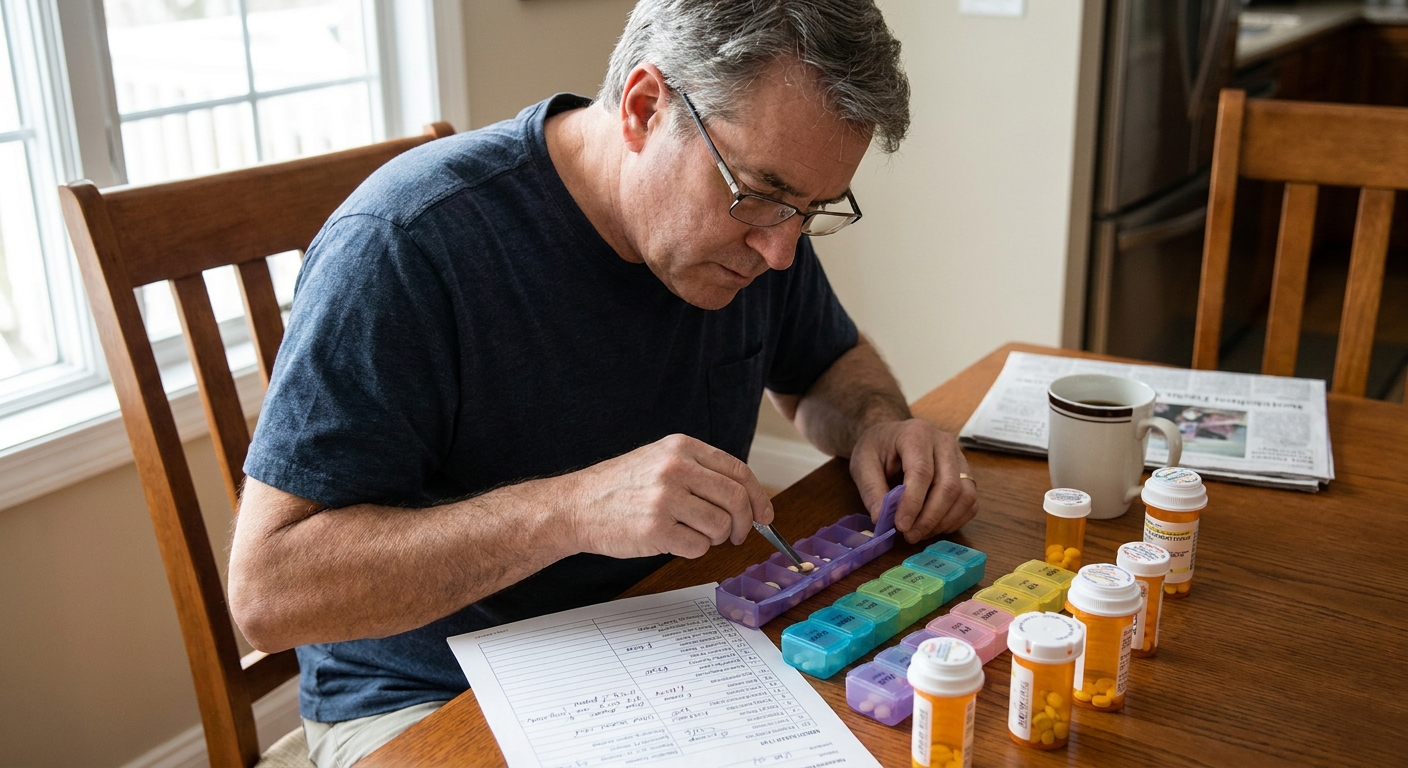
- Refill management and pharmacy coordination
- Insurance calls and paperwork tracking
- Meal planning and grocery logistics
- Scheduling family updates, rides, or visitor coordination
- Home maintenance tasks that quietly pile up
Protect your partner’s identity
One of the kindest things you can do is help your partner remain a whole person.
- Encourage one small “not caregiving” ritual: a walk, a class, coffee with a friend
- Make space for sleep and movement before you optimize anything else
- Plan low-effort connection: a show together, a porch chat, a drive with music
Safety and hands-on care
If your partner is doing physical care (transfers, lifting, bathing), injury risk is real for both caregiver and care recipient. This is not about toughness. It is about mechanics, training, and having enough help.
- Ask for training: A physical therapist, occupational therapist, or home health nurse can teach safer transfers and set-ups.
- Use the right tools: gait belts, shower chairs, grab bars, hospital beds, or lift devices can reduce strain.
- Know the line: If a task feels unsafe, it probably is. Escalate to professional help before someone gets hurt.
Paperwork that reduces panic
A surprising amount of caregiver overload comes from getting blocked by systems. A little paperwork up front can prevent the “I have to fix this right now” spirals later.
- Health information access: HIPAA release (U.S.) or local equivalent so clinicians can share info with the caregiver
- Medical decision authority: health care proxy or medical power of attorney
- Money management authority: durable power of attorney for finances (as appropriate)
- Medication and history: a current med list, allergies, diagnoses, and past procedures in one document
- Emergency plan: key contacts, preferred hospital, insurance info, and what to do if the caregiver is unavailable
Keep resentment from moving in
Resentment grows in silence. It shows up when one partner feels abandoned by the other, and the caregiver feels abandoned by everyone. The antidote is naming reality gently and often.
A simple script for hard moments
Try: “I miss you. I know you are doing everything you can. Can we talk about one change that would make this week more livable for both of us?”
Make room for both truths
- Your partner can be doing heroic work and still need to change how things are running.
- You can be supportive and still feel lonely, scared, or frustrated.
- The care recipient can be genuinely in need and still be difficult to care for.
Family dynamics and guilt
Caregiving rarely happens in a vacuum. Sometimes siblings disappear. Sometimes relatives criticize from a distance. Sometimes culture and family expectations create a heavy layer of guilt.
- Get specific: “Can you sit with Mom Saturday 1 to 4?” lands better than “We need more help.”
- Use a group update: one shared message thread or email to reduce repeating yourself
- Set boundaries early: “We are not debating the plan unless you are taking a shift.”
When outside support is needed
Many couples wait until there is a blow-up, a health crisis, or a near-collapse before bringing in help. If you are reading this and thinking, “We cannot keep doing it like this,” that is often the right time to add support.
Signs it is time to widen the circle
- Burnout symptoms are escalating, not improving
- Your partner cannot leave the house without anxiety or guilt
- You are fighting more, or avoiding each other to keep the peace
- The caregiver is missing work, neglecting medical needs, or becoming depressed
- Safety is at risk for the care recipient or caregiver
Types of support that can help
- Respite care: planned time off, even a few hours weekly
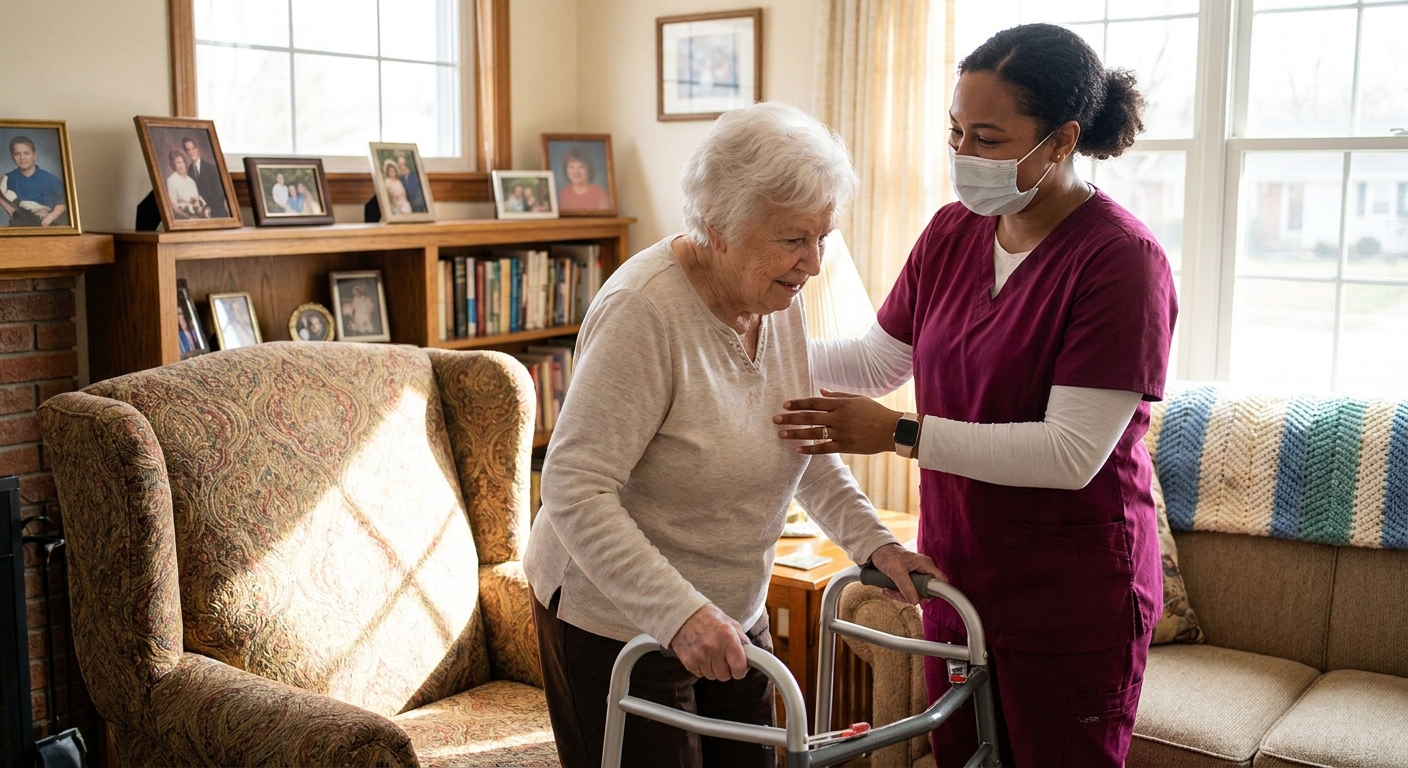
- Home health aides: help with bathing, mobility, meals, or supervision
- Adult day programs: structure and socialization for the care recipient
- Care manager or social worker: help coordinating services and planning
- Support groups: practical tips and the relief of being understood
- Individual therapy: for caregiver stress, grief, trauma, or anxiety
- Couples counseling: to protect the relationship while systems change
Want reputable starting points? The National Institute on Aging caregiving resources and the Family Caregiver Alliance are solid, practical hubs.
Help without becoming the manager
Sometimes the non-caregiving partner starts coordinating everything, and the caregiver feels replaced or controlled. Other times, the caregiver clings tightly because the stakes feel high. Either way, the relationship starts to feel like a workplace.
Try a partnership model
- Decide together: “Which tasks belong to you, which to me, which to someone else?”
- Agree on standards: what “good enough” looks like for meals, cleanliness, visits, and routines
- Set handoff rituals: a quick debrief when you take over, then the caregiver is off-duty
Respect the caregiver’s expertise
If your partner has been doing hands-on care, they have knowledge you do not. Invite coaching instead of corrections. “Show me how you do the transfer safely” goes a long way compared to “You are doing it wrong.”
Micro-connection
In seasons of caregiving, big romantic gestures can feel absurd. Micro-connection is where real resilience lives.
- A six-second kiss before you check your phones
- A daily two-minute hug without talking logistics
- A shared joke or a silly meme, even in the waiting room
- One question at bedtime that is not about caregiving: “What gave you a little relief today?”
These are not “cute extras.” They can help your body settle and remind you that you are still partners, not just coworkers in a crisis.
FAQ
What if my partner refuses help?
Start by getting curious, not forceful. Many caregivers refuse help because of guilt, fear of judgment, or past experiences where “help” created more work. Try: “What makes help feel unsafe or annoying?” Then offer one small, controlled experiment, like you handling one errand weekly for a month. Keep it predictable and low-drama.
What if I am burned out too?
That matters. Caregiving stress can spread through a household. If you are both depleted, aim for stabilization: sleep, meals, and a sustainable schedule before you tackle bigger emotional issues. Outside support is not a luxury when two people are sinking.
How do I talk about assisted living or memory care?
Lead with the goal, not the facility. “I want you to be healthy enough to be in their life for the long haul.” Then talk about safety and sustainability: falls, wandering risk, medication errors, sleep deprivation. If possible, tour options together and frame it as added care, not abandonment.
Is caregiver burnout the same as depression?
They overlap but are not identical, and they can also happen together. Burnout is often tied to chronic overload and may improve when there is meaningful relief and support. Depression can persist even when stress decreases, and it has its own patterns and risks. Only a clinician can diagnose either one. If your partner has ongoing low mood, loss of interest, changes in sleep or appetite, or thoughts of self-harm, encourage a professional evaluation.
A gentle next step
If everything in this article feels like a lot, choose one thing:
- Ask: “What is the hardest hour of your week?”
- Then take ownership of that hour, end-to-end, for the next two weeks.
Support is not proven by intensity. It is proven by consistency. And in caregiving seasons, consistency is romance.