

The first psychiatry visit can feel like a big threshold. Even when you are confident you are doing the right thing, it is normal to worry about what will be asked, who will be in the room, and whether you will leave with a major decision on the spot.
Most first visits are an extended evaluation. The goal is to understand what your teen is experiencing, rule out urgent safety concerns, review health history, and decide what next steps make sense. Sometimes that includes discussing medication options, but it is also common for the prescriber to wait, gather more information, or coordinate with a therapist or school before making changes.
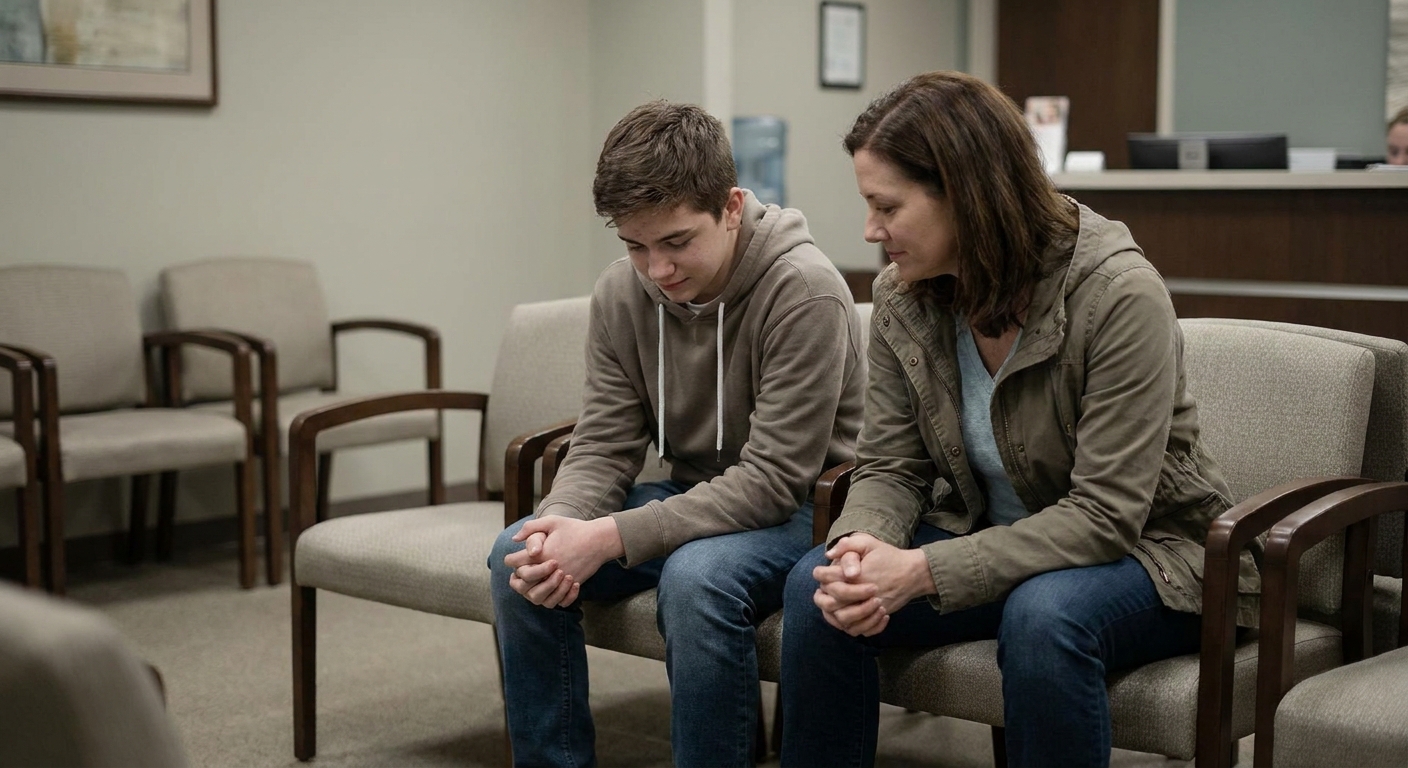
What this first appointment is for
A teen’s first psychiatry appointment is usually about clarity, not quick fixes. A prescriber is trying to answer a few core questions: What symptoms are showing up, how intense are they, how long have they been there, and how much are they interfering with life at home, school, and with friends?
You can expect the clinician to:
Get a timeline of what has changed and when.
Screen for safety, including self-harm and suicidal thoughts, even if you did not come in for that.
Review medical factors like sleep, appetite, energy, menstrual cycle patterns (if relevant), substance use, head injuries, and medications or supplements.
Ask about family history of mental health challenges and substance use, because it can affect risk and treatment planning.
Clarify supports that are already in place, such as therapy, a school counselor, accommodations, or coaching.
If you are still sorting out which professional does what, this companion page can help: Psychiatrist vs. Therapist for a Teenager.
Who the prescriber may be
The person you meet might be a child and adolescent psychiatrist, a psychiatric nurse practitioner, or a physician assistant working with a psychiatrist. In many clinics, a therapist, trainee, or nurse may also be part of the intake process.
The approach can vary by training, setting, and clinic model. What should stay consistent is this: you should be able to understand the plan, the reasoning behind it, and how to follow up if things change.
Before you go: paperwork and what to bring
Plan for forms. Most offices send questionnaires ahead of time, but some will have you arrive early to complete them. Try to treat the paperwork as a time-saver, not a test.
Here is what is worth bringing if you can:
Your teen’s current medications and supplements, including dose timing. A photo of the bottles on your phone is fine.
Medical history highlights, including allergies, major illnesses, hospitalizations, concussions, and sleep issues.
Names and contact info for current providers (therapist, pediatrician, school counselor).
A short symptom timeline with 5 to 10 bullet points. Include what you have tried and what helped even a little.
School context like recent grade changes, attendance problems, behavior reports, or existing accommodations.
If co-parenting dynamics are part of the stress, it can help to think ahead about how information will be shared. You may find support here: How to Bring Up Teen Therapy With a Co-Parent.

How the visit usually starts
Many psychiatry offices operate like other medical clinics. You may check in, show ID and insurance, sign consent forms, and your teen may have basic vitals taken. Some clinics also do brief screening questionnaires at check-in. In telehealth, the check-in looks different, but the evaluation questions are often similar.
Then you will meet the prescriber. First appointments are often longer than follow-ups. The pace may feel structured, with a lot of questions. That is not coldness. It is how they make sure they do not miss something important.
Privacy and who stays in the room
Many clinicians split the appointment into parts: some time with parent and teen together, some time with the teen alone, and sometimes a brief wrap-up together again. If your teen is anxious about being alone, you can ask how the clinician typically handles that. There is often flexibility.
Expect a conversation about confidentiality. Many teens have some privacy protections, but the details vary a lot by state or country, the teen’s age, clinic policy, and whether the visit is in a medical setting or a therapy setting.
In general, parents are brought in for safety issues and to help with treatment planning. Also, even when clinical details are kept private, some information may still show up in billing, visit summaries, or an online patient portal depending on insurance and electronic records.
If you want a deeper sense of what information is typically shared with parents, this page is a good next read: What Can a Therapist Share With Parents of a Teen?
If the visit is telehealth
Telehealth can be a great fit for some teens, but privacy becomes a practical issue. Before the call, help your teen find a spot where they can talk without worrying who can hear them. Headphones, a closed door, and a plan for siblings or other family members can make a big difference.
If your teen cannot get privacy at home, it is okay to tell the clinic. Some practices can problem-solve, adjust scheduling, or offer in-person options.
Questions your teen may be asked
Teens often worry the visit will feel like an interrogation. It can feel personal, yes. But the questions are usually predictable, and many are about patterns and functioning.
Your teen may be asked about:
Mood: sadness, irritability, anger, numbness, tearfulness, guilt, or hopelessness.
Anxiety: worries, panic sensations, social anxiety, perfectionism, intrusive thoughts.
Sleep: falling asleep, staying asleep, early waking, nightmares, day-night reversal.
Energy and focus: motivation, concentration, restlessness, memory, procrastination.
Appetite and body concerns: restriction, bingeing, purging, intense body checking.
School and peer life: attendance, workload, bullying, isolation, conflict, breakups.
Screen time and gaming: patterns that worsen sleep, mood, or family conflict.
Substances: vaping, cannabis, alcohol, pills, energy drinks. Honesty matters because of safety interactions, not because anyone is trying to catch them.
Some clinicians also ask about trauma, sexuality, identity stressors, or major losses. If your family has been through a lot, it is okay to say, “There is a story here, and we can share it in pieces.”
You may also see rating scales or questionnaires, and the prescriber may ask to gather collateral information from a therapist, pediatrician, or school if that feels relevant.
Questions you may be asked
Parents are often asked to describe what they are seeing and what they have tried. Your perspective matters, especially for younger teens, but it helps to stick to concrete examples instead of conclusions.
Useful, specific parent observations sound like:
“Homework that used to take 45 minutes now takes three hours and ends in tears.”
“She is sleeping after school most days and then awake at night.”
“He used to play basketball twice a week and has stopped going.”
“Mornings have become a daily fight, and attendance has dropped.”
If you feel unsure how to describe what you are seeing, this may help you organize your thoughts: 7 Signs Your Teen Needs More Support at Home.
Safety screening
Even when the reason for the visit is attention, anxiety, or mood, most prescribers will ask directly about self-harm and suicide. Parents are often startled by this, especially when the teen has never disclosed anything concerning.
The clinician may ask questions like “Have you had thoughts of hurting yourself?” or “Have you wished you would not wake up?” They ask because it is safer to ask than to assume, and many teens do not volunteer this information unless invited.
Medication talk
This is often the part parents and teens dread most, for opposite reasons. Some parents fear being pressured. Some teens fear being dismissed. A solid first visit makes room for both concerns.
What may happen at the first visit
A discussion of options, including benefits, common side effects, and how you would monitor changes.
A decision to start, stop, or adjust a medication, especially if symptoms are significantly impairing.
A monitoring plan for sleep, appetite, mood shifts, school functioning, and any emerging safety concerns.
Some prescribers will also screen for things that change medication choices, such as a history of mania or bipolar symptoms before prescribing certain antidepressants.
What is commonly put off until later
Big diagnostic conclusions when the picture is complex or information is missing.
Multiple changes at once. Many prescribers prefer one careful step at a time.
Long-term planning until they see how your teen responds to the initial plan and what therapy or school supports are doing.
One note that matters: you do not have to decide everything in the room. It is reasonable to ask, “Can we take 24 to 48 hours to think about this and message you with questions?” Some situations call for faster action, but many do not.
If safety feels acute, the plan may be an urgent evaluation or a higher level of care rather than a routine outpatient medication change. There is more on that below.
If you are trying to weigh prescriber options within healthcare, you might also read: Pediatrician vs. Psychiatrist for Teen Medication.
Possible labs and medical checks
Depending on symptoms, medical history, and which medications are being considered, the clinician may recommend labs or other medical checks. Sometimes that is to rule out medical contributors (like thyroid issues or anemia). Sometimes it is to establish baselines, such as weight, blood pressure, or other monitoring needed for certain medications.
If you are not offered labs, it does not automatically mean the evaluation was incomplete. It often means the clinician did not see a medical reason for them at that time.
Help your teen feel less ambushed
Teens do better when they know the shape of what is coming. You cannot control every question, but you can reduce the surprise factor.
Say the goal in one sentence. “This visit is to understand what you have been dealing with and decide what support makes sense.”
Offer choices where you can. “Do you want me to start the story, or do you?”
Agree on a signal. A small cue like tapping your leg can mean “I need a pause” or “Can you help me answer?”
Bring a grounding object. A hoodie, water bottle, fidget, or earbuds for the waiting room can help.
Plan something neutral afterward. A snack, a short drive, or a quiet errand, not a post-appointment interrogation.
If you want help with the earlier conversation of getting your teen to accept support in the first place, start here: How to Tell Your Teen They Need Therapy.

What a good wrap-up sounds like
At the end of the visit, you should leave with a clear plan. It does not have to be perfect, but it should be understandable.
A solid wrap-up usually includes:
What the clinician is most concerned about and what they think is less likely.
The next step (for example: follow-up visit timing, therapy coordination, labs if needed, or school support suggestions).
How to track changes at home and what to watch for.
What to do if things worsen, including after-hours instructions.
If you are leaving with a plan that involves therapy too, you might appreciate seeing how a first therapy intake differs: What to Expect at Your Teen’s First Therapy Appointment.
If your teen refuses to talk
This happens more often than people admit. Silence can be anxiety, anger, shame, mistrust, or a teen’s very clumsy attempt at control when they feel scared.
What you can do in the room:
Let the silence be information. You can say, “This is hard to talk about. We are here anyway.”
Ask for a different format. Some teens can answer rating scales or write a few notes on their phone more easily than speaking.
Offer a short parent summary with concrete examples, then stop.
Ask the clinician to try again later or schedule a second visit focused on rapport.
Outside the office, you may find these approaches helpful: How to Help a Teen Open Up Without Pressuring Them.
When to seek urgent help
A first psychiatry visit is not always the right level of care for a crisis. If your teen is in immediate danger, cannot be kept safe at home, or is making threats or plans to harm themselves or someone else, seek emergency help right away through local emergency services or the nearest emergency department.
If you are in the United States and need immediate support, you can contact the Suicide and Crisis Lifeline by calling or texting 988. If you are outside the U.S., look up your country’s crisis line and emergency number.
Questions to ask at the end
If your mind goes blank in the last five minutes, you are in very good company. Picking two or three questions is enough.
“What are the top two goals for the next month?”
“What changes would tell us this plan is helping?”
“What side effects or mood shifts would you want to hear about right away?”
“How do we contact you with questions between visits, and how fast should we expect a reply?”
“How will you coordinate with therapy or our pediatrician?”
“What should school know, and what should stay private?”
If you want help thinking through school communication specifically, this may help: What to Tell the School When Your Teen Starts Therapy.