

Siblings notice everything. The calendar changes, a parent leaves the house at odd times, someone gets a little more one-on-one attention, and suddenly a younger child is asking, “Where are you taking them?”
One simple, often safest approach is this: tell siblings that your teen is meeting with a therapist, counselor, or another mental health professional to get support, and that what they talk about is private, the same way a doctor visit is private. You can say that plainly without sharing your teen’s story.
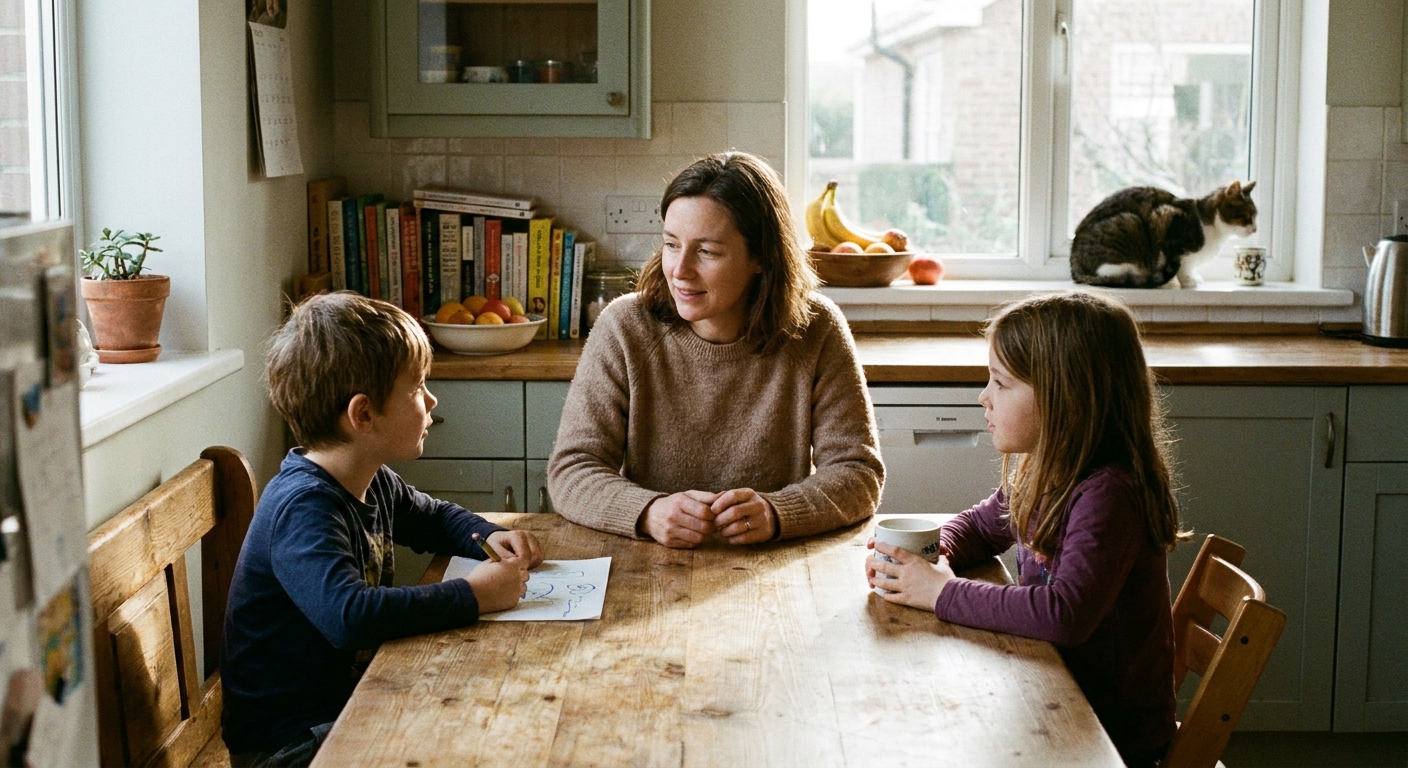
Start with one repeatable sentence
If you only have the energy for one good sentence, make it this one. Repetition can lower anxiety for kids of every age, including teens, because it keeps the message steady.
- Name it: “They’re seeing a therapist (or counselor) to get extra support.”
- Normalize it: “Sometimes people talk to a professional when life feels big.”
- Protect privacy: “What they talk about is private. I won’t be sharing details.”
- Offer reassurance: “Our family is okay, and we are handling it.”
If a sibling presses for details, you usually do not need a new explanation. You can calmly return to the same sentence.
Age-appropriate wording
Your goal is not a perfect explanation. It’s a simple, steady message that matches the sibling’s developmental level and your teen’s right to confidentiality.
For younger kids (roughly ages 4 to 8)
Keep it concrete and short. Younger kids can take “therapy” literally and imagine scary things if you get vague.
- “They are going to a counselor who helps kids with big feelings.”
- “It’s like coaching for feelings. It helps people feel better and solve problems.”
- “Nothing bad is happening right now. This is support, like when you go to the doctor to stay healthy.”
For tweens (roughly ages 9 to 12)
Tweens understand more than we think and also tend to track “fairness” closely.
- “They’re meeting with a therapist to learn tools for stress and emotions.”
- “It’s private, so I won’t share details, but we’re supporting them.”
- “If you ever want to talk to someone too, we can talk about options.”
For teens (siblings close in age)
Older siblings may read therapy as “something is wrong with them” or “they are getting special treatment.” Try calm honesty without recruiting them into the situation.
- “They’re getting extra support right now. Therapy is one way to do that.”
- “I’m not going to share what they talk about. I also won’t ask you to manage it.”
- “If you’re worried, you can tell me what you’re noticing at home.”
If your teen has asked you to keep it completely private, you can still say: “They have an appointment. It’s personal.” You can name it as therapy later if your teen becomes comfortable.
What not to share
Parents often overshare because we want siblings to understand, cooperate, or stop asking questions. I get it. But details can backfire fast at the dinner table.
A good rule is: share the purpose, not the content.
- Avoid diagnoses and labels unless your teen has clearly consented and it would be helpful for safety planning at home (for example, to set concrete house rules around privacy, conflict, or risky situations).
- Avoid the “why” story (panic, self-harm history, trauma details, substance use details, relationship conflict). Those details can turn into sibling ammunition later, even in otherwise loving families.
- Avoid making siblings responsible (“Please don’t upset them,” “You have to be extra nice,” “They are fragile”). That can create resentment and eggshell living.
- Avoid implying blame (“After the divorce,” “Because of your fighting,” “Because school is hard”). Siblings will internalize it.
Answer fairness without negotiating care
At some point, a sibling will say it. “Why do they get a special appointment?” or “How come they get to leave school early?” or “Do I get something too?”
Try to respond in two parts: fair does not mean equal, and everyone gets what they need.
Scripts you can use
- “In our family, we don’t do the exact same for everyone. We do what each person needs.”
- “Therapy isn’t a reward. It’s support.”
- “You also get support. It might look different, but I won’t ignore what you need.”
- “If you feel left out, let’s find a time that’s just for you this week.”
A fairness fix that works
When one child has standing appointments, schedule a small, predictable check-in with the other kids. It does not have to be elaborate.
- Pick one small ritual: a 10-minute walk, a weekly hot chocolate run, or a bedtime chat.
- Name it: “This is our time.”
- Protect it like an appointment when you can.
This is not to “make up for” therapy. It is to reduce the sibling narrative that attention only shows up when there is a crisis.
Curiosity, gossip, and snooping
Siblings might ask invasive questions, listen at doors, or scroll for clues if your teen leaves notes around. That behavior is often driven by worry mixed with curiosity.
Set a clear house rule
Use a rule that is about respect, not about your teen being “the problem.”
- “We do not read each other’s texts, journals, or therapy materials.”
- “We do not quiz each other about private appointments.”
- “If you’re worried about someone’s safety, you come to an adult. You don’t investigate.”
Give siblings a place to put worry
Sometimes the question beneath the question is, “Are they going to be okay?”
You can say: “I hear you’re worried. If something is unsafe, I will act. If it is private, I will protect it. Both can be true.”
If siblings overhear something scary
Sometimes siblings catch a phrase in passing that spikes panic, like “I want to die,” “Nothing matters,” or “I can’t do this.” They do not need to interrogate your teen, and they should not carry it alone.
Teach a simple response
- Stay with connection: “I’m really glad you told me. That sounds heavy.”
- Do not promise secrecy: “I can’t keep that a secret if someone might not be safe.”
- Get an adult: “Let’s tell a parent, caregiver, or another trusted adult right now.”
You can also tell siblings: “You will not get in trouble for bringing up a safety worry. That is what we want you to do.”
When siblings are resentful
Sometimes siblings don’t just feel curious. They feel mad. They may say things like, “Of course they get attention,” or “So now everything is about them.”
As a parent, you can hold two truths: the sibling’s feelings matter, and your teen’s care is not up for a vote.
Try this three-step response
- Name the feeling: “You sound frustrated and left out.”
- Set the boundary: “We are not going to make fun of therapy or punish someone for getting help.”
- Offer a next step: “Tell me what you need more of from me this week.”
If the resentment is chronic, consider whether the family is in a high-conflict or high-stress season and needs more structure. You might find it helpful to read 7 Signs Your Family Is in a High Conflict Season.
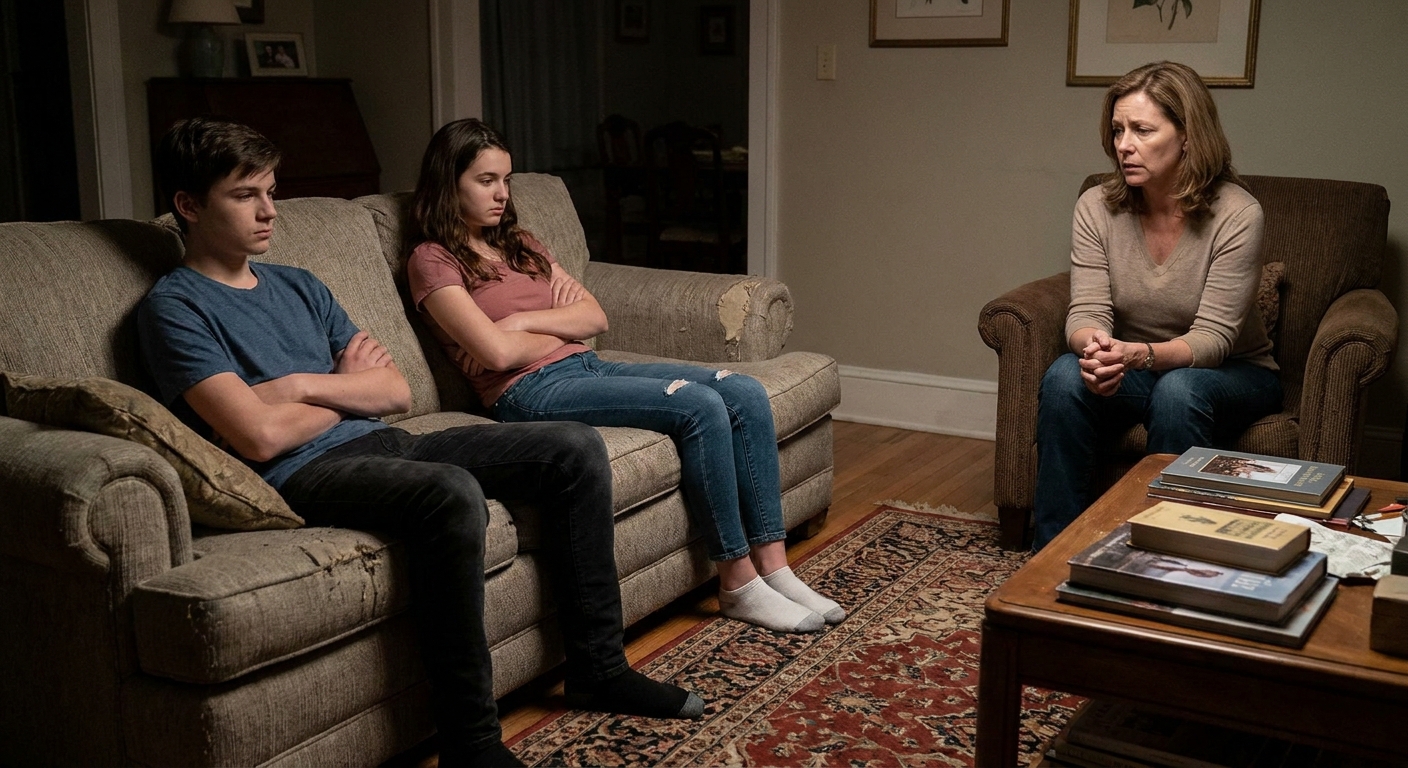
If they ask for therapy too
Sometimes this is genuine. Sometimes it is a fairness protest. Either way, it is useful information.
Start with a curious question
- “What makes you interested in talking to someone?”
- “Is there something you want help with, or do you feel left out?”
- “If talking to someone helped, what would be different for you?”
If they have real concerns, you can explore options thoughtfully. Kinfolds has a helpful overview of how care choices differ in Individual Therapy vs. Family Therapy for a Teen. If a sibling is younger, the same principle applies: individual support is different from family support, and both can be appropriate.
If the request is mostly about attention, you can respond warmly: “You don’t have to be in crisis to get time with me. Let’s plan some.”
Explain privacy so they respect it
Kids tend to accept privacy rules better when they understand that privacy is mutual, not a special privilege for one child.
A simple way to frame it
“In our family, everyone gets to have private conversations with doctors, teachers, and trusted adults. That’s part of being a person. If you ever talk to someone privately, I will respect that too.”
If you want a deeper look at what parents can and cannot know, you can read What Can a Therapist Share With Parents of a Teen?. It can help you hold the line with siblings and with your own curiosity on hard days.
Stigma script
If your family, community, or culture treats therapy as shameful, a short script can steady the tone:
“In our family, mental health is health. Getting support is responsible, not embarrassing.”
Two homes or blended families
If your kids move between households, siblings may worry about what gets said “over there,” or whether one parent knows more than the other. Keep your message consistent, even if the adults are not.
- “This is a health appointment. We do not share private details across houses.”
- “If there is a safety concern, the adults will communicate about safety steps.”
If co-parent communication is tense, it can help to keep your tone calm and businesslike. You might find support in Co-Parenting With a Difficult Ex: Keep Communication Calm and Therapy for a Teen in Two Homes.
When siblings are grown
If siblings are older teens or young adults, they may ask more direct questions or push for the “real reason.” You can stay respectful and firm:
- “I hear your concern. I’m not going to share their personal details.”
- “If you want to support them, be kind, keep things normal, and let them decide what to share.”
If your teen is nearing adulthood or already 18, you may also appreciate What Changes When Your Teen Turns 18 and Still Lives at Home.
If your teen feels embarrassed
Many teens assume therapy will change how siblings see them. The best protection is often a calm family tone: therapy is normal, help is allowed, and cruelty is not.
Ask what they want siblings to know
This can be a short conversation in the car or while doing dishes. You are not asking them to justify therapy, just to set preferences.
- “Do you want me to use the word therapy, or keep it as ‘an appointment’?”
- “If they ask questions, what is okay for me to say?”
- “Is there anything you do not want shared, even generally?”
If your teen is still on the fence about starting, you may also appreciate How to Tell Your Teen They Need Therapy, which includes language that preserves dignity and choice.
Common questions
“Is something wrong with them?”
“They’re having a hard time, and getting support is a healthy response. You don’t need to fix it. The adults are handling it.”
“Did I do something?”
“No. This isn’t your fault. If there is anything you need from me, you can tell me.”
“Why do they get to miss school, and I don’t?”
“Appointments happen when they are available. If you ever need an appointment for your health, we would do that too.”
“What do they talk about?”
“That’s private. If you’re worried, tell me what you’re noticing at home, and I’ll help.”
“Are we getting divorced?” or “Are they in trouble?”
“No. Therapy is support, not punishment. If there were big family changes that affected you, we would tell you directly.”
When to get extra support
Sometimes sibling stress becomes its own problem, even if you are handling the explanation well.
Consider extra support if:
- Siblings are escalating conflict around appointments or confidentiality.
- A child seems persistently anxious, withdrawn, or is acting out in new ways.
- There are safety concerns, threats, or self-harm talk in the home.
If you are noticing anxiety signs in a younger child, 5 Signs Your Child Is Struggling With Anxiety can help you sort what you are seeing and what a next step could be.
A final script
If the household feels tense and you want one sentence that is both honest and boundaried, here it is:
“Your sibling is getting extra support right now. We respect their privacy, and we also make sure everyone in this family has what they need. If you have worries or you feel left out, you can talk to me.”
You do not need to convince siblings to love the idea of therapy. You just need to set a respectful tone, protect your teen’s confidentiality, and keep the door open for everyone’s feelings.