

When your co-parent has clearly refused teen therapy, your priorities shift. The goal becomes protecting your teen from adult conflict, getting clear, neutral guidance from a professional, and putting support in place while the adults are still stuck.
This is hard. It can feel like you are trying to parent with one hand tied behind your back while your teen watches you both argue about their wellbeing.

Start by taking the fight away from your teen
If your teen is already anxious, depressed, angry, or shut down, watching adults battle over therapy can make symptoms worse. Even when you never raise your voice, a teen usually feels the tension and often decides they are the problem.
Three simple boundaries can change the temperature fast.
- No therapy debates in front of your teen. If your co-parent starts, pause it: “I am not discussing this in front of them. We can talk later.”
- No asking your teen to lobby the other parent. That turns care into a loyalty test. Keep the work adult-to-adult.
- No criticizing the other parent’s fears to your teen. You can validate your child without making the other parent the villain.
Say one steady thing to your teen
Teens tend to interpret refusal as: “I am not worth helping,” or “My feelings are too much,” or “I cannot trust adults.” Your message is not an argument. It is reassurance and a plan.
A simple script
“I know the therapy situation feels stressful. This is an adult disagreement, not a reflection of you. You deserve support, and I am going to keep looking for options that help you feel better and safer. You do not have to manage your other parent’s feelings about it.”
If your teen asks, “Why are they saying no?” you can stay honest without escalating:
“I think they are worried and they see therapy differently than I do. You do not have to pick a side. You can talk to me about what you need.”
Clarify what the refusal is really about
Often, “I oppose therapy” is shorthand for something else, like fear of being blamed, worry about medication, cost, privacy, or mistrust of mental health care.
You do not need to re-litigate the whole relationship. You do want to identify the real objection so you can address it with facts and boundaries.
Try asking one neutral question
“Help me understand what worries you most about therapy for them: cost, privacy, being blamed, medication, or something else?”
Then listen for the real fear underneath the no.
Common concerns you can respond to
- “Therapy will turn our kid against me.” You can respond: “A good therapist is focused on coping skills, mental health, and healthier relationships, not recruiting loyalty.”
- “They will tell the therapist private family things.” You can respond: “Therapy is a health service. Confidentiality exists to protect teens, and we can ask about how parent updates work.”
- “They just need discipline, not therapy.” You can respond: “We can still set limits. Therapy helps with skills like emotion regulation, anxiety management, and communication.”
- “It is too expensive.” You can respond: “Let’s look at school supports, insurance options, and low-cost clinics. We can also start with a pediatrician visit.”
- “I do not want medication.” You can respond: “Therapy does not automatically mean medication. Most teen therapists (counselors, social workers, psychologists) do not prescribe. Prescribing is typically handled by a physician, psychiatrist, or psychiatric nurse practitioner if it ever becomes relevant.”
If your co-parent will communicate at all, keeping it calm and structured helps. This Kinfolds guide can support the tone you want: Co-parenting with a difficult ex: keep communication calm.
Check consent and custody rules early
This part is unglamorous, but it matters. Depending on where you live and what your custody order says, one parent may be able to consent to outpatient mental health treatment, or both parents may need to agree.
If you are unsure, review your parenting plan and consider getting clarification from your attorney or mediator before you schedule care. This is not about “winning.” It is about avoiding a last-minute cancellation that hurts your teen.
If you need help thinking through parenting-plan structure in general, this may be useful: A successful co-parenting plan after divorce.
Use a pediatrician visit as a neutral next step
When co-parents disagree, a pediatrician or family doctor can be a surprisingly effective reset. They are often seen as more neutral than a therapist, and they can screen for depression, anxiety, sleep issues, substance use, and medical contributors. They can also screen for ADHD symptoms and either evaluate further or refer, depending on the practice.
A pediatrician can also explain the basics: what teen therapy is, what it is not, and what a reasonable plan looks like.
How to frame it to your co-parent
“You do not have to agree to therapy today. Can we agree to a medical check-in so we are not guessing? If the doctor says therapy is appropriate, we can talk about options.”
What to ask the pediatrician to cover
- What symptoms or behaviors they are seeing as red flags
- What level of care is recommended (school counseling, outpatient therapy, group support)
- How confidentiality typically works with teens
- How parents are included without compromising the teen’s trust
- When a psychiatry consult is appropriate and when it is not
If you are weighing different kinds of providers, these may help: Psychiatrist vs therapist for a teenager and School counselor vs outside therapist.
Let a therapist explain the process
Sometimes a co-parent refuses because they are picturing therapy as unstructured venting or parent-bashing. A brief consultation with a therapist can clarify what treatment would look like, what outcomes are realistic, and how parents can be involved appropriately.
If your co-parent is willing to attend a one-time informational call, you can keep the ask small and specific.
A script for proposing a consult
“I hear you do not want to start therapy. Would you be willing to do one consult call with a teen therapist with me, just to understand how it works and what the boundaries are? After that, we can decide next steps.”
Helpful questions to bring are in: Questions to ask a teen therapist before you book.
Practical options while you still disagree
It is deeply frustrating to feel stalled. But “not in therapy yet” does not have to mean “no support at all.” You can build a support scaffold around your teen while you keep working the adult problem.
Support options that do not require a big leap
- School supports: school counselor, school psychologist, or a check-in plan for anxiety, overwhelm, or bullying. If bullying is part of the picture, see signs your child is being bullied and what to do.
- Primary care screening and follow-up: a pediatrician visit, sleep and mood screening, and referrals.
- Skills-based resources at home: coping tools for panic, anger, and spiraling thoughts. If you are choosing a therapy style, CBT vs DBT for teenagers can help you understand what might fit.
- Trusted adult connections: a coach, aunt, older cousin, youth leader, or mentor who is calm and consistent. Not as a substitute for therapy, but as added stability.
- Safer routines: regular meals, consistent sleep windows, movement, and less late-night isolation. These do not cure mental health concerns, but they reduce vulnerability.
If you are stuck on the “how do I even talk to my teen about this?” part, these Kinfolds guides can help with language that keeps pressure low: How to help a teen open up without pressuring them and 10 strategies to improve communication with your teen.

Watch for signs your teen needs help now
Even when adults disagree, safety is not a debate topic. If your teen is showing signs that they are struggling, it is appropriate to increase support and involve professionals promptly.
These two Kinfolds pages can help you reality-check what you are seeing: 7 signs your teen needs more support at home and 5 signs your child is struggling with anxiety.
Keep conflict contained and predictable
When therapy becomes the battleground, the risk is that every exchange turns into a blowup. Your teen feels that. They also learn that asking for help causes warfare, which can shut them down.
Consider shifting therapy discussions into a narrow channel: one email thread, one weekly check-in time, and one agenda. If your co-parent tries to pull you into daily arguments, you can keep returning to structure.
A script that ends the loop
“I am not going to debate this by text. If you want, we can each send three bullet points by Friday and then choose one next step, like a pediatrician visit or a therapist consult.”
If co-parenting disagreements are a broader pattern for you, this may also help: Co-parenting without constant arguments.
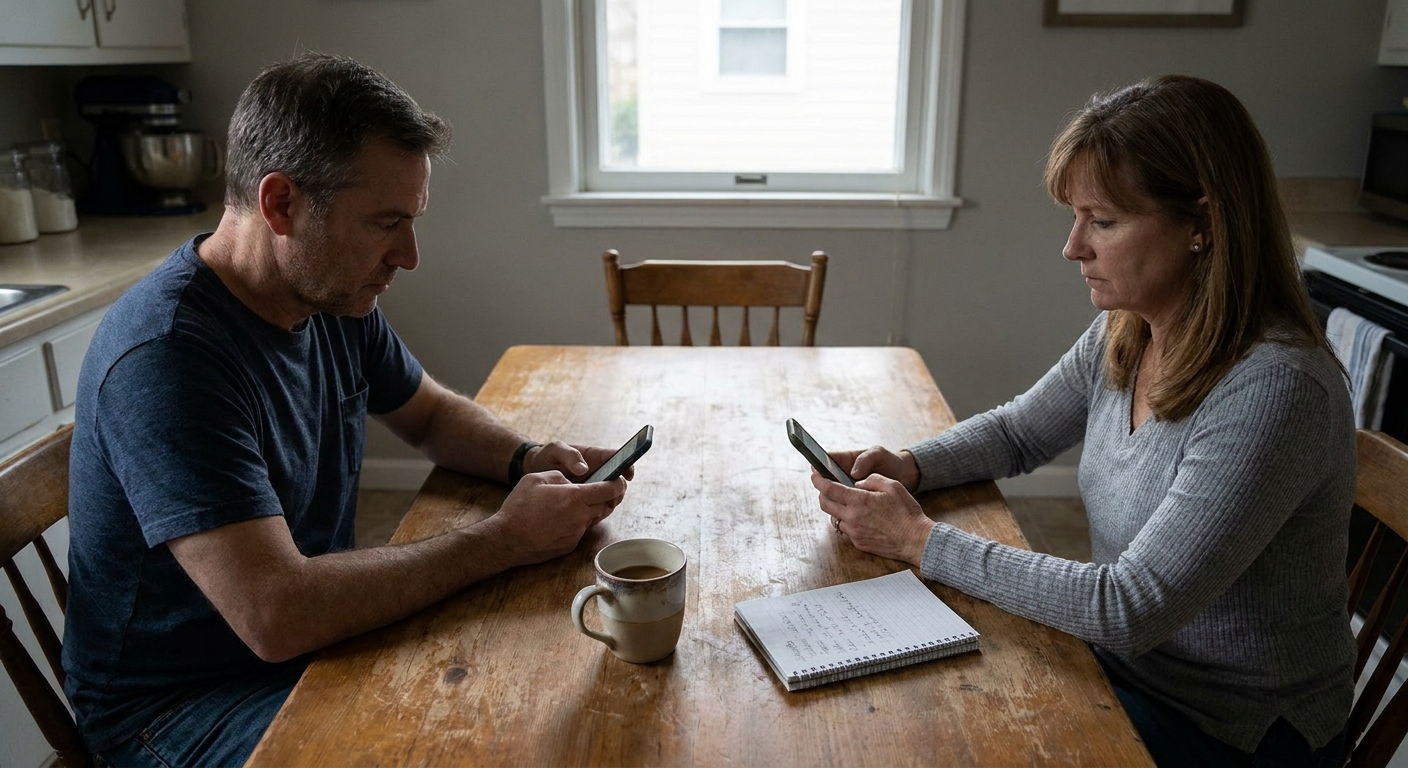
If your teen asks for therapy and one parent says no
This is one of the most painful versions of the problem. Your teen has taken the brave step of naming what they need, and an adult has shut the door.
Start by protecting the teen’s dignity. You do not need to “prove” anything to them. You just need to stay on their side.
What to say
“I believe you. Wanting support makes sense. I am going to keep working on options and I will keep you updated. In the meantime, let’s choose one support you can use this week.”
If your teen is ready, you can also explore what they want therapy to help with, and what kind of therapist would feel safest. These pages can guide you: When your teen asks to start therapy and How to find a therapist for your teenager.
What not to do
When you are scared for your kid, it is easy to go into panic-control mode. These moves are understandable, but they usually backfire by making the refusal more entrenched or by putting your teen in the middle.
- Do not use therapy as a weapon. Avoid “If you cared, you would agree.” It may be true that you are more proactive here, but shaming rarely opens doors.
- Do not recruit your teen as evidence. “Tell your other parent how bad it is” creates pressure and can increase symptoms.
- Do not promise secrecy you cannot keep. If your teen discloses a safety risk, you may need to involve help.
- Do not trash the other parent to the therapist. Focus on the teen’s needs and your co-parenting boundaries. A therapist can only work with what is present, not with a courtroom-level narrative.
A small step to take this week
If you are exhausted, pick one manageable step. Momentum matters, and it is okay if your first move is simply stabilizing your teen and lowering conflict.
- Choose one neutral professional step: schedule a pediatrician appointment or request a one-time therapist consult call.
- Choose one teen support: a school counselor check-in, a weekly walk-and-talk with you, or a coping plan for the hardest time of day.
- Choose one boundary: “We do not discuss therapy in front of our teen,” and repeat it as needed.
If you also need help talking to your teen about the idea of therapy in a way that reduces pressure, How to tell your teen they need therapy is a good companion read.